WalkingPad A1 Pro Review (2026) — Is the Upgrade Actually Worth It for Renters?

WalkingPad A1 Pro — Serah's Verdict
Rating: 8.2/10
Best for: WFH walkers who need a wider belt and use it 60+ minutes daily
Not for: Renters on a tight budget — the C2 does 90% of the same job for $100 less
Price: $499
Check current price →I bought the WalkingPad A1 Pro in January and used it daily for three months alongside my C2 — same apartment, same hardwood floors, same downstairs neighbor situation. So when someone asks me "is the A1 Pro actually worth the extra hundred dollars," I have a real answer, not a spec sheet.
The short version: for most renters, no. The C2 is the move. But there's a specific kind of user the A1 Pro was made for, and if that's you, the upgrade makes sense. Let me show you exactly where the line is.
Specs at a Glance
How the A1 Pro Differs from the C2 (The Question Everyone Is Actually Asking)
The gap between these two machines is narrower than the $100 price difference suggests — and wider than the spec sheet makes it seem. On paper: the A1 Pro has a 16.9" belt vs the C2's 15.7", weighs about 3 lbs more, and costs $100 extra. That's basically it. Same brushless motor, same max speed, same app ecosystem.
But that 1.2-inch belt difference? It's not nothing. At 45 minutes in, when your gait loosens up and you stop micro-correcting your stride, the C2 starts to feel slightly contained. The A1 Pro doesn't. That's the entire case for upgrading. If you've ever looked at our full A1 Pro vs C2 side-by-side comparison, that's the moment we keep coming back to.
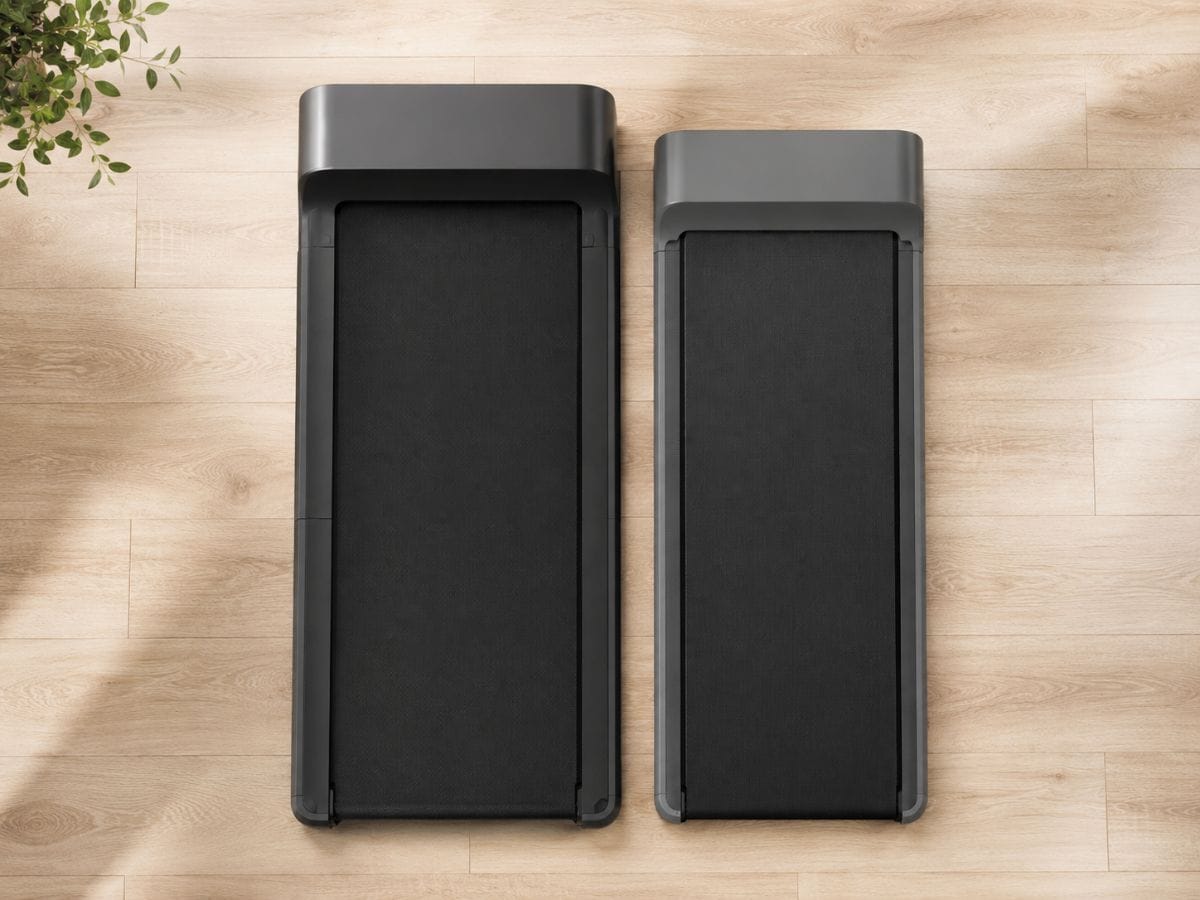
A1 Pro belt (left) vs C2 belt — 1.2 inches wider, which matters more than it sounds after 45 minutes.
Most renters don't need the A1 Pro. But if you're over 5'7", walk longer than 45 minutes per session, or use it as your primary WFH desk setup, the wider belt changes how the machine feels. Not the specs — the feel. And after a while, that's what keeps you using it.
Here's what three months of daily A1 Pro use actually taught me.
First Impressions — Unboxing to First Walk
Setup was 14 minutes solo. The A1 Pro ships mostly assembled — unbox, unfold, connect the safety key, pair the app. The extra 3 lbs over the C2 is noticeable when you're dragging it out from under the bed every morning. Not a deal-breaker, but worth knowing before you commit.
First walk: I went straight to 4 km/h, which is my usual WFH pace on the C2. The difference in belt width hit me within the first 60 seconds. It's not dramatic — it's just roomier. Your feet find their natural spacing without any silent negotiating with the edges. If you've ever walked on the C2 and thought "this feels fine" — you're right, it does. But the A1 Pro feels generous.
App connection matched the C2 experience exactly — Bluetooth paired on the first try, pulled up speed and step data immediately. One sensory detail I didn't expect: the belt surface on the A1 Pro feels slightly softer underfoot. Not cushioned, just less rigid. After 45 minutes on it, my feet weren't bothered in the way they occasionally were on longer C2 sessions.
The Apartment Tests
a. The Noise Test
I ran the A1 Pro at the same time of night, same hardwood floor, same position near the living room wall as my C2 tests. The A1 Pro clocked in at roughly 65–67 dB at 4 km/h — about 2–3 dB louder than the C2 at identical speed. On a decibel scale that's barely measurable, but in a quiet apartment at 9pm it's the difference between "ambient machine noise" and "that machine is running." The downstairs neighbor situation remained unchanged — no complaints, no knocks. Both machines are apartment-viable. The A1 Pro is not meaningfully louder for real-world purposes.
b. The Floor Test
Same apartment, same hardwood, 90 days of daily use. The A1 Pro's slightly heavier motor produced a touch more vibration through the floor than the C2 — but only at speeds above 5 km/h, which I rarely hit during desk sessions. At WFH pace (3–4 km/h), floor vibration was identical to the C2. I used the same non-slip mat under both. No new scuffs, no floor damage, no drama.
c. The Storage Test
The A1 Pro folds to 5.9 inches. My bed clearance is 9 inches. It slides under without issue — same as the C2 in terms of height, though the wider footprint means it takes up slightly more horizontal space under the bed frame. If your under-bed storage is already packed on the sides, you'll want to measure — I've written up a full roundup of under-bed storage ideas that actually work in small apartments if you're trying to make it all fit. Vertically, both machines fit the same beds. Horizontally, the A1 Pro needs about 1.5" more real estate.
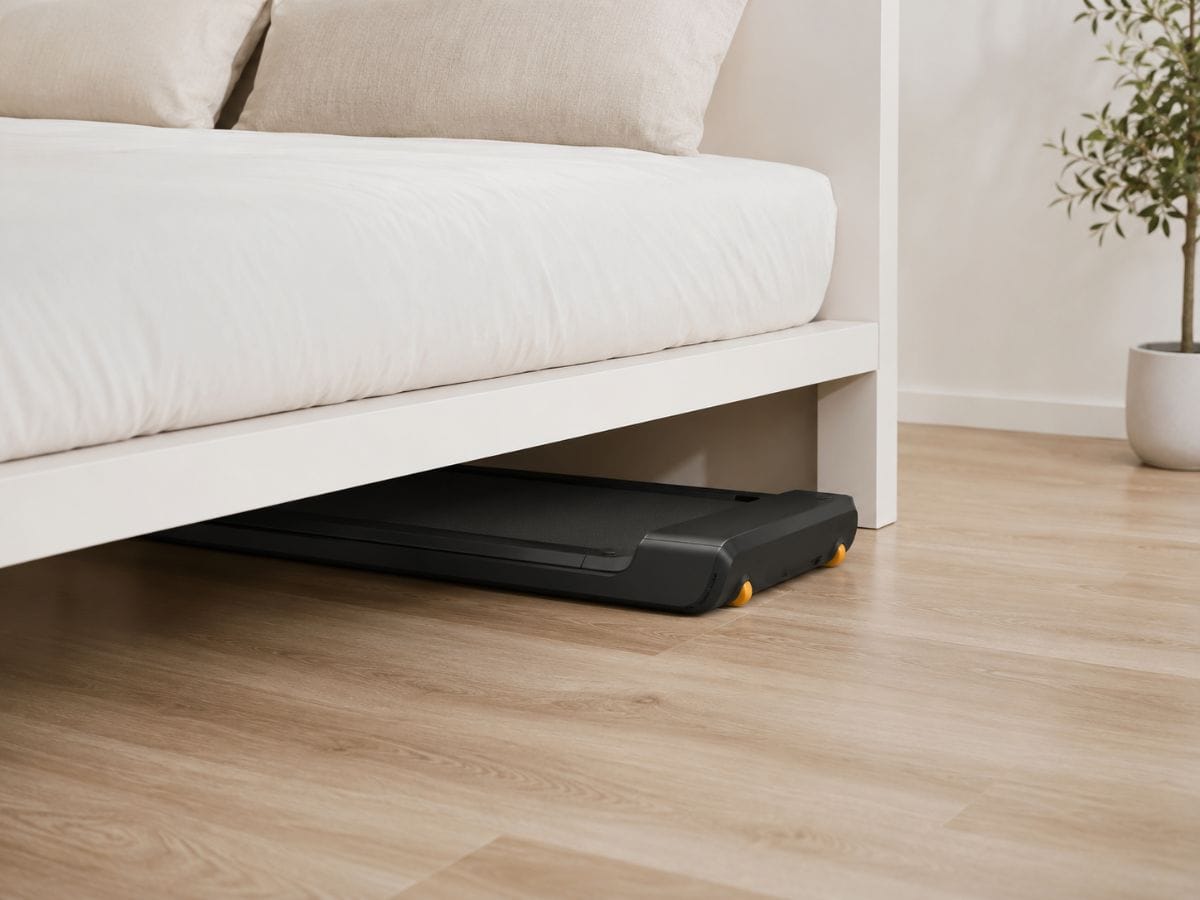
5.9 inches folded — clears most platform beds. Measure your horizontal space too, it's slightly wider than the C2.
d. The WFH Desk Test
Six weeks, A1 Pro as my under-desk walking pad during calls, emails, and light writing sessions. This is where the machine earns its premium. At a standing desk, you're not holding onto anything — your gait is fully natural, your arms are moving, and the belt width actually matters. On the C2, I'd unconsciously walk slightly narrow to stay centered. On the A1 Pro, I just walked. That sounds minor until you're 90 minutes into a long work block and realize your posture hasn't shifted. The wider belt made my WFH sessions longer and more comfortable without me consciously trying to extend them — and if you're building a full standing desk and walking pad setup, the A1 Pro's extra width is the better long-term call.
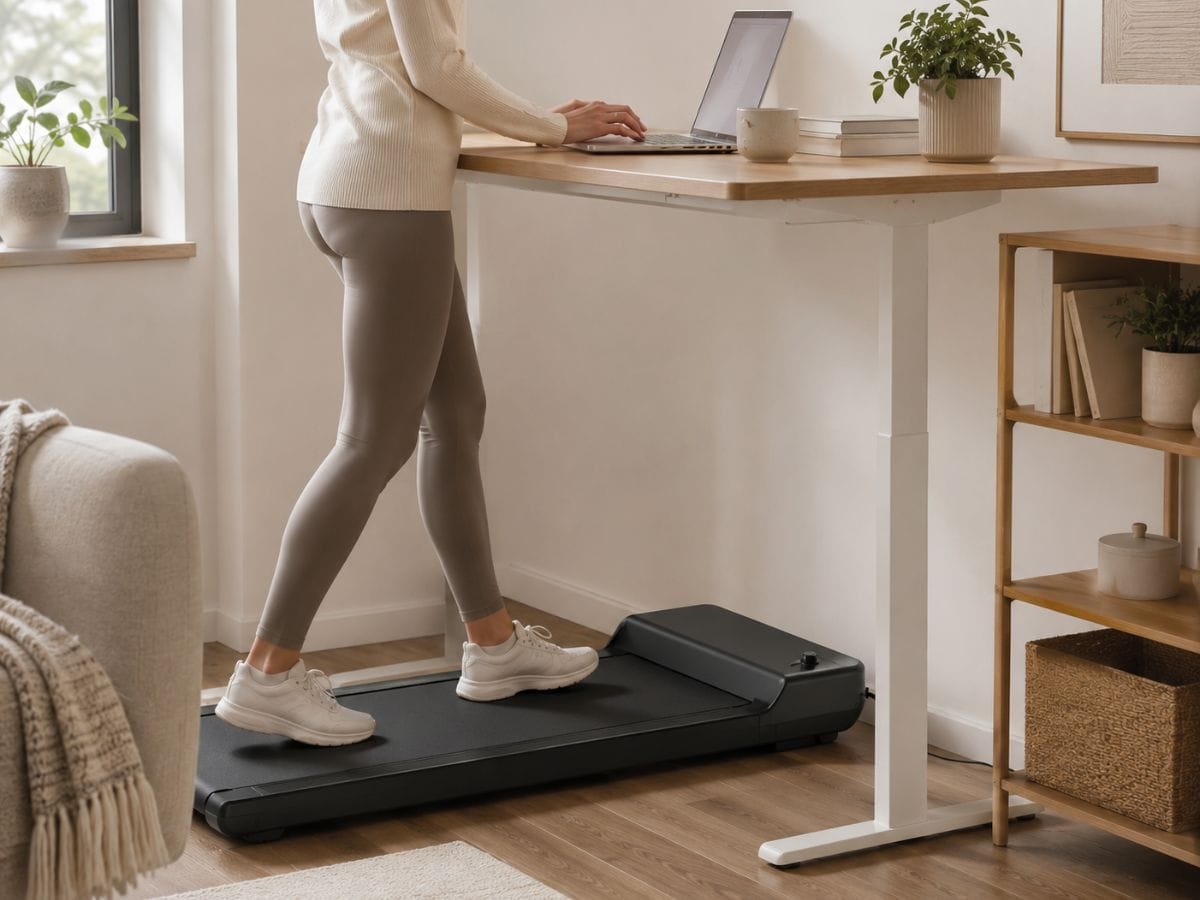
Under a standing desk is where the A1 Pro's wider belt actually earns the $100 premium.
See the A1 Pro on WalkingPad.com →
What I Liked
The belt width at the 45-minute mark. This is the A1 Pro's actual case — not the spec, the feeling. During short sessions, you won't notice it. But after 45 minutes, when fatigue starts to loosen your gait and you're no longer walking with conscious intention, the C2 starts to feel like a tightrope. The A1 Pro doesn't. Your stride just stays where it wants to be, and you stop spending any mental energy on it. That's not a luxury — that's the difference between a 45-minute session and a 70-minute one.
The under-desk experience is genuinely better. At a standing desk with no handrails and active arms, the wider belt changes the WFH walking dynamic in a real way. The C2 is excellent for desk walking. The A1 Pro is more forgiving — less micro-correction, more flow.
The belt surface texture. Not in the marketing anywhere, but the A1 Pro belt has a slightly softer feel underfoot than the C2. After long sessions, my feet were noticeably less fatigued. I only noticed this around week three — when it stopped being a new machine and became just part of my day.
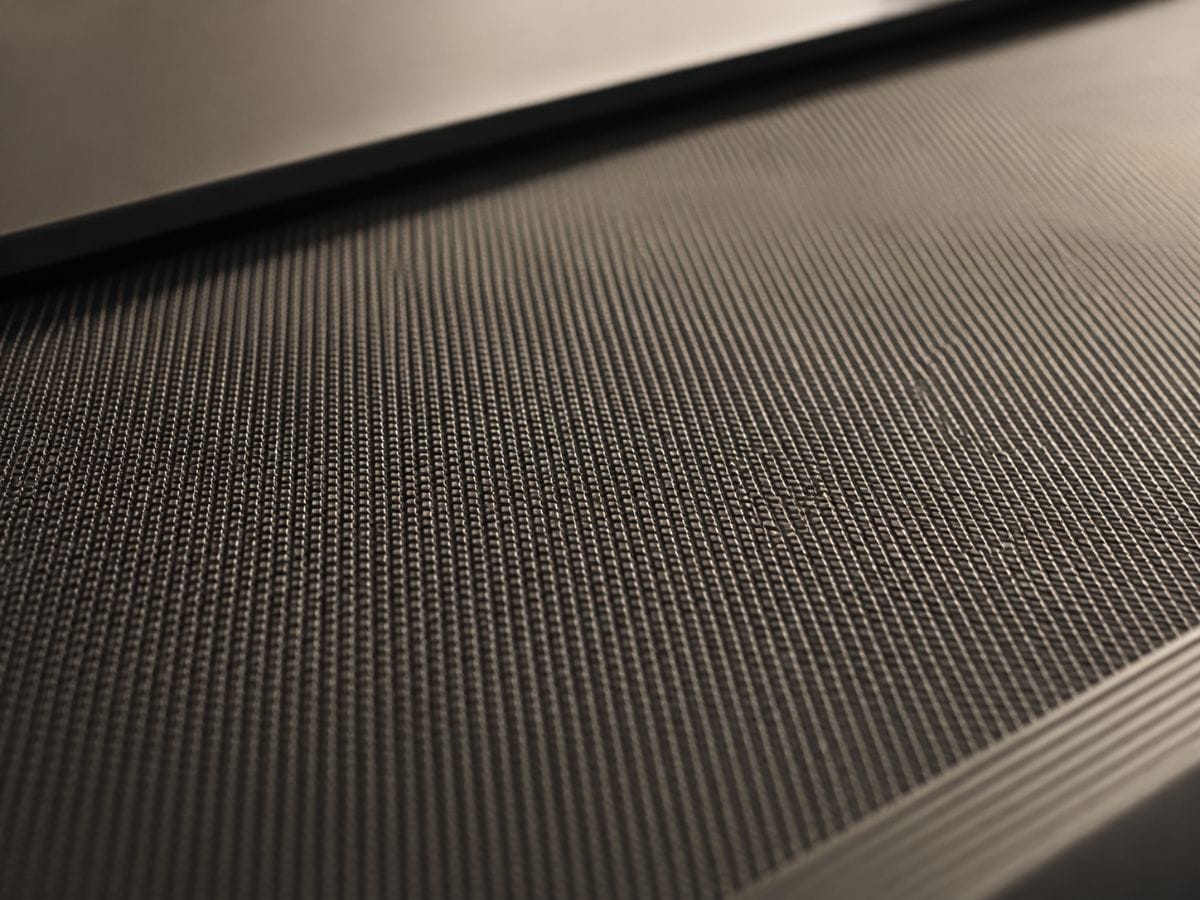
The belt texture isn't in the spec sheet — but it's what you feel after 60 minutes of daily use.
What Annoyed Me
The weight is a daily tax if you store it under your bed. 30 lbs isn't backbreaking, but pulling and pushing it in and out every single day is a different experience than moving it occasionally. I have a low platform bed and a long reach to grab it, and after three months I still notice the weight on tired mornings. The C2 is lighter and the difference is felt, not imagined.
The $100 premium has a moment. It arrived about six weeks in — a good WFH session, nothing wrong with the machine, and I thought: "The C2 would have done this." There was no feature I was using that the C2 lacked. I was just walking. For most days, the extra hundred dollars is not perceptible. That's the honest answer.
The wider footprint slightly complicates tight storage configurations. If you're running the C2 with a carefully arranged under-bed setup — a bin on one side, a yoga mat rolled up on the other — the A1 Pro won't fit the same way. The extra 1.5 inches of width sounds small until you realize something else was living in those 1.5 inches.
Who Should Buy the WalkingPad A1 Pro
The serious WFH walker. If you're using a walking pad as your primary movement strategy during the workday — 60+ minutes daily, under a standing desk, no handrails, arms in motion — the A1 Pro's wider belt is not a bonus feature. It's the whole reason to upgrade. The difference shows up in longer sessions, better posture, and less mental load managing your stride while you're also managing your inbox.
The taller renter. If you're 5'7" or above and you've ever walked on the C2 and felt like you were slightly corralling your stride, that feeling is real. It's not that the C2 is too small — it's that the A1 Pro has room to spare. At taller heights, your natural stride width hits the edges of the C2 belt earlier. The A1 Pro gives you that margin back.
The long-session user. Evening walkers doing 45–60 minute sessions for wind-down, step goals, or audio content — this is where belt comfort compounds. The first 20 minutes feel identical on both machines. Minutes 40–60 do not. If you're building a walking habit around longer sessions rather than short daily maintenance bursts, the A1 Pro ages better with use. For a deeper look at how to actually structure those sessions, the guide on how to use a walking pad to lose weight is worth a read.
Who Should Save $100 and Buy the C2 Instead
If your sessions are under 30 minutes, the belt width difference is invisible — you won't feel it, and you won't miss it. If your budget is tight, $100 is real money, and the C2 does the same core job for less. If you have strict under-bed clearance and a tight storage setup, the C2's narrower footprint is a genuine advantage. The A1 Pro is a better machine for a specific kind of use. The C2 is the right machine for most apartment renters — and if you want the full picture before deciding, our WalkingPad C2 review covers everything from noise levels to storage in the same format as this one.
Frequently Asked Questions
Is the WalkingPad A1 Pro worth it over the C2?
For most renters, no. The C2 handles shorter sessions and casual WFH walking at $100 less. The A1 Pro earns its premium if you're walking 60+ minutes daily, use it at a standing desk without rails, or are taller than 5'7" and found the C2 belt slightly narrow mid-stride. If none of those apply to you, save the money.
Is the WalkingPad A1 Pro quiet enough for an apartment?
Yes. At WFH speeds (3–4 km/h), it runs at approximately 65–67 dB — comparable to a quiet conversation or a running fan. It's 2–3 dB louder than the C2 at the same speed, which is technically measurable but not practically noticeable. I used it daily in a 650 sq ft apartment with a downstairs neighbor. No complaints.
What is the belt size on the WalkingPad A1 Pro?
The A1 Pro belt measures 16.9 inches wide by 43.3 inches long. The WalkingPad C2 belt is 15.7 inches wide — a 1.2-inch difference. That extra width is the A1 Pro's main advantage, and it matters most during longer sessions and true under-desk use where your stride is natural and unrestrained.
Does the WalkingPad A1 Pro fit under a bed?
Yes — folded height is 5.9 inches, which clears most platform and standard bed frames. My bed has 9 inches of clearance and it slides in easily. The A1 Pro is slightly wider than the C2 when folded, so if your under-bed space is tightly organized, measure before assuming it fits the same way.
Can you use the WalkingPad A1 Pro as an under-desk treadmill?
Yes, and this is its best use case. The wider belt makes it more comfortable for desk walking than the C2 — especially for sessions over 45 minutes or if you're on calls without a handrail to self-correct. You'll need a standing desk with at least 28–30 inches of height clearance and enough floor space for the full unfolded footprint (about 53 × 21 inches). For help choosing the right desk pairing, see our guide to the best under-desk walking pads for small spaces.
Final Verdict
The A1 Pro is a genuinely good machine for a specific person. If you're WFH walking more than an hour a day, are taller than average, or noticed the C2 felt slightly narrow after long sessions — the A1 Pro solves that problem cleanly and quietly. If you're doing 20–30 minute sessions and storing it under your bed without much ceremony, the C2 does the same job for $100 less. I don't regret using the A1 Pro for three months. I also wouldn't tell most renters they need it. If you're still weighing all your options, the best walking pads for apartment living roundup covers the full field.
I test every piece of gear in my actual apartment — noise, footprint, deposit-safety, and real-world durability. No sponsored samples, no showroom conditions. If I wouldn't buy it for my own 650 sq ft studio, I don't recommend it.
Build Your Dream Home Gym—Without Wasting Space or Money
Join the MiniHomeGym Newsletter for expert reviews, space-saving fitness tips, apartment-friendly workout ideas, practical buying guides, and exclusive deals to help you choose the best compact fitness equipment with confidence.