WalkingPad R3 Hybrid Plus vs X21: Which Foldable Treadmill Is Actually Worth It for Your Small Space?

Updated July 2026
Two of KingSmith's most talked-about WalkingPad models. Both fold. Both fit in a small space. But they're built for completely different lifestyles — and picking the wrong one will frustrate you within a week. I've had both machines in my own 650 sq ft studio, logging regular sessions on each, so this is a hands-on comparison, not a spec-sheet guess.
Quick Answer
If you want a walk-to-run treadmill with side handrails and the higher weight capacity, get the WalkingPad R3 Hybrid Plus. It's the closer thing to a real home gym treadmill, built for structured cardio sessions.
If you want the most compact, ultra-portable under-desk walker that disappears into your apartment, get the WalkingPad X21. It's the one built around vanishing into a small space and running quietly in the background of your workday.
Both currently land in a similar price range (commonly listed around $699–$799 depending on retailer and promotions), so this isn't really a budget decision — it's a use-case decision. Keep reading and I'll break down exactly which one matches your space and your routine.
At a Glance
The R3 Hybrid Plus is a 2-in-1 walk-to-run treadmill with adjustable side handrails, a wider weight capacity (around 265 lbs), and a stronger motor built for sustained jogging intervals. The X21 is KingSmith's award-winning double-fold walking pad — it folds twice and leans flat against a wall, has the widest running belt in the WalkingPad lineup, and is designed to run quietly under a standing desk all day. Both reach a top speed of about 7.5 mph and use WalkingPad's FootSense™ auto-pace technology, but they solve different problems: one is a home treadmill you work out on, the other is a background appliance you walk on while you work.
Who Each Model Is Actually For
The WalkingPad R3 Hybrid Plus is for you if:
- You want to actually run on your treadmill, not just walk — the 2.5 HP brushless motor and reinforced frame are built to support jogging intervals, not just occasional light jogs
- You prefer the safety of dual, height-adjustable side handrails for longer sessions, especially if you're newer to treadmill workouts (the handrails fold down when you want a more open walking surface)
- Aesthetics matter — the dynamic LED light bar and premium build make this feel like a real home gym piece, not a gadget
- You have a dedicated corner, closet, or wall space and don't need to move it daily
- You want the higher rated weight capacity (around 265 lbs) for a wider range of household users
The WalkingPad X21 is for you if:
- You work from home and want a true under-desk walking setup — this is the one people build their WFH aesthetic around
- Storage is non-negotiable: its double-fold design lets it stand upright against a wall and nearly disappear
- You're a renter moving apartments or traveling frequently and portability is a real factor (it's the lightest model in this comparison and rolls on built-in transport wheels once folded)
- Walking is your primary movement — you're adding daily steps and staying active while you work, with the option to jog occasionally
- You want something minimal and unobtrusive that doesn't visually dominate a small room
Side-by-Side Specs
Spec figures are commonly listed values gathered from current manufacturer and retailer listings; always confirm exact numbers on your regional WalkingPad or retailer page before purchase, as specs can vary slightly by market.
In-Depth Breakdown
Size & Storage
This is the category most apartment renters care about most — and the two models take completely different approaches.
The X21 wins on storage flexibility. Its double-fold design — the deck folds up, then folds again to roughly half its height — means it stands upright against a wall and becomes nearly invisible in a hallway, closet, or corner. If you're in a studio or a one-bedroom where every square foot counts, this is the one that actually disappears. It's also the lighter of the two, and its built-in transport wheels make it easy to reposition once folded.
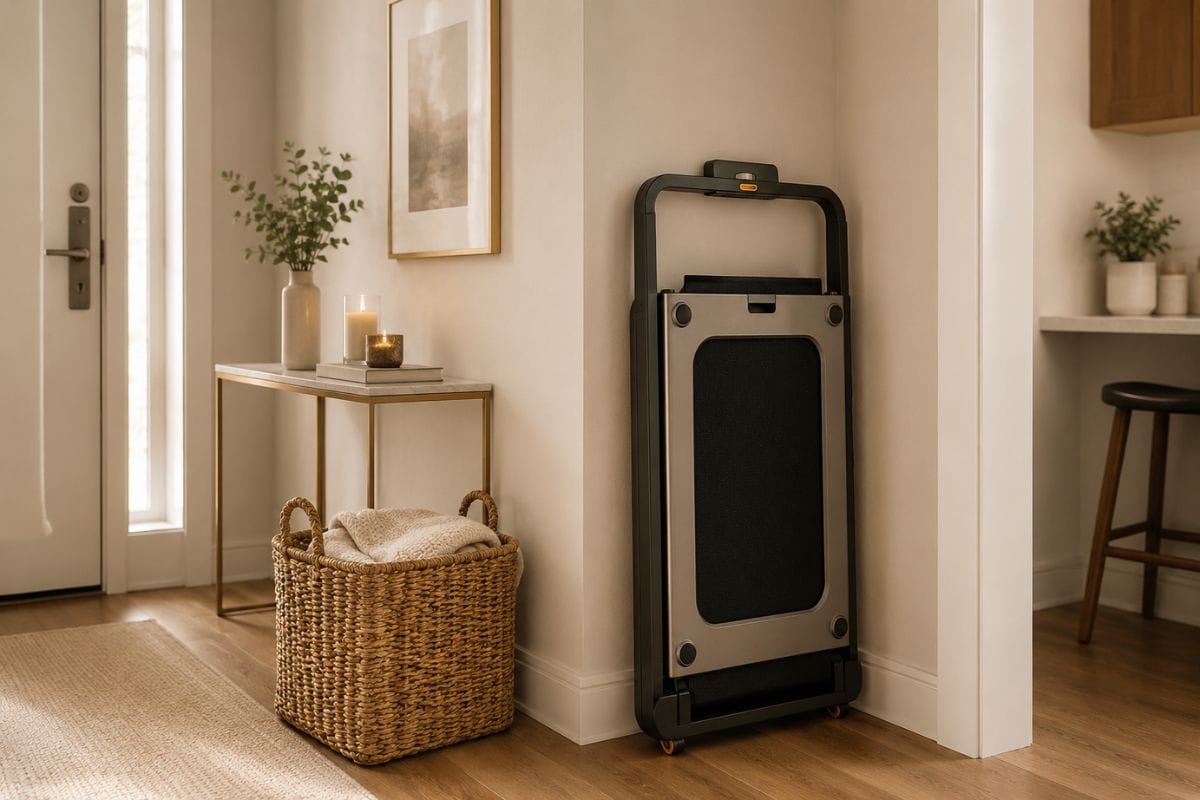
it basically disappears into the wall ✨ studio apartment approved
The R3 Hybrid Plus is larger — the handrail structure adds width even though the rails fold down, and while it does fold flat, it's better suited to a dedicated spot than daily moving. Think: a bedroom corner, beside a standing desk, or along a wall with some clearance. It's not impossible in a small apartment with a thoughtful gym layout, but it requires more intentional placement.
Storage verdict: X21 for maximum flexibility. R3 Hybrid Plus for a semi-permanent setup with more working space.
Running Capability: Which One Can You Actually Run On?
This is where the two models get compared most, and most unfairly. Both reach the same top speed (7.5 mph), and — contrary to what you'd expect — the X21 actually has the slightly wider belt of the two (about 18.1" vs. 17.3"). So belt size isn't the deciding factor here.
The real difference is motor power and structure. The R3 Hybrid Plus's stronger 2.5 HP motor and dual side handrails are built to support sustained jogging and interval sessions — the handrails give you something to hold onto at pace, and the frame is reinforced for that use. The X21's smaller 1.0–1.2 HP motor and lighter handrail/console mean it can handle occasional jogging, but it's not built for regular, sustained running sessions the way the R3 is.
Running verdict: both can technically run at 7.5 mph, but the R3 Hybrid Plus is the one actually engineered for regular running workouts. Treat the X21's running capability as a nice-to-have for occasional intervals, not its primary job.
Noise Level
Both machines are apartment-friendly — WalkingPad's brushless motors are rated under 65 dB, roughly the level of normal conversation, and both are dramatically quieter than a traditional gym treadmill.
The X21 is quieter at low walking speeds, which makes sense given it's engineered for sustained low-intensity walking. If you're on video calls or living in a building with thin floors, the X21 at walking pace is close to silent.
The R3 Hybrid Plus generates more audible sound at higher speeds — not disruptive, but noticeable during a jogging interval. For most apartments it's fine during normal hours, but it's worth a heads-up to downstairs neighbors before an early-morning run. If noise across your whole setup is a top concern, see our guide to the quietest treadmills for apartments.
Noise verdict: X21 for whisper-quiet WFH walking. R3 for workouts where a bit of motor hum at speed is expected and fine.
Ease of Use & Setup
Both connect to the WalkingPad (KS Fit) app and support FootSense™ auto-pace control, so the baseline experience is the same. Where they differ is physical usability and setup.
The R3 Hybrid Plus ships fully assembled and is easier for structured workout sessions — the adjustable side handrails give you confidence at speed and make it easier to step on and off safely during longer cardio intervals.
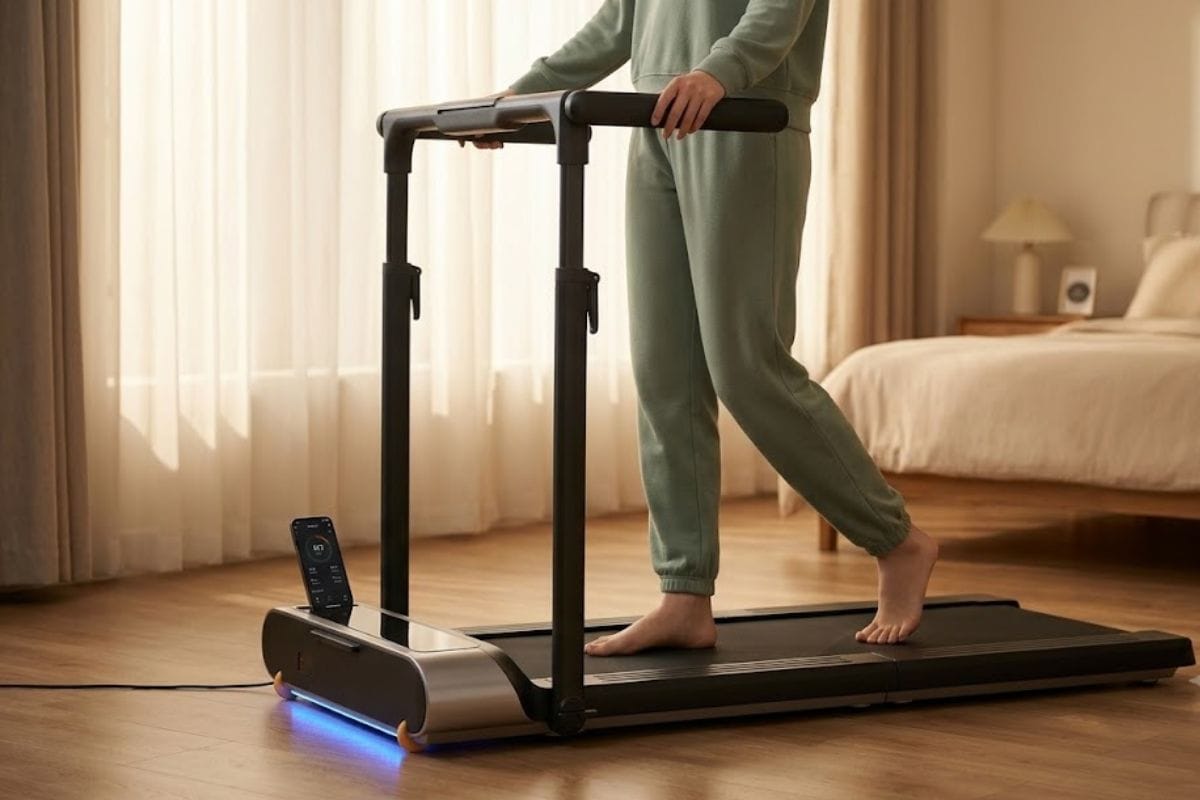
handrail on, headphones in, 6am me is thriving 🎧
The X21 typically requires brief, straightforward self-assembly on most retailer listings (check your specific order), but is easier for everyday passive use once set up — no handrail to maneuver around, just unfold, step on, and walk while you work. Its rotary speed dial lets you adjust pace with a single twist without breaking stride or reaching for a remote.
Ease of use verdict: R3 for intentional workout sessions. X21 for frictionless daily movement that doesn't interrupt your flow.
Value & Price
At similar price points (roughly $699–$799 depending on retailer), value here comes down to fit, not budget.
The R3 Hybrid Plus justifies its price with dual adjustable handrails, a stronger motor, the higher 265 lb weight capacity, and a build meant to replace a gym treadmill for real cardio training.
The X21 delivers excellent value for what it is — the most design-forward, space-efficient walking machine WalkingPad makes (it's also picked up Red Dot and iF Design Award recognition for its fold mechanism). For WFH users building daily step counts, it does one job extremely well in almost no floor space.
The mistake is buying the X21 expecting a full training machine, or buying the R3 hoping it'll vanish into a studio apartment. Match the machine to your actual use case and both deliver strong value. For more on the discontinued R2 and how the R3 generation compares to budget alternatives, see our WalkingPad vs competitors breakdown.
Value verdict: X21 for step-count-focused WFH buyers. R3 Hybrid Plus for anyone replacing a gym membership or building a real home fitness setup.
Serah's Verdict
Okay, honest take? These are two completely different machines wearing the same brand name. I wouldn't call one "better" than the other — I'd call one right for you and one wrong for you.
I've personally logged the X21 into my WFH routine for months now, and it's genuinely changed how much I move on a workday — I'm regularly hitting 6,000+ steps before noon without ever changing out of my slippers. If that's your life, stop overthinking it — the X21 is the move. For more on what that daily-step habit actually looks like, see our 10,000 Steps a Day at Home guide.
But if you're someone who actually works out — sweat sessions, interval walking, light jogging, the kind of structured cardio that replaces a gym membership — the R3 Hybrid Plus is the one that delivers that. The handrails aren't extra; they're what makes longer, more intense sessions feel safe and sustainable. And the LED light bar is honestly gorgeous during a dim early-morning workout.
My rule: buy the X21 if movement is your background. Buy the R3 if fitness is your foreground. If you're still weighing whether a walking pad fits your life at all before buying either one, our Is a Walking Pad Worth It? guide is a good next read. And if you're building a fuller home setup around whichever one you choose, the apartment gym under $500 gear list is a smart next stop.
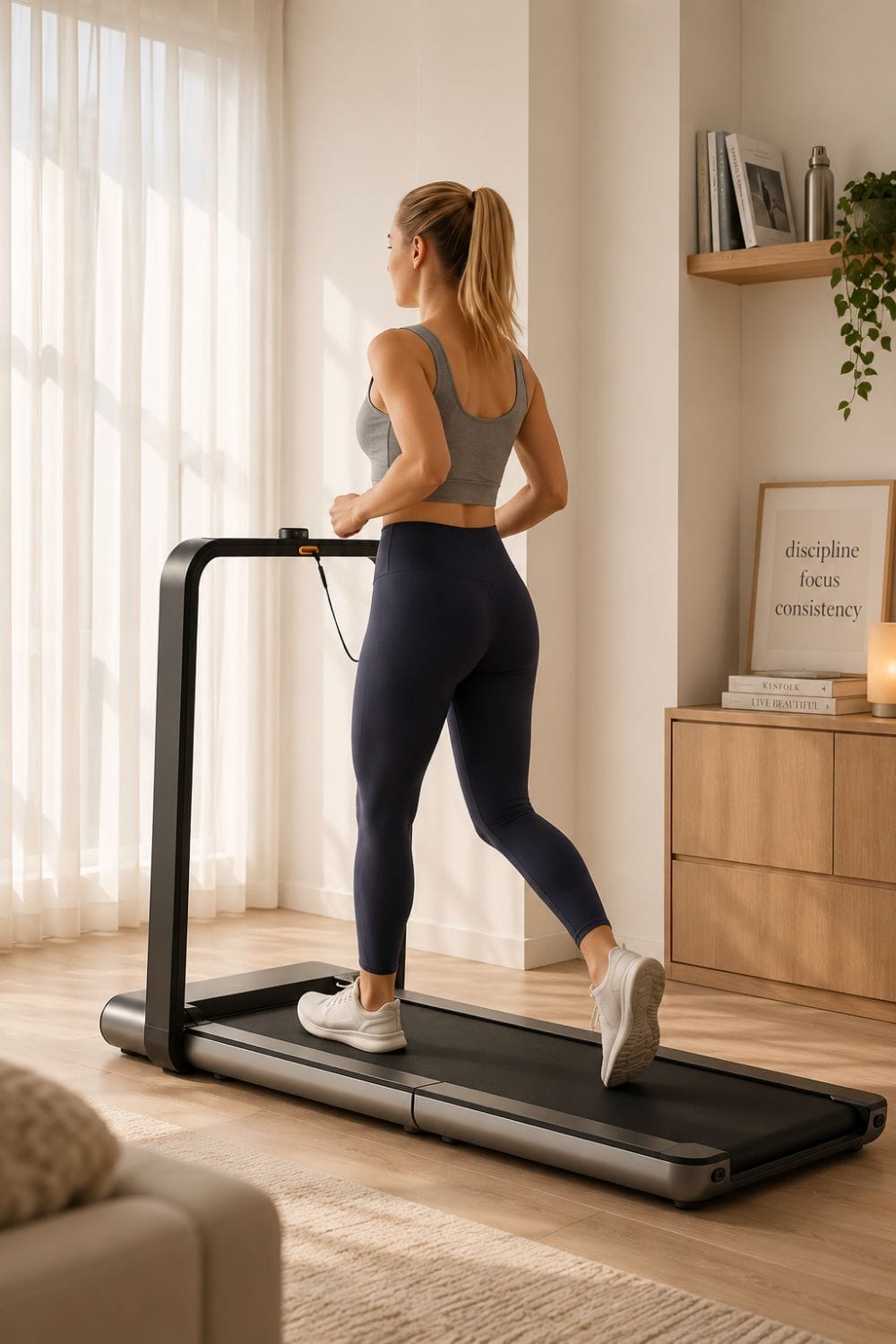
6,000 steps before my 10am meeting and nobody knows 🤫
Ready to shop? Both models ship directly from WalkingPad with free delivery.
FAQs
Can I use either of these in a small apartment without disturbing neighbors?
Yes — both are designed for apartment use with brushless motors rated under 65 dB, about the volume of normal conversation. The X21 is the quieter option at walking speed, making it ideal for shared buildings or thin-floor situations. For the R3 Hybrid Plus, keep speeds moderate during quiet hours if you're jogging. A treadmill mat underneath either machine further reduces vibration transfer to floors below.
Which one is better for under-desk use with a standing desk?
The X21, without question. It was built for exactly this setup — a low profile and no bulky handrail structure to interfere with desk placement. The R3 Hybrid Plus's side handrails add width and require more clearance, making it awkward to pair with most standing desks. See our under-desk walking pads for small spaces guide for more picks built specifically for this setup.
Is the R3 Hybrid Plus worth the higher price over the X21?
It depends on how you'll use it. If you want to jog, run intervals, or make the treadmill your primary cardio equipment, the R3 Hybrid Plus is worth it — the handrail stability, stronger motor, and higher weight capacity justify the cost. If your goal is adding daily steps while you work, the X21 does that job just as well for less. Don't pay for capacity you won't use, but don't underbuy if regular jogging is on your list.
Can both models handle running, or just walking?
Both reach up to 7.5 mph, which technically supports light jogging on either. But the R3 Hybrid Plus, with its stronger 2.5 HP motor and dual side handrails, is genuinely built to support sustained running sessions. The X21's belt is actually slightly wider, but its lighter motor and console-style handrail make it better suited to occasional jogging intervals than regular running workouts. Think of the X21 as a power-walker's machine with occasional jog capability, and the R3 as the true 2-in-1 walk-to-run treadmill.
What's the weight capacity and price difference between the two?
The R3 Hybrid Plus is commonly rated around 265 lbs with a typical price near $799. The X21 is commonly rated around 240 lbs with a typical price near $699. Always confirm current figures on your regional WalkingPad or retailer listing, since exact numbers can shift slightly by market and promotion.
Does either model have incline?
No — neither the R3 Hybrid Plus nor the X21 offers incline. If incline is a priority for you, it's worth looking at other walking pads built specifically for that feature.
Keep Exploring
Want to see how these stack up against every other compact treadmill worth considering? Start here:
- The 5 Best Foldable Treadmills That Actually Fit in Closets — our full pillar covering every foldable treadmill worth your money in a small space
- WalkingPad R2 vs C2 vs Urevo Foldi vs DeerRun A1 Pro — how the earlier generation models compare if you're open to a budget-friendly alternative
- WalkingPad X218 vs X25+ Comparison — if you're weighing other X-series models before committing
- Best Walking Pad for Apartments — our top-level buying guide across the whole lineup
Affiliate links may earn a commission at no extra cost to you. Serah tests every product featured on Mini Home Gym in her own apartment — no sponsored samples, no showroom conditions.
I test every piece of gear in my actual apartment — noise, footprint, deposit-safety, and real-world durability. No sponsored samples, no showroom conditions. If I wouldn't buy it for my own 650 sq ft studio, I don't recommend it.
Build Your Dream Home Gym—Without Wasting Space or Money
Join the MiniHomeGym Newsletter for expert reviews, space-saving fitness tips, apartment-friendly workout ideas, practical buying guides, and exclusive deals to help you choose the best compact fitness equipment with confidence.