Best Exercise Bike for a Small Apartment (2026): Renter-Tested Picks
Discover the best apartment-friendly exercise bikes designed for small spaces. Compare top quiet, compact models with magnetic resistance, heavy flywheels, and small footprints to fit your layout.
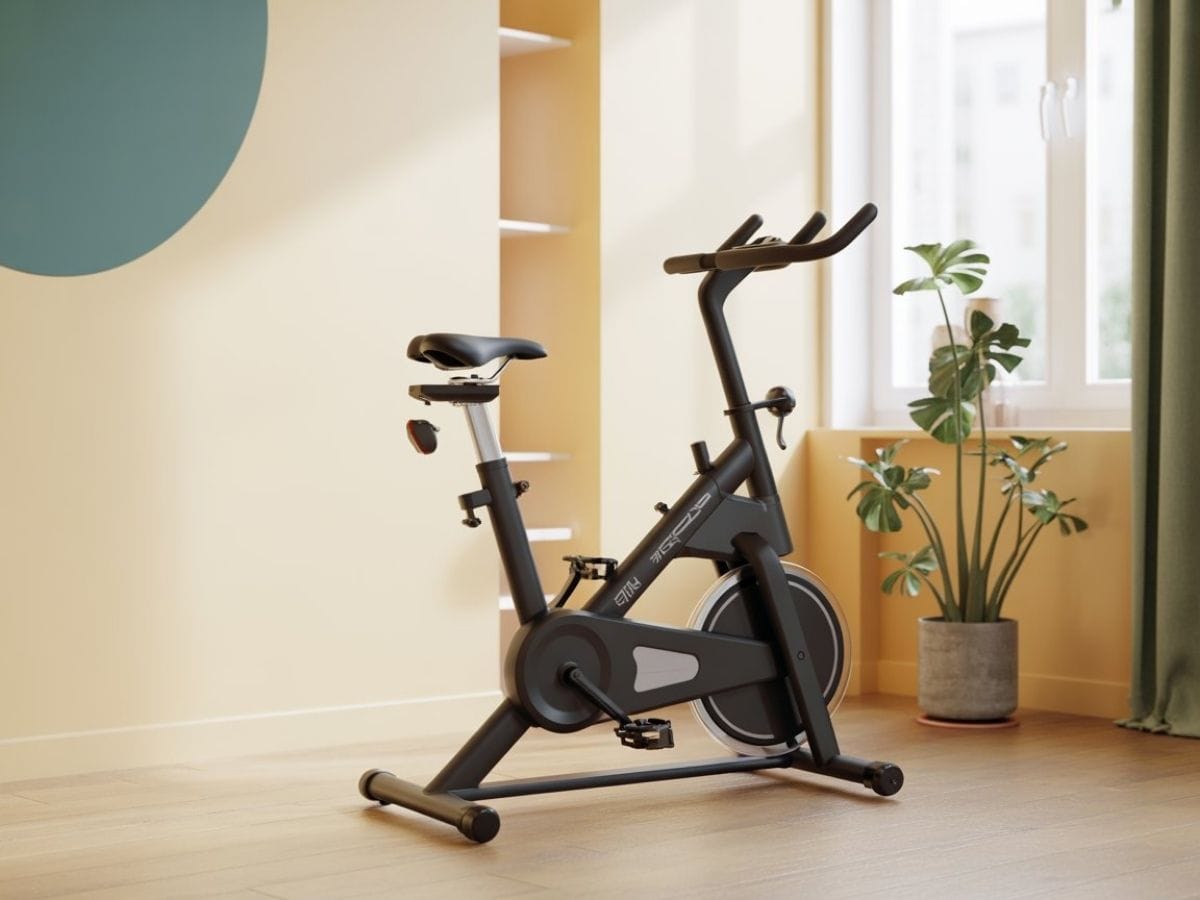

Updated September 2026
Quick Answer
The best exercise bike for a small apartment has magnetic resistance, a steel frame, a belt drive, and an assembled footprint under 40" × 20". Target the $300–$600 price tier for daily use, a flywheel of 18 lbs or more, and a frame warranty of at least 3 years. Magnetic resistance runs around 40–50 dB — quiet enough for early-morning or late-night rides without disturbing neighbors — and won't damage rental flooring the way heavier cardio machines can. If you have knee, hip, or back concerns, a recumbent bike is worth considering over an upright. If you need the floor back the moment you're done, a folding model is the better fit — check the folded footprint, not just the assembled one, before you buy.
Top pick: Sunny Health & Fitness SF-B1805 — 44 lb flywheel, 40 resistance levels, 300 lb weight capacity, 5-year frame warranty, under $450. View on Amazon →
In this guide
What makes an exercise bike "apartment-friendly"?
A compact exercise bike — also called a stationary bike or indoor cycling bike — is a piece of cardiovascular fitness equipment designed to simulate the motion of outdoor cycling without forward movement. Not every exercise bike suits a small apartment, though. You pedal against a resistance mechanism, elevating your heart rate and engaging the lower-body musculature, all from a fixed position — but the models actually worth owning in a small space share four traits: magnetic resistance, a steel frame, a belt drive, and an assembled footprint under 40" × 20". A fifth trait matters just as much if storage is tight: a folded footprint small enough to tuck behind a couch or into a closet. Miss any of these and you end up with something noisy, wobbly, or too big for the corner you actually have.
Unlike treadmills or ellipticals, exercise bikes are inherently low-impact. Your joints — knees, hips, ankles — never absorb jarring force because your feet stay in contact with the pedals throughout the full rotation. Mayo Clinic specifically lists stationary and recumbent cycling among the recommended low-impact options for people managing joint pain or arthritis[1] — which is part of why this machine shows up so often in small-space, daily-use setups: it's one of the few cardio tools you can use every day without your joints filing a complaint.
How does it work?
At its core, an exercise bike uses either a flywheel (a weighted spinning disc) or an air resistance fan to create the sensation of load. As you pedal, energy transfers through the drivetrain to spin the flywheel. You increase or decrease resistance to mimic hills, sprints, or steady-state riding. The heavier and smoother the flywheel, the more authentic and consistent the ride feel. This same mechanism is what separates a full-size exercise bike from a mini pedal exerciser (sometimes called an under-desk bike) — those use a much lighter resistance band or friction dial instead of a flywheel, trading ride quality for a footprint that fits directly under a desk. If total floor space is your hardest constraint, that's worth knowing about before you commit to a full-size model — more on that in the format comparison below.
Direct Answer
Most upright and folding exercise bikes fit within a 20" × 40" assembled footprint — smaller than a standard office desk — with magnetic resistance running quiet enough (40–50 dB) for early-morning rides in a studio or one-bedroom without waking anyone up. Folding models typically reduce that footprint by roughly half once stored upright against a wall.
Who is it for?
Exercise bikes serve a broad audience. Beginners benefit from the forgiving seated position and adjustable resistance. Intermediate athletes use them for structured interval training and zone-2 cardio. Older adults and anyone managing joint pain appreciate the zero-impact load — and if that's your main reason for buying, jump ahead to our upright vs. recumbent comparison below, since a recumbent frame may suit you better than the upright pick most buyers default to. And anyone working through our small home gym ideas on a tight budget will find the stationary bike delivers more cardio value per square foot than nearly any alternative — including versus name-brand connected bikes like Peloton or NordicTrack, which trade footprint efficiency for screens and subscriptions.
The history of the exercise bike
The exercise bike has a surprisingly long lineage — far older than modern fitness culture would suggest. Its evolution mirrors the broader story of how society has approached indoor fitness: first as medical curiosity, then as luxury novelty, and finally as an everyday essential for small home gym setups worldwide.
Key terms to know before you buy
Walking into the exercise bike market without knowing the terminology is like reading a menu in a language you don't speak. Below are the eleven terms that matter most, contextualized for small home gym buyers specifically.
Pros and cons of exercise bikes
No piece of fitness equipment is perfect. The good news: the exercise bike's strengths align almost exactly with what small-space, home-gym buyers need most. Here's an honest look at both sides before you commit.
The space-saving vs. durability trade-off
This is the central tension every small-home-gym buyer faces. Here's how it plays out across three price tiers:
Upright vs. recumbent vs. smart vs. mini: which is best for a small apartment?
Most "best exercise bike" roundups default straight to upright models, but that's not the right answer for every apartment. Here's how the four main formats actually compare for small-space use.
The 5 Best Exercise Bikes for Small Apartments
Every model below has an assembled footprint under 48", whisper-quiet magnetic resistance, and a confirmed weight capacity — perfect for shared walls, tight corners, and rental floors. Tap any bike to check today's price.
How we chose these picks
Every pick below is compared against our small-apartment checklist — resistance type, assembled and folded footprint, weight capacity, and warranty length — using verified manufacturer specifications. Picks marked ✓ Renter-Tested have been hands-on tested in Serah's own apartment. Picks marked Spec-Verified are queued for testing and will be updated with real-world ride, noise, and assembly notes as soon as testing is complete — we'd rather tell you a pick isn't tested yet than pretend it is.

Full spec comparison
Specs sourced from manufacturer listings as of September 2026 and may vary by retailer or bundle — confirm current specs on the product page before buying. "Confirm w/ mfr" cells are queued for verification against current listings.
Why each pick made the list
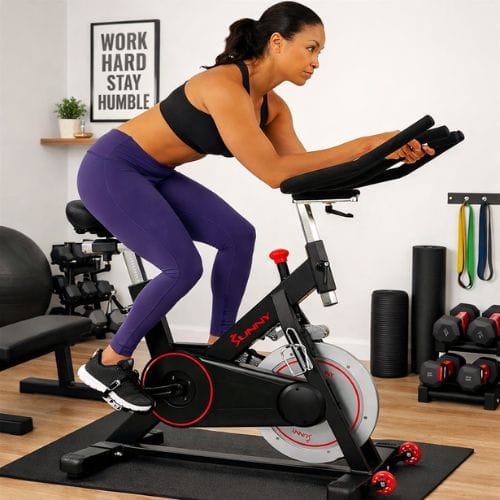
Best overall — Sunny Health & Fitness SF-B1805: A 44 lb flywheel in an upright frame that fits a 20"×46" assembled footprint. Magnetic resistance with 40 micro-adjustable levels, belt drive, a 300 lb weight capacity, and a 5-year frame warranty at a price that reliably sits under $450 — the heaviest flywheel at this price point on paper. Hands-on ride notes coming once testing is complete. View on Amazon →
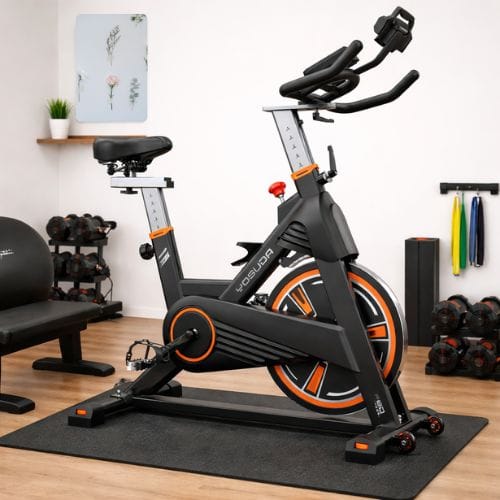
Best for higher weight capacity — YOSUDA Pro Magnetic: Rated to 350 lbs with a reinforced steel frame, 16-level magnetic resistance, and a belt drive system. Footprint is 40"×22". Ideal for buyers who need a higher structural limit without moving into commercial-tier pricing. Hands-on ride notes coming once testing is complete. View on Amazon →
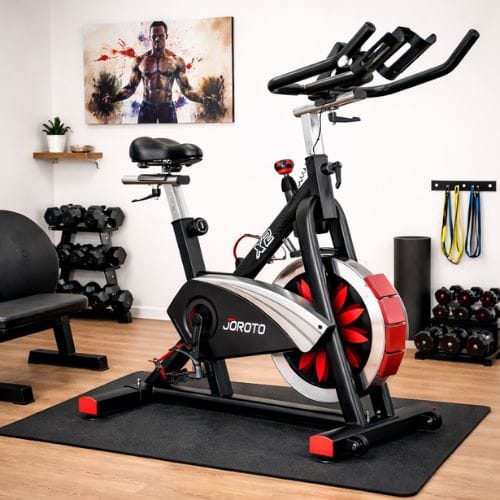
Best for ultra-quiet operation — JOROTO X2: Belt drive paired with a 35 lb flywheel, 40 resistance levels, and a 300 lb weight capacity. The handlebar is multi-grip and adjustable across both height and fore/aft position — rare at this price on paper. Worth a close look if you share a wall with a light sleeper. Real noise measurement coming once testing is complete. View on Amazon →
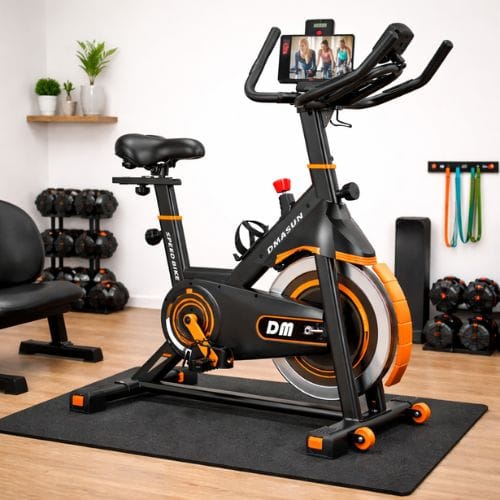
Best footprint — DMASUN Ultra-Compact: Under 36" long assembled with the seat at minimum height — one of the most space-efficient magnetic-resistance upright bikes currently listed, with a 300 lb weight capacity. Flywheel is lighter (30 lbs) but sufficient for steady-state and moderate interval work. If square footage is the primary constraint, this is the pick to start with. Hands-on ride notes coming once testing is complete. View on Amazon →
Best recumbent — Merach S23 Recumbent with Resistance Bands: For readers who need a reclined, backrest-supported ride over an upright frame — the format Mayo Clinic points to for arthritis-friendly cycling[1]. The S23 pairs 8-level magnetic resistance with a 350 lb weight capacity, an adjustable seat and backrest, and integrated resistance bands for light upper-body work while pedaling. It syncs with the Merach app, Kinomap, and Zwift, and front transport wheels make it easier to reposition in a small room. This pick is spec-verified only — full hands-on testing notes coming soon. Check price →
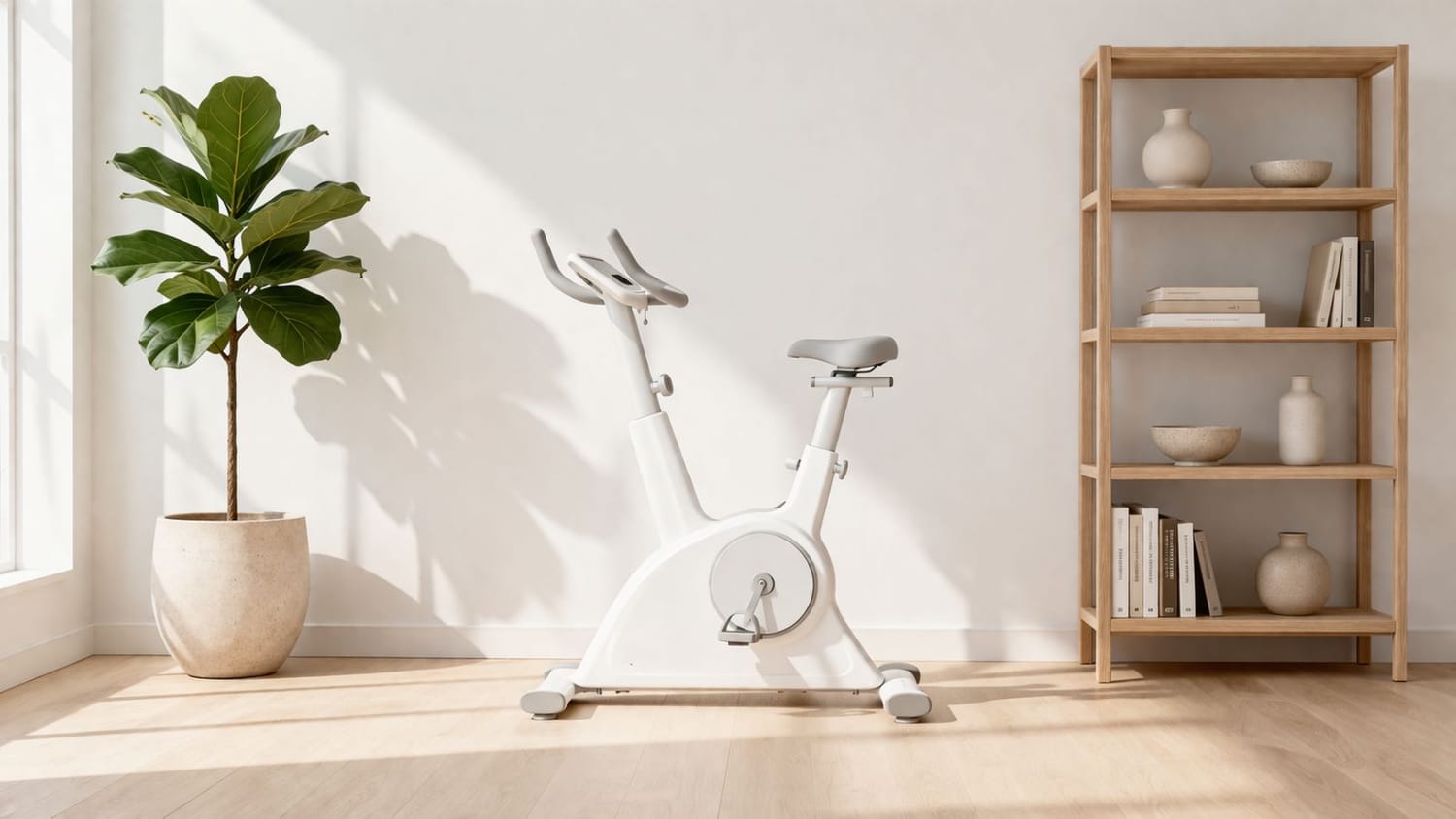
Modern design means your gym can live in your lounge, not just your garage. If you like this look, our That Girl Apartment Gym guide breaks down how to style it.
How to set up an exercise bike in under 50 sq ft
Fifty square feet is roughly a 7-foot by 7-foot zone — the size of a large walk-in closet. It sounds tight. It is workable. With the right bike, a deliberate layout, and a few accessories that earn their footprint, you can build a genuinely effective cardio setup in that space. Here's exactly how.
Space allocation — 50 sq ft layout map
Step-by-step setup guide
Beginner workouts to get started
You have the bike set up. Now what? These three beginner-friendly sessions are designed for your first 30 days and, combined, comfortably clear the CDC's 150-minutes-a-week aerobic activity guideline[2]. Each one works within the compact constraints of apartment living — no instructor required, no app subscription needed.
Workout 1 — The Steady-State Foundation (20 min)
Set resistance to a level where you can hold a conversation but feel your breathing elevated. Pedal at 70–80 RPM continuously for 20 minutes. No intervals, no sprints — just consistent effort. This builds aerobic base and lets your body adapt to the saddle. Do this 3× per week for the first two weeks.
Workout 2 — The 1:1 Interval Introduction (25 min)
After a 5-minute warm-up at easy resistance, alternate: 1 minute at high effort (resistance +4 levels, 90+ RPM) / 1 minute recovery (base resistance, 60 RPM). Repeat for 15 minutes, then cool down for 5 minutes. Total time: 25 minutes. This is your gateway to HIIT — do it 2× per week starting week three.
Workout 3 — The Climb Simulation (30 min)
Warm up 5 minutes. Then every 3 minutes, increase resistance by one level while keeping cadence at 60–70 RPM — simulating a sustained hill climb. After 15 minutes of climbing, reverse the process (descend one level every 2 minutes) to cool down. Great for building leg strength without adding floor space needs.
Consistency tip
Place your bike where you'll see it daily — not tucked in a corner. Visibility is the single biggest predictor of usage frequency for home cardio equipment. A bike you step around is a bike you'll step on. Our Compact Home Gym for Women guide has real layout examples if you want ideas for where it should live.
Bike vs treadmill vs rower — which wins for small spaces?
If you're choosing between home cardio machines for a tight apartment, this is the comparison that matters. Each machine has a genuine use case — none is universally superior — but for small home gym buyers, the trade-offs are decisive.
Footprint comparison
Noise comparison
Exercise bike (magnetic): 40–50 dB — library-quiet. Treadmill: 60–75 dB — equivalent to a normal conversation or vacuum cleaner. Neighbors below will hear footfall impact regardless of mat quality. Rower (air resistance): 60–70 dB fan noise. Magnetic rowers are quieter but still louder than a stationary bike.
For apartment-specific cardio, the magnetic exercise bike wins on every metric that apartment living makes non-negotiable: footprint, noise floor, and price-to-performance at the mid tier.
Frequently asked questions
What's the best exercise bike for a small apartment?
The best exercise bike for a small apartment combines magnetic resistance, a steel frame, a belt drive, and an assembled footprint under 40" × 20". In the $300–$600 range, our current top pick on paper is the Sunny Health & Fitness SF-B1805, which pairs a 44 lb flywheel with a 5-year frame warranty and a 300 lb weight capacity.
How much weight capacity do I need?
Look for a weight capacity rating at least 25–50 lbs above your body weight to allow for standing pedaling and normal wear over time. Budget bikes typically cap at 250–275 lbs; steel-frame magnetic bikes in the $300–$600 tier usually support 300–350 lbs.
Is a recumbent or upright bike better for a small apartment?
Upright bikes have the smaller footprint and suit most riders without joint concerns. Recumbent bikes take up more floor length but offer back support and a more reclined position — Mayo Clinic specifically lists recumbent cycling as a low-impact option for people managing arthritis[1]. Choose recumbent if comfort and joint support outweigh the extra floor length.
Will my neighbors hear me riding it?
Not if you choose magnetic resistance with a belt drive — this combination runs around 40–50 dB, which is quieter than normal conversation. Friction-resistance bikes and chain drives are noticeably louder and are the setup most likely to bother neighbors.
Do I need to protect my floor to stay deposit-safe?
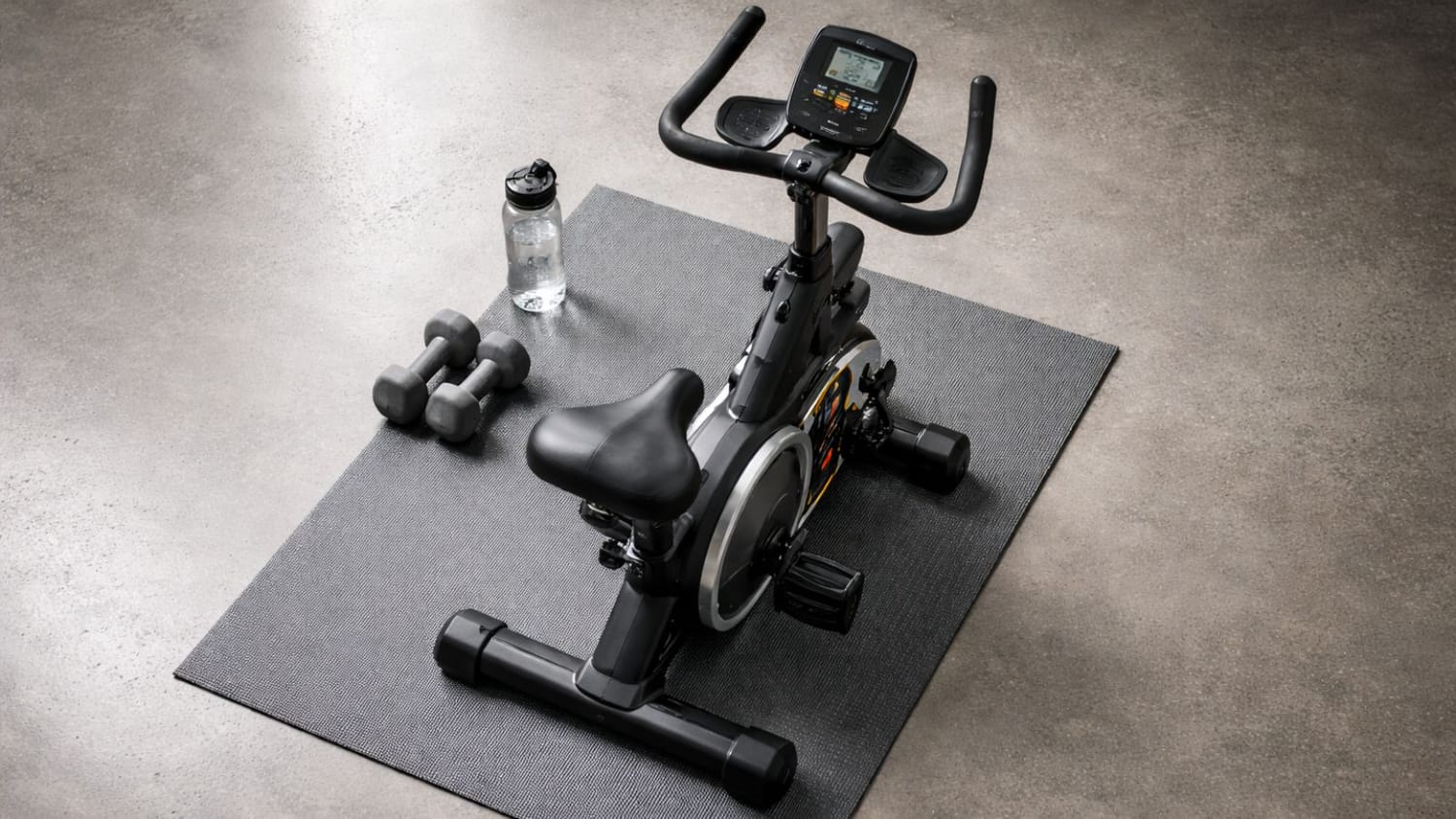
Yes — lay a 3/8" or 1/2" rubber equipment mat under the bike before your first ride. It protects flooring from scuffs and pressure marks, cuts vibration transfer to the unit below, and is easy to remove entirely at move-out.
How much floor space do I actually need?
Plan for the bike's assembled footprint (typically ~40"×20") plus 24" of clearance on each side and 18" behind for safe mounting and dismounting — roughly 50 sq ft total, about the size of a large walk-in closet.
Does a folding exercise bike actually fit under a bed or in a closet?
Most folding uprights don't fully flatten enough for under-bed storage — they fold to a smaller footprint that still needs to stand upright, typically in a closet or against a wall, not slide flat beneath a bed frame. Check the manufacturer's listed folded dimensions (height, width, and depth once collapsed) before assuming it'll disappear completely.
How do I get an exercise bike delivered to a walk-up apartment?
Check the boxed (not assembled) weight before you order — steel-frame magnetic bikes commonly ship 60–90 lbs boxed, which is manageable solo up one or two flights but worth having help for higher. Most listings state assembly is required on delivery, so plan 30–60 minutes and basic tools for setup once it's inside.
Your exercise bike final checklist
Before you buy and before you ride — run through this list. Everything ticked means you're set up for long-term success, not a bike gathering dust in the corner. For a broader look at how exercise bikes fit alongside other renter-friendly gear, our smart and compact home gym setup guide is a useful companion read, and if you're working with a tighter budget, our apartment gym under $500 guide shows how a bike fits into a full setup.
Affiliate links may earn a commission — no extra cost to you.
Sources: [1] Mayo Clinic, "Exercise helps ease arthritis pain and stiffness" — mayoclinic.org. [2] Centers for Disease Control and Prevention, Physical Activity Guidelines for Adults — cdc.gov.