Best Under-Desk Walking Pads for Renters (2026)

Quick Answer
Which compact treadmill is right for you?
Walk while you work (WFH): Get an under-desk walking pad — slim, quiet, slides under furniture, $150–$500.
Walk + jog in a small room: Get a compact folding treadmill — folds upright, up to 8 mph, $400–$900.
Run and train seriously: Get a full folding running treadmill — real speed, real incline, $700–$1,800.
In this guide
At a Glance: Compact Treadmill Comparison
Before we go deep on specs and categories, here's a clean side-by-side of the most popular compact treadmill types. Full product picks are in the Top Picks section below.
✦ Pro Tip: If your primary use case is walking while you work, a walking pad is almost always the better investment. If you want to run or train, a folding running treadmill is worth the extra footprint. Jump to our picks →
Walking Pads vs. Folding Treadmills: What's Actually the Difference?
This is the question every first-time buyer gets wrong — and it matters more than you'd think.
Under-Desk Walking Pads (0.5–4 mph)
Walking pads — sometimes called "flat treadmills" or under-desk treadmills — are purpose-built for one specific use case: slow, sustained movement while you work, study, or watch content. They are not designed for running. They're not trying to be.
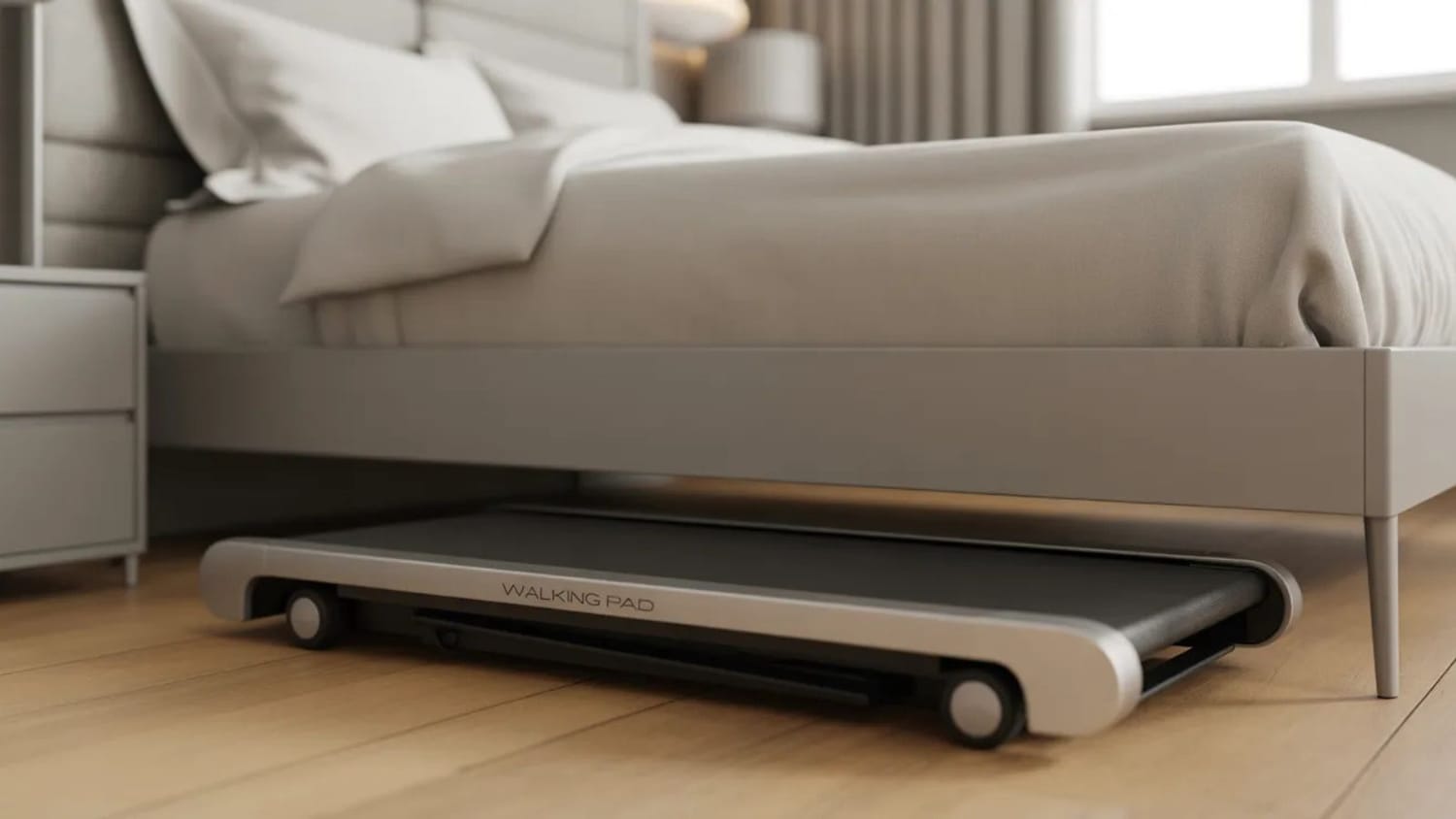
What they are designed for is seamless integration into your daily routine without any behavioral friction. You roll one out from under your desk, step on, and walk at 2–3 mph while you answer emails. When you're done, it slides back under the desk or behind a door.
Key characteristics of walking pads:
- Flat or nearly flat profile: Most fold completely flat (3–5 inches thin) or don't fold at all — they're already slim enough to store upright or slide under furniture.
- No handrail or a detachable one: The open design is what makes them compatible with standing desks. Some models include a foldable handlebar for balance.
- Quiet motors: Most walking pads operate between 40–55 decibels — quieter than a normal conversation, quieter than your HVAC system.
- App-dependent displays: Many modern walking pads skip a physical console entirely and pair with a smartphone app via Bluetooth.
- Weight limits: Typically 220–265 lbs, which is standard for low-speed walking applications.
Best for: Remote workers, light daily movement goals, small apartments, minimalist setups, people who already have a standing desk.
Not ideal for: Runners, people who want incline training, or anyone whose primary cardio goal is calorie burn through intensity.
WFH Wellness
Best cooling towels for small workout spaces — because standing all day has its own recovery demands
Compact Folding Running Treadmills (0.5–10+ mph)
Folding treadmills are the middle-ground heroes of small-space cardio. They offer full running capability — real incline, real speed, real workout — and they still fold up when you're done. Most use a hydraulic fold mechanism that lets you lift the deck upright, reducing the floor footprint by 40–60%. If you're comparing specific models before committing, our roundup of foldable treadmills that actually fit in apartments covers the top five options in detail.
Key characteristics of compact folding treadmills:
- Upright fold design: The deck folds up vertically and often locks in place with a latch or hydraulic assist. When stored, the footprint is roughly the size of a large rolling suitcase standing on its end.
- Variable speed + incline: Folding treadmills support the full spectrum of cardio — brisk walks, jogs, runs, and incline intervals.
- Larger motor: A quality folding treadmill for running should have a minimum of 2.5 CHP. Anything less will overheat under sustained running loads.
- Longer belt deck: Look for a belt length of at least 50 inches if you're over 5'6" and plan to run above 6 mph.
- Heavier build: Typically 70–130 lbs, but most have transport wheels built into the front feet.
Best for: People who want to actually train, runners who need speed + incline, multi-user households.
Not ideal for: Under-desk use, ultra-tight spaces, people whose primary goal is passive walking while working.
Level Up Your Cardio
Compact rowing machines for small spaces — a complete small-space cardio routine that hits every system
Key Buying Factors: What Actually Matters
The fitness equipment marketing world loves big numbers and vague buzzwords. Here's a no-fluff breakdown of the specs that actually affect your daily experience.
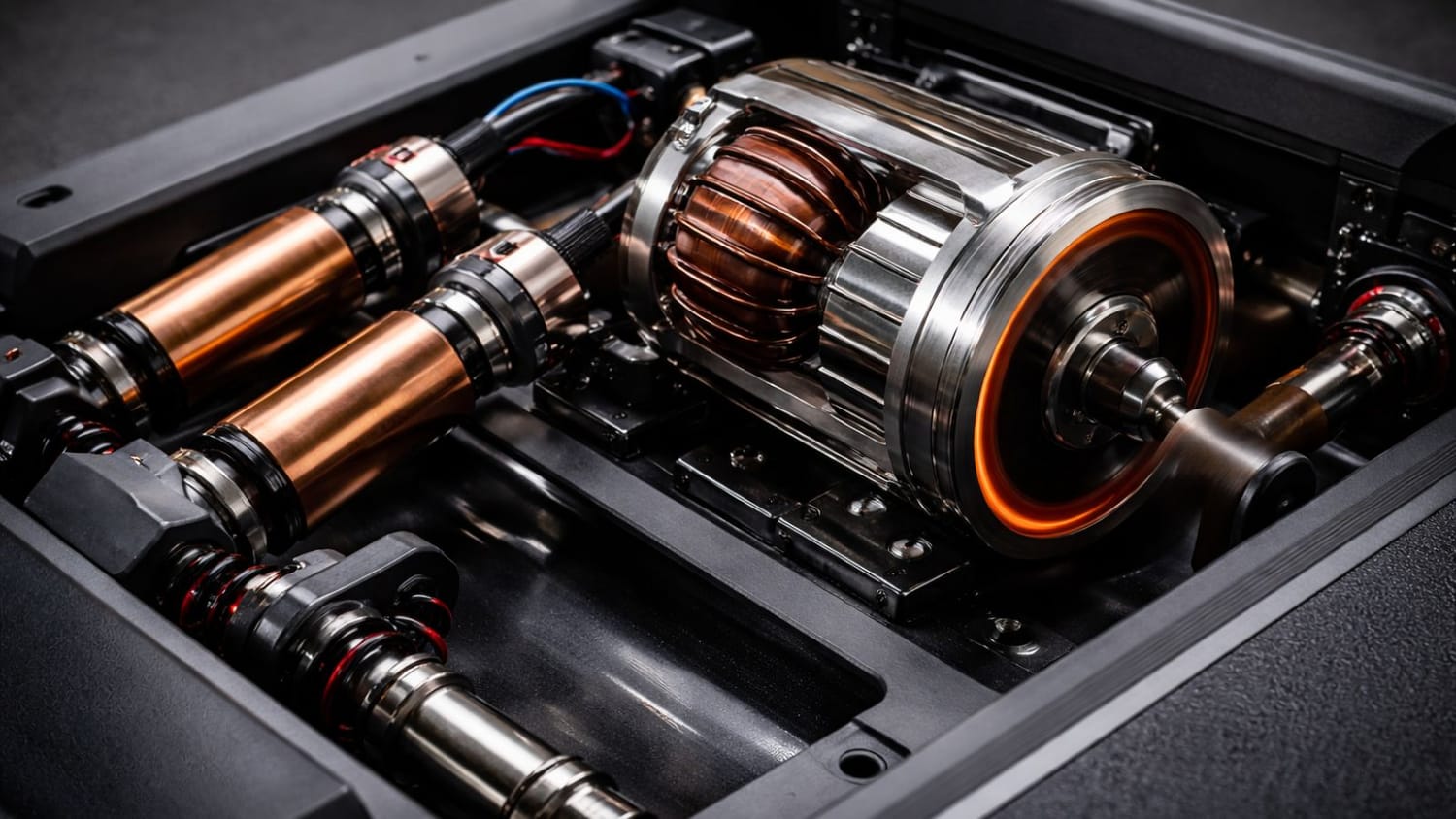
Motor Horsepower (CHP): The Longevity Factor
What you need to look for is CHP — Continuous Horsepower — the amount of power the motor sustains during your entire workout, not just at its peak moment. Peak horsepower (PHP) is a marketing number. CHP is an engineering number.
CHP guide by use case:
✦ What to Avoid: Any treadmill that only lists "peak" horsepower without specifying CHP. This is almost always a budget machine cutting corners on motor quality.
✦ Trusted CHP Brands: NordicTrack, LifeFitness, Sole Fitness, and Horizon Fitness consistently publish accurate CHP ratings. Budget brands often inflate their peak HP numbers by 30–50%.
Noise Levels: Apartment-Friendly Decibels
Treadmill noise comes from three sources: the motor, the belt friction against the deck, and the impact of footfalls. The last one — footfalls — is actually the loudest and hardest to engineer away. If noise is a dealbreaker for your building, our guide to the quietest under-desk and compact treadmills ranks models specifically by apartment-friendliness.
Practical noise reduction tips:
- Treadmill mat: A dense rubber mat (4–6mm thick) placed under the machine absorbs both vibration and impact noise, reducing transmitted noise by 30–40%.
- Time your runs: If your building has quiet hours (typically 10pm–8am), schedule high-intensity runs outside those windows.
- Belt lubrication: A dry, unlubricated belt is significantly louder than a properly maintained one.
- Check the deck material: Treadmills with rubberized or cushioned decks absorb impact better than hard wooden decks.
Storage Dimensions: Folding Flat vs. Folding Upright
"Foldable" is a word that covers a lot of very different physical realities. Before you buy, you need to know how the machine folds, not just that it folds. For a broader look at how a treadmill fits into a well-planned small-space setup, the minimalist home gym design guide for tiny apartments covers layout strategies that work with most compact cardio machines.
Flat-fold (Walking Pads):
The machine lies entirely flat — typically 3–5 inches tall — and slides under furniture. If you have a bed frame with 6+ inches of clearance, a flat-fold walking pad essentially disappears from your space when not in use.
Ideal for under-bed or under-desk storage. Limitation: no running capability.
Upright-fold (Folding Treadmills):
The running deck folds up vertically using a hinge mechanism, usually locking in place with a latch or hydraulic assist. Floor footprint shrinks from roughly 55"×28" to approximately 28"×28" — but it now takes up vertical space (55–65 inches tall).
Ideal for corners and against walls. Limitation: requires ceiling clearance — verify before buying.
✦ Measurements to Take Before You Purchase:
- The space where the machine will live in use
- The space where it will be stored after use
- Ceiling height in the storage area (for upright-fold machines)
- Doorframe widths if you need to move it between rooms
- Elevator dimensions if you're above ground floor
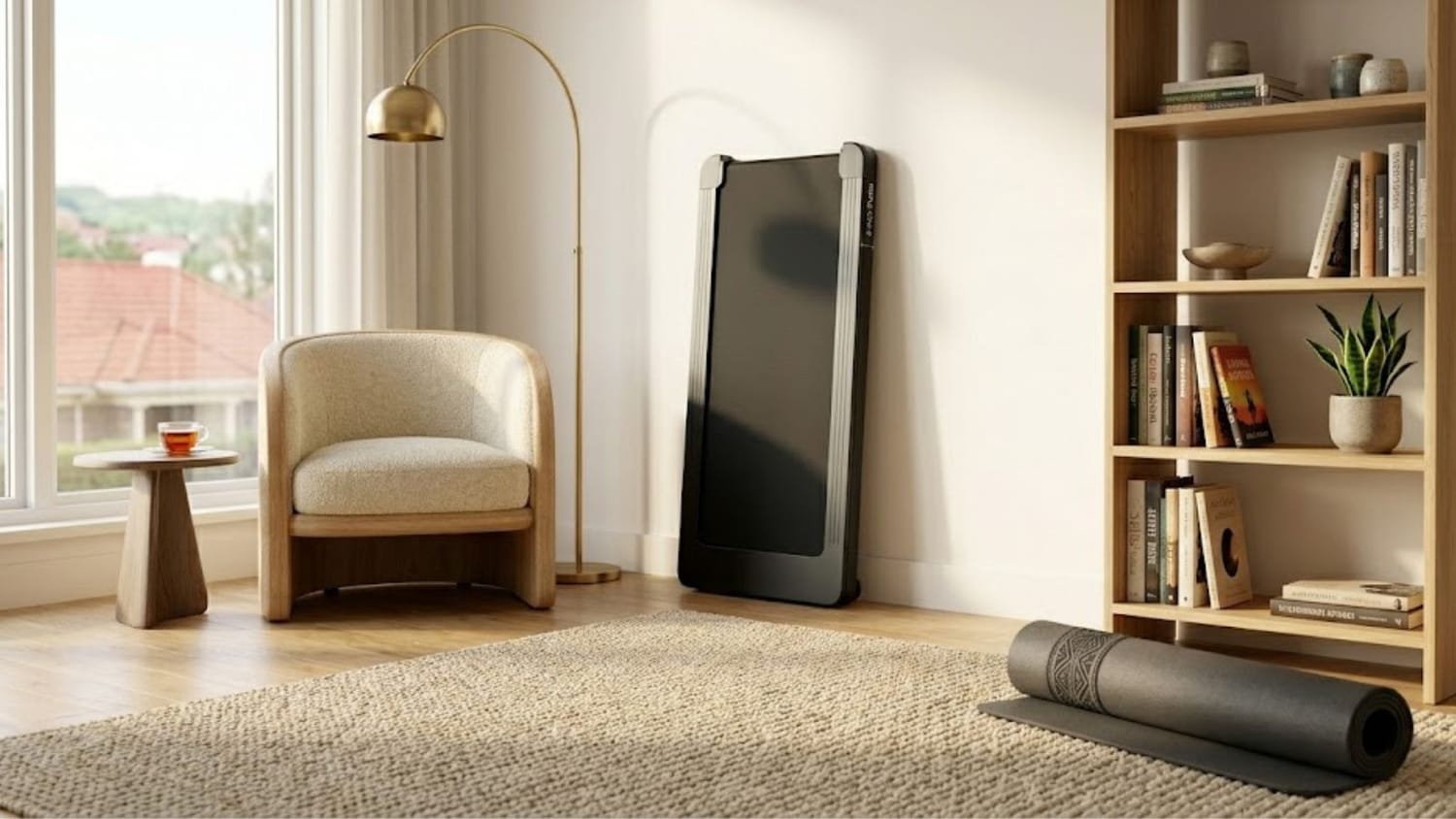
A treadmill that doesn't fit your storage reality isn't a space-saving solution — it's furniture you resent.
Maintenance: Keeping Your Compact Treadmill Running Long-Term
Compact treadmills work hard in small packages. The motors are sized closer to their CHP limits than commercial machines. The belts are shorter and cycle more frequently. Maintenance is the difference between a 3-year machine and a 7-year machine. Two tasks cover 90% of what your machine needs.
Belt Lubrication: The Most Neglected Step
Without lubrication, friction builds, the motor has to work harder to maintain speed, temperatures rise, and both the belt and motor degrade faster.
How often to lubricate:
- Walking pads used daily: Every 3 months or every 40 hours of use, whichever comes first.
- Folding treadmills used 3–5x/week: Every 3–6 months or every 40–50 hours of use.
- Any machine that sounds louder than usual: Lubricate immediately and check belt tension.
Always use 100% silicone lubricant — either liquid or spray. Never use WD-40, petroleum-based oils, or generic spray lubricants. These degrade the belt material and void most warranties.
How to lubricate (step by step):
- Unplug the treadmill completely.
- Loosen the belt slightly using the rear adjustment bolts (usually 1/4 turn counterclockwise on each side).
- Apply a thin, even line of silicone lubricant down the center of the deck, under the belt, from front to back.
- Re-tension the belt.
- Walk slowly on the treadmill for 2–3 minutes at 2 mph to distribute the lubricant evenly.
- Wipe any excess that seeps from the belt edges with a dry cloth.
Belt Alignment: Preventing Drift and Uneven Wear
A belt that drifts to one side during use is both a performance issue and a safety issue. Left uncorrected, it creates uneven wear patterns that shorten belt life significantly.
How to correct drift:
- Belt drifts right: Turn the right adjustment bolt clockwise 1/4 turn. Wait 1 minute of walking, reassess.
- Belt drifts left: Turn the left adjustment bolt clockwise 1/4 turn. Wait, reassess.
- Make small adjustments: 1/4 turn at a time is the rule. Over-tensioning is a common mistake.
✦ Belt Tension Check: Proper tension means you can lift the belt from the side approximately 2–3 inches from the deck surface. Less than 2 inches = too tight. More than 3 inches = too loose.
✦ For Compact Machines: Inspect the belt surface every 6 months for glazing (a shiny, hardened appearance). Most compact treadmill belts last 3–5 years with proper lubrication. Replacement belts typically cost $40–$120.
Quick Maintenance Checklist:
Frequently Asked Questions
Can I run on a walking pad?
The short answer: technically some people do — but you shouldn't, and most manufacturers explicitly advise against it.
Walking pads are engineered for speeds between 0.5 and 4 mph. Running at 5–6 mph generates significantly higher impact forces and heat, translating to motor strain, faster belt wear, potential overheating shutdowns, and a voided warranty.
If you want to jog or run, invest in a compact folding treadmill with at least a 2.5 CHP motor and a deck length of 50 inches or more.
The one exception: A few newer "2-in-1" walking pads are specifically designed for speeds up to 6 mph with a detachable handlebar. If the manufacturer explicitly rates the machine for running and provides a running-speed warranty, that's a legitimate product.
Do compact treadmills require assembly?
Walking pads: Most arrive largely pre-assembled. The standard unboxing experience is: remove from box, attach handlebar if included (4–6 bolts, 10 minutes), plug in, and walk.
Compact folding treadmills: Expect a moderate assembly process — typically 20–45 minutes for one person. You'll attach the upright posts, console, and handlebars using provided tools.
What to watch for:
- Console wiring: Most folding treadmill consoles connect via a data cable routed through the upright post. This step is commonly missed and causes the display to appear dead on first use.
- Safety key: Always test the magnetic safety key before your first run. Pull it out — the machine should stop immediately.
- Leveling feet: Most treadmills have adjustable leveling feet. Five minutes spent leveling the machine prevents belt drift and uneven wear.
How do I move a compact treadmill by myself?
For walking pads (45–65 lbs): Most are light enough to carry alone, though awkward. Use the built-in carry handle to drag rather than fully lift. On carpet, a furniture slider under one end makes repositioning effortless.
For folding treadmills (70–130 lbs): These are too heavy to carry alone safely — and you don't need to. Here's the proper technique:
- Fold the deck up and lock it in the upright position.
- Use the transport wheels. Every quality folding treadmill has two small wheels built into the front base feet. Tilt the machine back slightly until it balances on those wheels.
- Roll it. With the deck folded and weight on the transport wheels, a 100-lb treadmill moves with roughly the effort of a rolling suitcase.
- Navigate doorframes: A standard 32-inch interior door is the minimum you'll need.
If you ever need to move the machine down stairs alone — don't. Ask for help on this one.
Our Top Picks for 2026
Not sure which machine is right for you? Match your use case below. Every pick was selected for real-world apartment compatibility — not just spec-sheet performance. If you're building out a full cardio setup, our apartment gym ideas guide shows how treadmills, rowers, and other compact cardio equipment can coexist in a single small-space layout.
🏆 Best for WFH Walkers
WalkingPad Z1 Folding Under-Desk Treadmill
Ultra-slim profile slides under a standing desk or bed frame. Whisper-quiet motor (40–55 dB) runs on Bluetooth app control — no console bulk. The cleanest walking-only solution on the market at this price point. For a detailed look at how it stacks up against similar models, see our WalkingPad A1 Pro vs C2 comparison.
✓ Slides under a standing desk ✓ 40–55 dB whisper motor ✓ App-controlled via Bluetooth ✓ Minimal assembly
From $329
🏆 Best Compact Folding Treadmill
Horizon Fitness T101 Folding Treadmill
The strongest value-to-footprint ratio in the folding treadmill category. A properly rated 2.5 CHP motor, 0–12% automatic incline, and a hydraulic fold that locks upright in under 10 seconds. Built for mixed use — walk, jog, or run without compromise.
✓ 2.5 CHP rated motor ✓ 0–12% auto incline ✓ Folds upright in under 10 seconds ✓ Bluetooth audio
From $889
🏆 Best Full Running Treadmill
NordicTrack T Series 10 Treadmill
When you need to actually run — and run hard — this is the pick. A 3.5 CHP motor handles sustained high-speed intervals without overheating, and the 0–15% automatic incline range covers every training protocol. The iFit-connected touchscreen turns a small room into a full training environment.
✓ 3.5 CHP motor ✓ 0–15% auto incline ✓ Touchscreen console with iFit ✓ Folds upright for storage
From $699
Affiliate Disclosure: MiniHomeGym.com participates in affiliate programs. If you purchase through our links, we may earn a small commission at no extra cost to you. We only recommend equipment we've researched or tested.
The Bottom Line: Small Space, Big Cardio Energy
The compact treadmill market has matured into something genuinely impressive. You no longer have to choose between living in your space and training in it. Walking pads have made consistent daily movement accessible to anyone with a desk and six square feet. Folding treadmills have made real cardio training possible in rooms that were never designed for it.
The key is matching the machine to your actual use case — not the aspirational one. Be honest about whether you'll walk or run. Measure your space before you browse. Prioritize CHP and noise level over flashy display features. And maintain the machine consistently, because a well-lubricated compact treadmill will outlast its cheap competitors by years.
Your apartment is small. Your fitness goals don't have to be.
Explore More on MiniHomeGym.com
→ Compact rowing machines for small spaces — Full-body cardio in a surprisingly compact footprint
→ Best cooling towels for small workout spaces — Because working out is only half the equation
I test every piece of gear in my actual apartment — noise, footprint, deposit-safety, and real-world durability. No sponsored samples, no showroom conditions. If I wouldn't buy it for my own 650 sq ft studio, I don't recommend it.
Build Your Dream Home Gym—Without Wasting Space or Money
Join the MiniHomeGym Newsletter for expert reviews, space-saving fitness tips, apartment-friendly workout ideas, practical buying guides, and exclusive deals to help you choose the best compact fitness equipment with confidence.