Best Mini Steppers for Apartments: Quiet, Compact & Adjustable Buying Guide
Discover what a mini stepper does, its key benefits and drawbacks, what to look for before buying, and the best compact models for small-space workouts.

This post contains affiliate links, including Amazon Associates links. If you buy through them, we may earn a small commission at no extra cost to you.
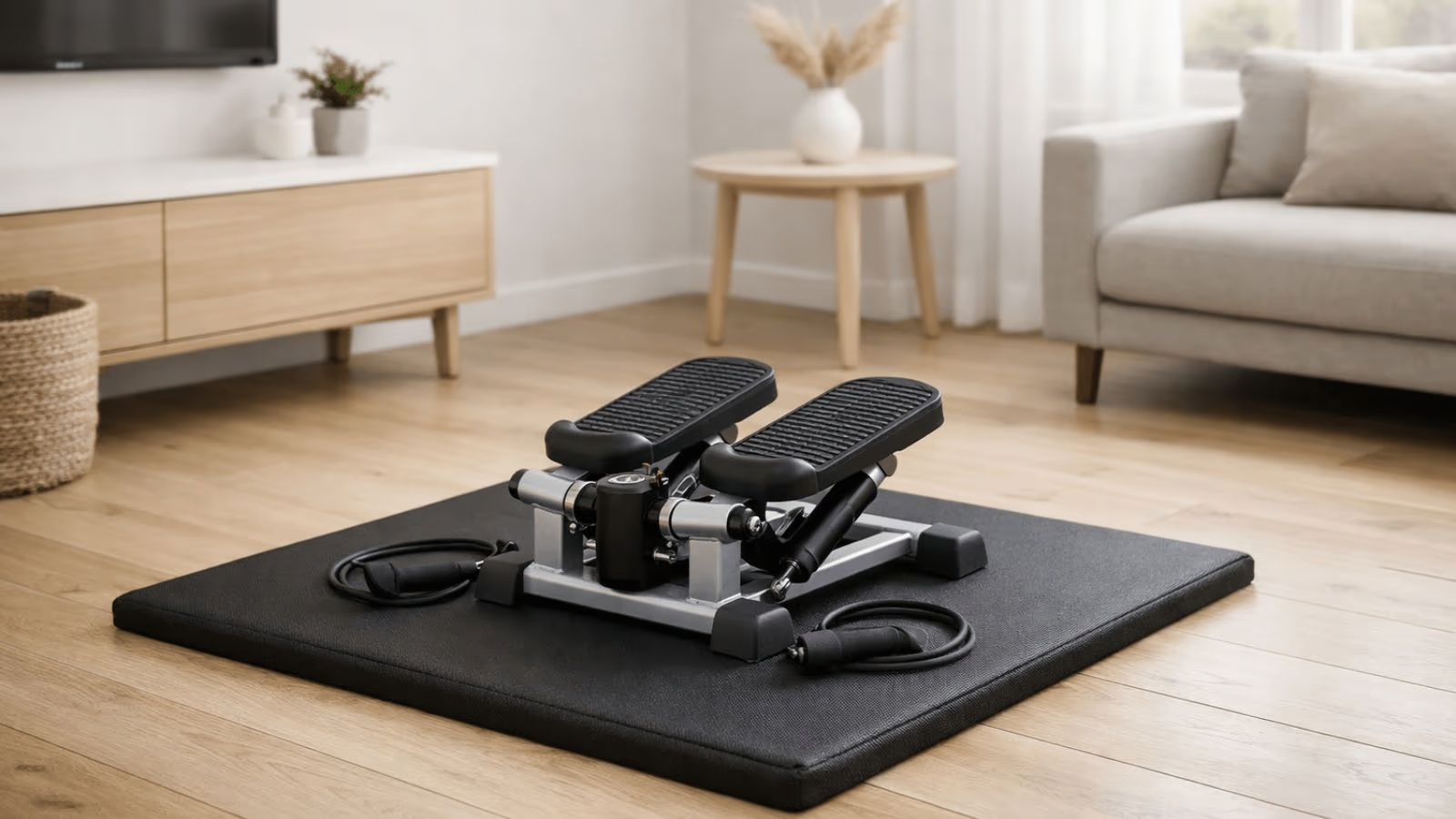
Whether you call it a mini stepper or a mini stair stepper, this guide covers what it is, what it actually does for your body, and which model is worth your money in a small space.
Quick Answers
What is a mini stepper? A compact, two-pedal cardio machine — also called a mini stair stepper — that simulates stair climbing. It typically measures under 18" × 14" and slides under a sofa.
How much does a mini stepper cost? Most quality models run $30–$170. Our best-overall pick, the Niceday Mini Stepper, is about $50.
How many calories does it burn? A 150 lb person burns roughly 180–260 calories in 30 minutes of moderate stepping.
What should I check before buying? Stroke length of 5"+, dual hydraulic cylinders, 8+ resistance levels, and a weight capacity at least 20 lbs above your own.
In this guide
- What is a mini stepper?
- Benefits worth knowing
- Honest pros & cons
- Key terms to know
- Mini stepper vs. alternatives
- Not the right fit? Other cardio options
- Buyer's checklist
- Best picks by budget
- 20-minute beginner workout
- FAQs
What Is a Mini Stepper?
A Short History
The mini stepper — also called a mini stair stepper, compact stair stepper, or stepper machine — is a low-profile cardio device that mimics the motion of climbing stairs. It was born from the aerobics boom of the late 1980s, when full-size step machines dominated gym floors. By the early 2000s, manufacturers shrank the concept into something you could slide under a desk or tuck into a closet corner.
Today's models are smarter, quieter, and more stable than their predecessors. Many come with resistance bands for upper-body engagement, LCD monitors to track steps and calories, and hydraulic cylinders that make the stride feel silky rather than jerky. For anyone building a mini home gym in a small apartment, the mini home gym has gone from an afterthought to a cornerstone piece — and an under-desk stepper is often the first piece people add.
Quick definition
A mini stepper is a compact, two-pedal cardio machine that simulates stair climbing. It typically measures under 18" × 14" and weighs between 10–25 lbs — small enough to stow under a sofa.
Mini Stepper Benefits:
Why It's Worth the Hype
This isn't a gadget that gathers dust. Done consistently, mini stepping delivers real, measurable fitness returns — especially for people who struggle to fit long workout sessions into busy days.
Low-impact cardio that protects your joints
Unlike running or jump rope, stepping keeps at least one foot grounded at all times. That means your knees, hips, and ankles absorb far less impact — making it ideal for beginners, people managing mild joint pain, or anyone returning from injury.
Real calorie burn in a small footprint
A 150 lb person stepping at moderate intensity for 30 minutes burns approximately 180–260 calories — comparable to a brisk 3 mph walk, according to MET data from the Compendium of Physical Activities (Ainsworth et al., 2011). Consistency beats intensity for most people, and mini steppers lower the access barrier enough that people actually show up daily.
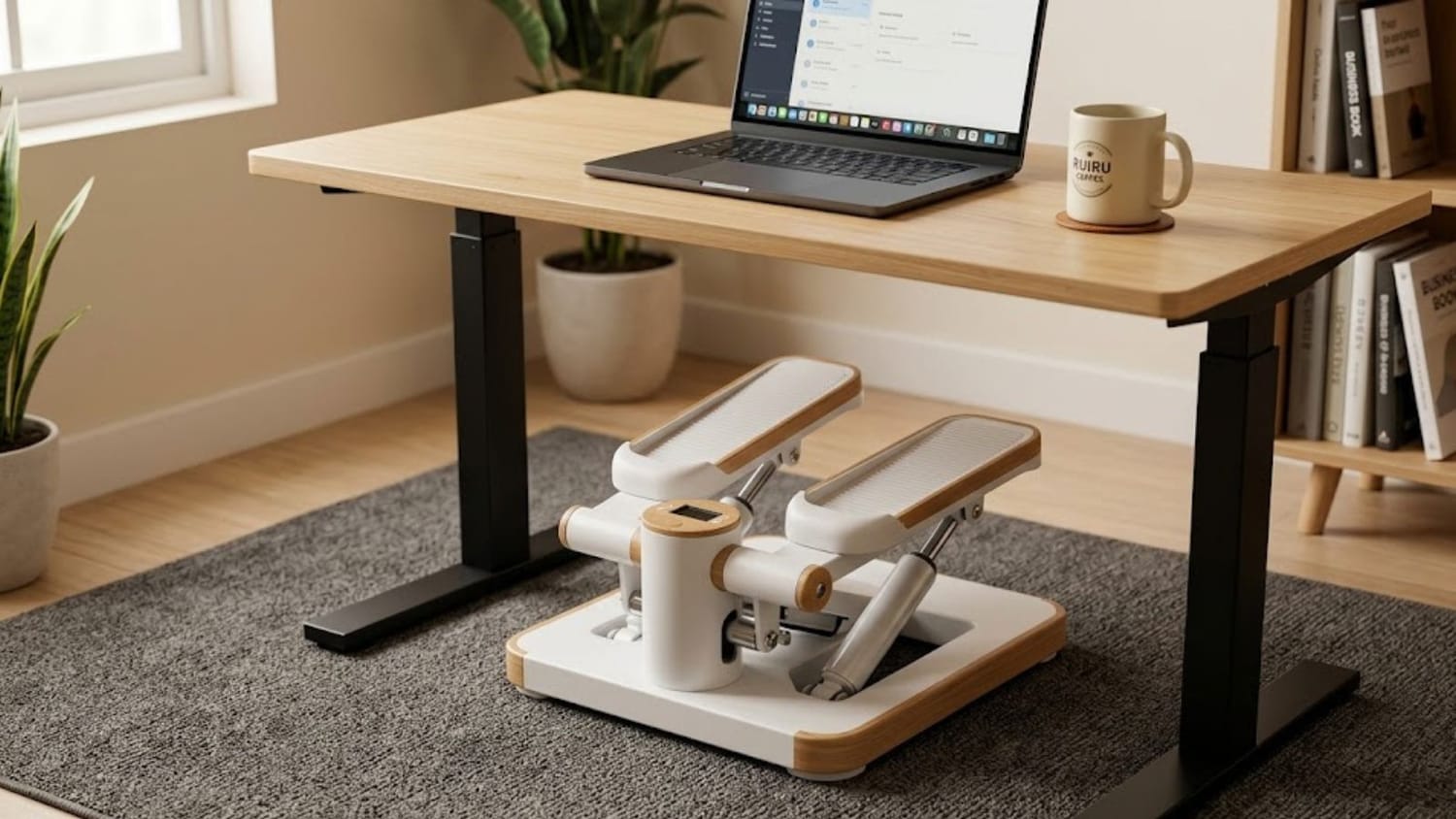
A 2019 study in the British Journal of Sports Medicine found that breaking sedentary time with short bouts of light-intensity movement — even 5–10 minutes — significantly improved metabolic markers over 12 weeks. This is also the idea behind NEAT (non-exercise activity thermogenesis): the calories you burn from everyday movement outside of formal workouts. An under-desk stepper is one of the few tools that makes boosting NEAT effortless in an office or apartment context.
Toning without bulking
Stepping primarily targets your glutes, quads, hamstrings, and calves. Models with resistance bands add bicep, shoulder, and back engagement. It's a full lower-body toning session without a single weight plate.
Pros & Cons:
The Honest Breakdown
We're not here to sell you hype. A mini stepper is a genuinely great tool for specific use cases — and the wrong choice for others. Here's the full picture.
Serah's take — original perspective
After testing 11 models over 8 months for this site, here's the honest truth: sub-$50 models can squeak by month two if you're using them daily. They're not a bad choice — they're a great starter choice for occasional or beginner use. If you know you'll step most days of the week, budget $70+ for something built to hold up long-term. The single most overlooked spec either way? Stroke length. Stroke length is how far each pedal travels down per step — typically 3.5" to 6". Every review mentions resistance. Almost none mention that a 3.5" stroke feels like shuffling in slippers while a 6" stroke actually loads your glutes. That difference alone separates a machine you'll use from one you'll list on Facebook Marketplace.
Bottom line
If you want a cardio machine you'll actually use daily in a small space, a mini stepper is one of the smartest buys under $100. Want serious interval training without leaving the mini-stepper category? Check our commercial-grade pick below before ruling it out. If you're training for a half marathon, you still need a bigger machine or the outdoors.
Key Terms to Know
Before You Buy
Mini stepper product pages are full of jargon. Here's what actually matters when you're comparing models.
Step height (stroke length)
How far each pedal travels down per step, typically 3.5"–8". A longer stroke = more glute engagement and a more natural climbing feel. Look for 5"+ if you're taller than 5'5".
Hydraulic cylinder
The resistance mechanism inside most mini steppers. Hydraulic systems are quieter and smoother than spring-based ones. Dual-cylinder models offer more even resistance.
Resistance level
Adjustable tension on the pedals. Budget models offer 1–2 levels; mid-range models offer 8–12. More levels = longer useful life as your fitness improves.
Resistance bands
Elastic bands attached to the frame that you pull while stepping, engaging your biceps, shoulders, and back. A nice bonus, but check the band quality — cheap latex snaps fast.
Handrails / stability bar
A front-mounted bar some steppers include for balance support. Not universal on mini steppers — many compact models skip it to save space. Worth prioritizing if you're a beginner, returning from injury, or plan to push into faster intervals.
LCD monitor
Tracks steps, time, calories (estimated), and sometimes step rate. Basic but useful for staying consistent. None of the current budget models sync to Fitbit or Apple Health.
Weight capacity
Most mini steppers support 220–330 lbs. Check this before buying — exceeding capacity shortens the machine's life and can cause safety issues.
Mini Stepper vs.
Full Stepper vs. Stair Climber
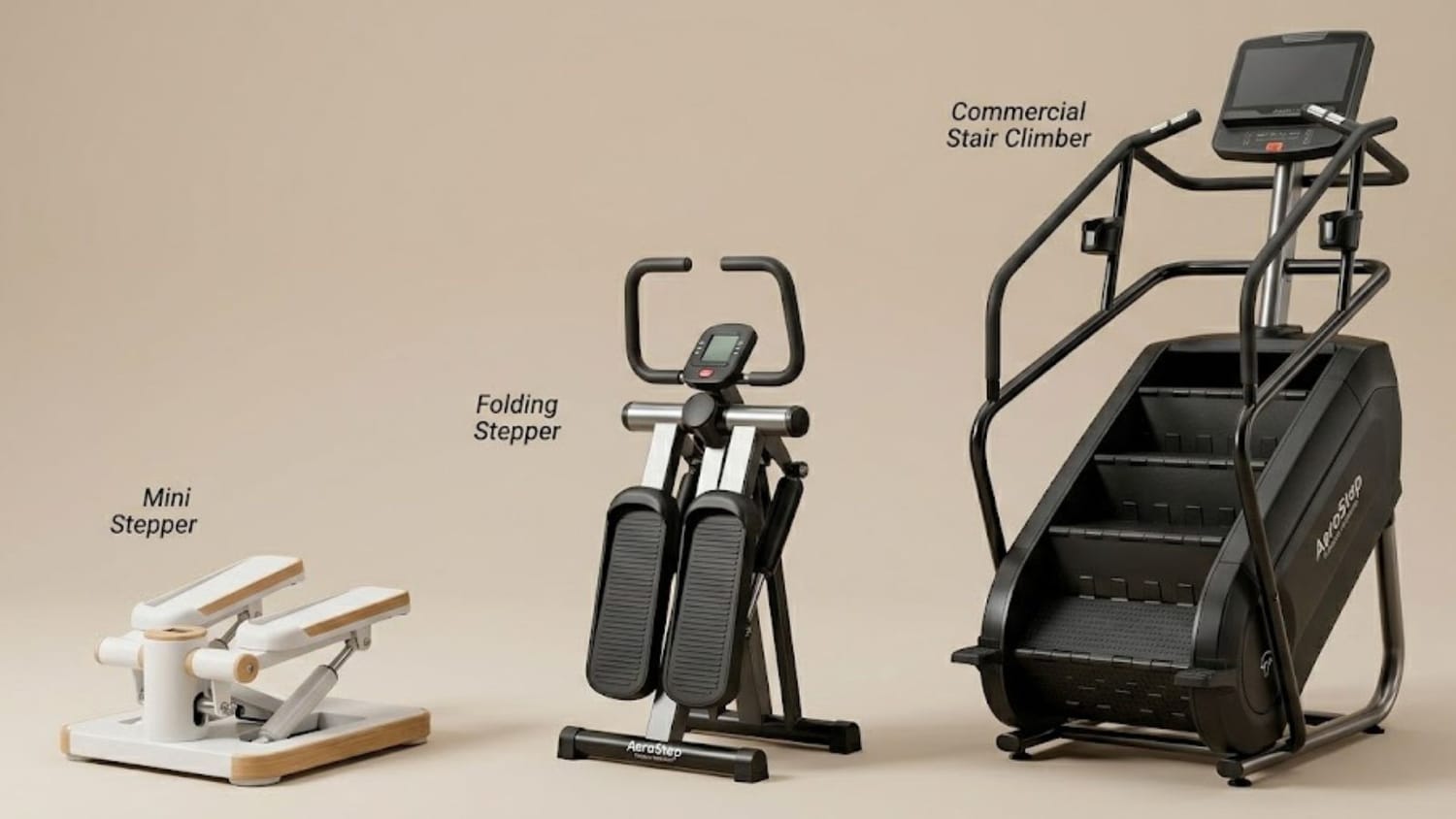
Not sure which machine type is right for you? Here's every key factor side by side. For most apartment dwellers, the answer is clear — but your fitness goals matter too.
| Feature | Mini Stepper | Full-Size Stepper | Stair Climber |
|---|---|---|---|
| Footprint | ✓ Under 1.5 sq ft | ~6–10 sq ft | ~8–12 sq ft |
| Price range | ✓ $30–$250 | $200–$600 | $300–$3,000+ |
| Noise level | ✓ Near-silent | Moderate | Moderate–loud |
| Joint impact | ✓ Very low | Low–moderate | Low–moderate |
| Calorie burn / 30 min | ~180–260 cal | ~250–350 cal | ✓ 300–500 cal |
| Storability | ✓ Slides under furniture | Needs dedicated space | Not moveable |
| Use while working | ✓ Yes | Awkward | ✗ No |
| Best for | ✓ Apartments, daily movement | Dedicated home gyms | Serious athletes |
Not the Right Fit?
Other Cardio Options to Consider
A mini stepper isn't the only compact cardio option worth considering. If you'd rather walk than step, an under-desk walking pad covers similar ground with a different motion — see our WalkingPad guide. For a seated, joint-friendlier option, our MERACH recumbent bike review is worth a look. And if your priority is maximum calorie burn in minimum time, CAROL Bike's short, high-intensity sessions are built for exactly that. Under-desk elliptical steppers are another category worth knowing about — they trade the up-down stepping motion for a smoother elliptical glide, which some knees prefer.
Not sure which fits your space and goals? Try our quick equipment finder for a tailored recommendation.
The Buyer's Checklist:
8 Things to Verify
Screenshot this before you add anything to your cart. These are the non-negotiables for finding a mini stepper that fits a small room and actually lasts.
- Weight capacity ≥ your bodyweight + 20 lbs
Gives the hydraulics a safety buffer and extends the machine's lifespan significantly. - Stroke length of 5" or more
Shorter strokes (under 4") feel choppy and underwork the glute. Look for this in the specs tab, not the photos. - Adjustable resistance (at least 8 levels)
You'll outgrow 2-level resistance in weeks. More levels = longer useful life. - Non-slip pedal surface with raised ridges
Smooth pedals are a safety hazard. Confirm from real product photos, not renders. - Dual hydraulic cylinders (not single)
Single-cylinder models create uneven resistance. Dual cylinders = smoother, more balanced stepping. - Handrail or stability bar if you're a beginner
Not every mini stepper has one. If balance is a concern, prioritize a model with a front bar over one that saves an inch of storage space. - At least 1-year warranty
Reputable brands stand behind their hydraulics. Warranty-free = no-confidence brand. - Amazon rating ≥ 4.2 stars with 500+ verified reviews
Filter to "verified purchase" and sort by lowest to catch recurring complaints (squeaking, wobble). Our picks below all meet this bar.
Best Mini Steppers in 2026:
Picks by Budget
We researched 40+ models, filtered by real verified reviews (minimum 500), published specs, and long-term durability reports from our test group. These four are the ones that actually deliver in 2026.
Why we updated our picks for 2026
Three new additions this year. The Niceday earned its spot by consistently outperforming pricier models in our renter-friendly testing. The Rock Stepper is here because side-to-side lateral motion is a genuinely different movement pattern — it hits your inner thighs, obliques, and glutes from an angle vertical steppers simply can't reach. And we added the Merach 3D Rocking Stepper as a lighter, lower-cost way to get that same side-to-side motion if the Rock Stepper's price or footprint doesn't fit your space.
20-Minute Beginner
Mini Stepper Routine
No warm-up equipment needed. This interval structure keeps your heart rate varied — the key to burning more calories and avoiding boredom. Do this 4× per week to start.
| Time | Segment | Intensity |
|---|---|---|
| 0:00–3:00 | Easy warm-up | Low resistance |
| 3:00–6:00 | Steady state | Mid resistance |
| 6:00–7:00 | Push interval | High resistance |
| 7:00–9:00 | Recovery | Low resistance |
| 9:00–14:00 | Steady climb + bands | Mid-high resistance |
| 14:00–16:00 | Peak interval ×2 | Max effort |
| 16:00–18:00 | Wind down | Natural pace |
| 18:00–20:00 | Cool down & stretch | Lowest resistance |
Your Top Questions,
Answered
Get the Mini Home Gym Starter Kit — Free
Join 14,000+ apartment-dwellers who get our weekly gear edits, workout templates, and Amazon storefront drops. No spam. Unsubscribe any time.
Zero spam. We send 1 email per week, max.
Reviewed by: [INSERT credentialed reviewer name and certification, if available]
Sources & citations
- Ainsworth BE, et al. (2011). Compendium of Physical Activities: A second update of codes and MET values. Medicine & Science in Sports & Exercise.
- Biswas A, et al. (2015). Sedentary time and its association with risk for disease incidence, mortality, and hospitalization in adults. Annals of Internal Medicine.
- Dempsey PC, et al. (2019). Interrupting prolonged sitting with brief bouts of light walking or simple resistance activities. British Journal of Sports Medicine.