Pregnancy Workout Program You Can Do at Home (2026)
Quick Answer
The best pregnancy workout program for home is one that is trimester-safe, guided by certified professionals, and designed for small spaces with minimal equipment. App-based programs with structured weekly plans and expert support consistently outperform generic PDFs — they remove the guesswork, adapt as your body changes, and dramatically reduce the risk of doing something unsafe.
Whether you are eight weeks along and not sure where to start, or 28 weeks in and wondering if what you have been doing is still safe — this guide breaks down the best pregnancy workout programs you can do at home, why they work, and exactly how to choose the right one for your trimester, your space, and your body.
🥇 Best Overall Pregnancy Workout Program: Fitnow Pregnancy Program
Best for: First-time moms who want structure, safety, and support without stepping foot in a gym.
If you only read one section of this guide, make it this one. The Fitnow Pregnancy Program is the top pick because it solves the biggest problem most pregnant women face when working out at home: not knowing if what they are doing is actually safe.
Most workout content online — YouTube videos, free PDFs, Instagram routines — was not designed with pregnancy in mind. Moves that are perfectly fine at 10 weeks can be problematic at 28 weeks. Fitnow eliminates that risk entirely by structuring every workout around your trimester.
What Makes Fitnow Different
- Trimester-based progression: The program automatically evolves with your pregnancy. First trimester focuses on foundational strength and breath work. Second trimester shifts to mobility and low-impact cardio. Third trimester prioritises pelvic floor, posture, and birth prep movements.
- Guided workouts with real coaching: Instead of reading a PDF and guessing whether your form is right, you follow along with certified prenatal fitness instructors — critical when your centre of gravity is shifting week by week.
- No gym required: Every workout is designed for a standard living room or small apartment. Most sessions need nothing more than a yoga mat and a resistance band.
- Expert support: The app includes access to certified coaches who can answer your specific questions — a feature no PDF can offer.
- Built-in safety filters: Exercises that are not recommended during pregnancy — like heavy supine work after the first trimester — are either modified or removed automatically based on your stage.
Why it converts hesitant moms: The number-one objection first-time moms have is "Is this safe?" Fitnow answers that before you even press play. The program is built on the premise that movement during pregnancy is healthy — but only when it's the right movement at the right time. That reassurance is built into every screen, every session, and every coach interaction.
🥈 Alternative Pregnancy Workout Programs Worth Considering
Every pregnant woman is different. Here are two solid alternatives depending on your specific needs.
1. MommaStrong — Best for Pelvic Floor Focus
MommaStrong is a subscription-based platform with a strong emphasis on core and pelvic floor work — critical areas that often get neglected during pregnancy. Sessions are short (15–20 minutes), making them realistic for exhausted first-trimester moms. The downside: the interface is less polished than Fitnow and the trimester progression is less structured.
- Best for: Women with a history of pelvic floor issues or diastasis recti concerns
- Equipment needed: Minimal — mat and small ball
- Weakness: Less coaching interaction, heavier self-guidance required
2. Expecting and Empowered — Best for Strength-Focused Moms
Created by two sisters — one a physical therapist, one a registered nurse — Expecting and Empowered offers trimester-specific guides that lean toward strength training. If you were lifting weights pre-pregnancy and want to continue safely, this program bridges that gap well. However, it is guide-based rather than app-based, which means more self-direction.
- Best for: Previously active women who want to maintain strength
- Equipment needed: Dumbbells, resistance bands
- Weakness: PDF-heavy format, less adaptive than a full app
🧠 How to Choose a Pregnancy Workout Program: 5 Criteria That Matter
The fitness industry is flooded with prenatal content that looks credible but was never designed for your specific situation. Here is what to actually evaluate before buying or subscribing.
1. Safety Certification
The coach or program creator should hold a prenatal fitness certification — look for credentials from NASM, ACE, or programs aligned with ACOG guidelines. Avoid programs where the only credential is "I worked out through my own pregnancy."
2. Trimester Progression
Your body at week 8 is fundamentally different from your body at week 32. A quality program acknowledges this and adapts accordingly. Static programs that offer one generic "pregnancy workout" are a red flag. You need progression — in intensity, in modification, and in focus areas.
3. Equipment Requirements
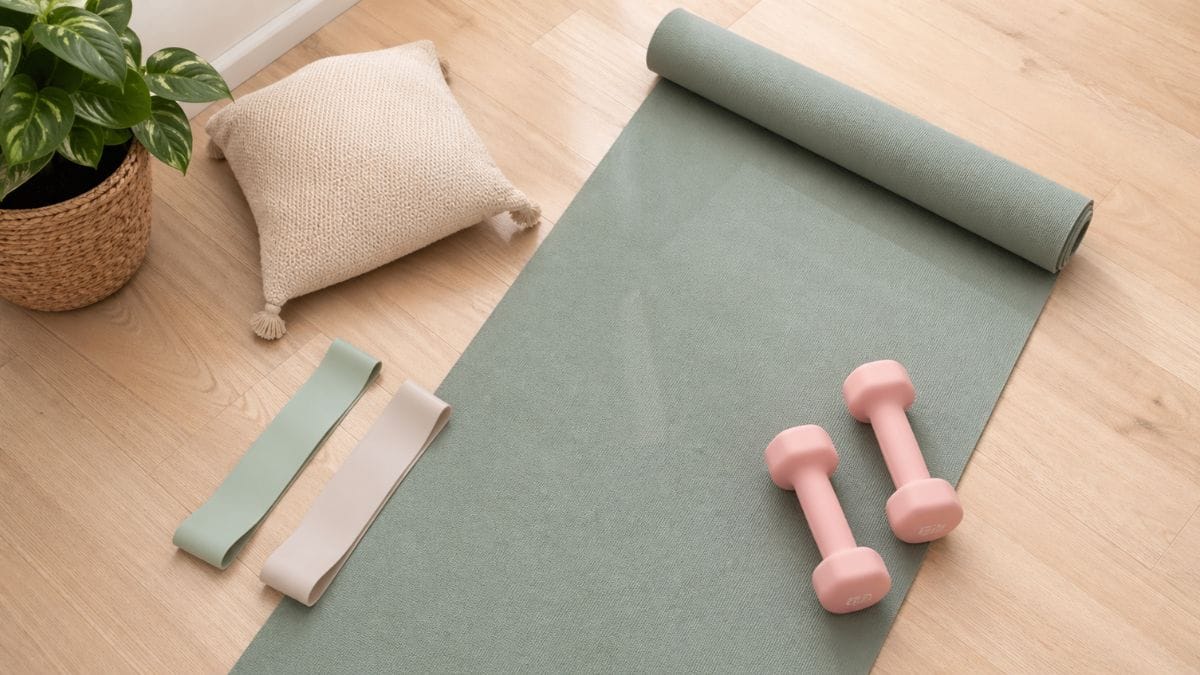
For home workouts — especially in small apartments — equipment-heavy programs are impractical. The best programs for home use require: a yoga or exercise mat, one set of light-to-medium [resistance bands for compact home workouts](https://www.minihomegym.com/best-resistance-band-sets), and optionally a set of light dumbbells (2–5 kg). If a program requires a cable machine or barbell, it is not designed for home use.
4. Coaching vs. Self-Guided
Self-guided plans put the burden of correct form, pacing, and modification entirely on you. For a first-time mom, that is a significant amount of pressure — especially when your body is changing in ways you have never experienced. Guided programs with instructor follow-along videos substantially reduce both the error rate and the anxiety.
5. Community and Support Access
Pregnancy can be isolating. Programs that include a community component — whether a private group, in-app messaging, or live Q&A — add a layer of accountability and emotional support that directly improves adherence. You are more likely to stick with something when other people are doing it alongside you.
🏠 Can You Work Out in a Small Apartment While Pregnant?
Yes — and in many ways, home workouts are better for pregnant women than gym environments. Here is how to make a small space work for you.
Space Requirements
You need approximately 2m × 1.5m of clear floor space — roughly the size of a yoga mat with a little room around it. That is achievable in almost any apartment. Move your coffee table to the side, roll out your mat, and you have a functional workout space. If you want a more structured approach to setting up your space, our full guide on how to design a compact home gym for small spaces walks through layouts, flooring, and storage solutions that work room by room.
For more creative setup ideas that work whether you're pregnant, postpartum, or just short on square footage, see our roundup of apartment gym ideas. If you want to go further and turn a spare corner into something that feels intentional, our [minimalist home gym design guide for tiny apartments](https://www.minihomegym.com/minimalist-home-gym-design-for-tiny-apartments-2026) covers exactly that.
Noise Considerations
If you have downstairs neighbours or paper-thin walls, high-impact cardio is both uncomfortable during pregnancy and potentially problematic for your living situation. The good news: the best prenatal workout programs are already low-impact by design. Jumping jacks and plyometrics are replaced with step touches, bodyweight squats, and banded lateral walks — quiet, effective, and easy on your joints.
Low-Impact Movement: What It Looks Like
- Bodyweight squats and sumo squats
- Resistance band glute bridges and clamshells
- Modified push-ups (wall or incline)
- Seated core activation and diaphragmatic breathing
- Standing prenatal yoga flows
- Side-lying hip and glute work (especially in the third trimester)
- For women who want a low-impact cardio option beyond walking, a compact stationary bike can work well in the second trimester — see our roundup of exercise bikes for apartments to find one that fits your space.
Minimal Equipment Setup for a Small Apartment
If you want to expand beyond these basics without overspending, our guide to the best compact home gym equipment under $200 covers everything worth buying — and what to skip.
⚖️ App vs. PDF Pregnancy Workout Plans: Which Is Actually Better?
This is worth answering honestly because both formats exist at very different price points — and the difference matters more during pregnancy than at any other time.
The bottom line: PDFs are fine if you are already a certified fitness professional who understands prenatal contraindications. For everyone else — especially first-time moms — the guided, adaptive nature of an app-based program is worth every extra dollar.
❓ Frequently Asked Questions
Is it safe to work out during pregnancy at home?
Yes — ACOG recommends at least 150 minutes of moderate-intensity exercise per week during an uncomplicated pregnancy. Home workouts are safe provided they are prenatal-appropriate, low-impact, and guided by certified professionals. Always consult your OB or midwife before starting any new program.
Which trimester can I start a pregnancy workout program?
You can start in any trimester — including the first, assuming you have medical clearance. Starting earlier is generally better because it allows you to build a habit before fatigue peaks. Trimester-specific programs like Fitnow adjust intensity and movement type based on exactly where you are, so it is never too late to begin.
Do I need equipment to do pregnancy workouts at home?
No — most high-quality prenatal home programs are designed to work with just a yoga mat and your bodyweight. Adding one or two light resistance bands (under $15 total) opens up a wider range of exercises, particularly for glutes and upper body. Heavy equipment is unnecessary and often counterproductive for prenatal training.
How often should I train during pregnancy?
ACOG recommends 150 minutes of moderate activity per week — approximately 3–5 sessions of 30 minutes each. Most structured prenatal programs are built around 3–4 sessions per week with rest days built in. On high-fatigue days, a 15-minute gentle yoga session still counts.
What exercises should I avoid during pregnancy?
After the first trimester, avoid flat supine exercises, high-impact jumping, heavy contact sports, hot yoga, and any activity with a high fall risk. Also avoid traditional sit-ups and crunches, which can worsen diastasis recti. A good prenatal program will automatically exclude these — another reason to choose guided over self-directed.
🧠 Final Verdict: Who Should Buy a Pregnancy Workout Program?
Let's be direct about who this is — and is not — for.
Buy a guided pregnancy workout program if you:
- Are pregnant for the first time and have no idea where to start
- Feel anxious about doing something wrong and want expert reassurance
- Live in a small apartment and need workouts that fit your space
- Were active before pregnancy and want to maintain fitness safely
- Are in any trimester and want a clear, progressive plan — not random YouTube videos
You may not need it if you:
- Are a certified prenatal fitness professional yourself
- Already have a personal trainer with specific prenatal qualifications
- Have a high-risk pregnancy where movement has been restricted by your doctor
Our Recommendation
For the vast majority of first-time moms working out at home — especially in small spaces — an app-based, trimester-progressive program is the single best investment you can make in your prenatal fitness. The Fitnow Pregnancy Program stands out as the top choice because it combines professional guidance, trimester-smart progression, and a small-space-friendly design into one cohesive experience.
You are growing a human. The least you can do is make sure you are moving safely — and Fitnow makes that easier than anything else on the market.
📚 Related Guides
More from the Mini Home Gym small-space fitness library:
Creative small-space setups that work whether you're pregnant, postpartum, or just short on square footage.
Low-impact cardio options that fit small spaces — including OB-approved options for prenatal use.
The only gear you actually need — curated for small spaces and tight budgets.
Step-by-step layout guidance for turning any spare corner into a functional workout space.
Medical Disclaimer: This article is for informational purposes only and does not constitute medical advice. Always consult your OB-GYN, midwife, or healthcare provider before beginning any exercise program during pregnancy.
I test every piece of gear in my actual apartment — noise, footprint, deposit-safety, and real-world durability. No sponsored samples, no showroom conditions. If I wouldn't buy it for my own 650 sq ft studio, I don't recommend it.
Build Your Dream Home Gym—Without Wasting Space or Money
Join the MiniHomeGym Newsletter for expert reviews, space-saving fitness tips, apartment-friendly workout ideas, practical buying guides, and exclusive deals to help you choose the best compact fitness equipment with confidence.