WalkingPad vs Foldable Treadmill: Which Actually Saves More Space in a Small Apartment?

I've been testing both in my 650 sq ft apartment for months now. And if you're here, you're probably standing in your living room mentally measuring floor space and wondering if either of these machines is actually going to work without taking over your entire life. The short answer: yes — but the right pick depends on how you move, how you live, and how much your downstairs neighbor hates you already. Here's my honest breakdown of WalkingPad vs Foldable Treadmill for real apartment living — and how each one fits into a compact home gym setup that doesn't compromise your space.
⚡ Quick Verdict
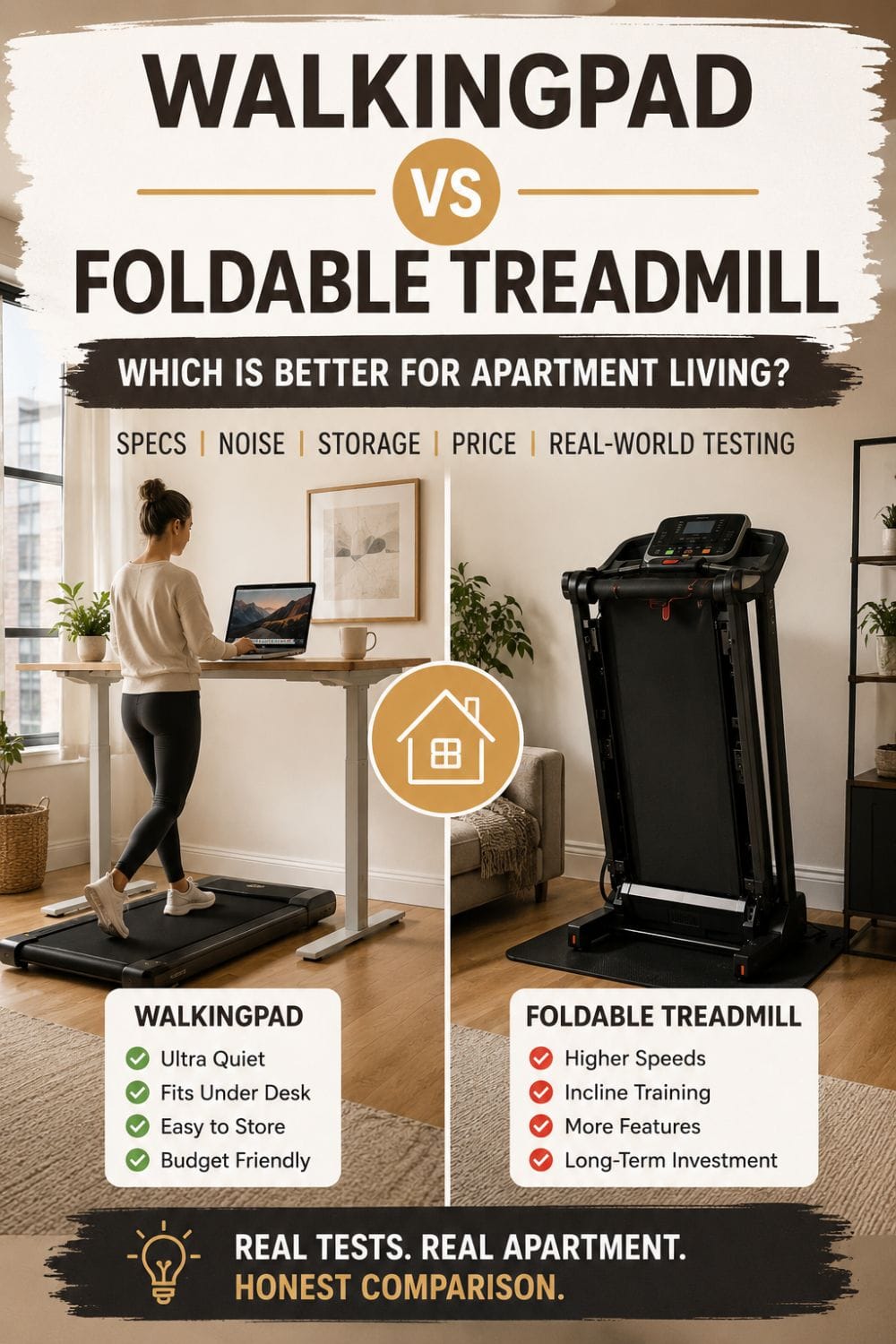
Get a WalkingPad if you want something that slides under your bed or desk, runs whisper-quiet, and fits a walking-only routine.
Get a Foldable Treadmill if you need actual running speeds, an incline, and don't mind a bigger footprint when it's unfolded.
WalkingPad vs Foldable Treadmill: Side-by-Side Specs
Let's skip the marketing copy and get into the numbers that actually matter in an apartment.
Folded Footprint
WalkingPad C2: ~57" L x 20" W x 5" H
Foldable Treadmill (e.g. NordicTrack C 1750): ~39" L x 36" W x 62" H
Noise Level
WalkingPad C2: ~55–60 dB at walking speed
Foldable Treadmill: ~65–75 dB at running speed
Speed Range
WalkingPad C2: 0.3–3.7 mph
Foldable Treadmill: 0–12+ mph
Weight
WalkingPad C2: ~28 lbs
Foldable Treadmill: ~200–280 lbs
Price Range
WalkingPad C2: ~$299–$399
Foldable Treadmill: ~$999–$2,499+
App Integration
WalkingPad: WalkingPad app (iOS/Android)
Foldable Treadmill: iFit, NordicTrack, or proprietary
Warranty
WalkingPad C2: 1 year parts, 1 year labor
Foldable Treadmill: 10-year frame, 2-year parts typical
The Downstairs Neighbor Test
My downstairs neighbor Dan is a light sleeper and a passive-aggressive note-leaver. He's been the unintentional quality control for every piece of fitness equipment I've ever tested.
When I started using the WalkingPad C2 at 7 a.m., nothing happened. No note. No passive-aggressive hallway eye contact. Just silence. The belt hum is real but it's soft — think electric toothbrush from the next room. On carpet? Barely perceptible. If you want the full rundown on this machine specifically, my WalkingPad C2 review covers everything I tested over several weeks.
Then I tested a full-size foldable treadmill — running at 6 mph. Dan knocked on my door within 20 minutes. He was polite about it. But he knocked. The motor vibration travels through the floor in a way that's hard to fully absorb with a mat alone, especially in older buildings with thinner concrete slabs.
Verdict on noise: WalkingPad wins for apartment-safe hours. Foldable treadmill is manageable for mid-day use with a good anti-vibration mat, but not ideal for early mornings or late nights if walls are thin. I put together a full guide to the quietest treadmills for apartment use if noise is your top filter.
Storage Test: Does It Actually Fit in a Closet?
I have one hall closet. It fits a vacuum, a yoga mat, and whatever is currently making me feel guilty about not using it. I needed to know: would either of these live there comfortably?
WalkingPad C2: Slid right in horizontally, leaning against the back wall. At about 5 inches tall when flat, it fits under most standard closet shelves without losing any hanging rod space. I can also slide it under my bed or behind the couch without much effort — it weighs 28 lbs and has a carry handle. This thing was designed by someone who has lived in a small apartment.
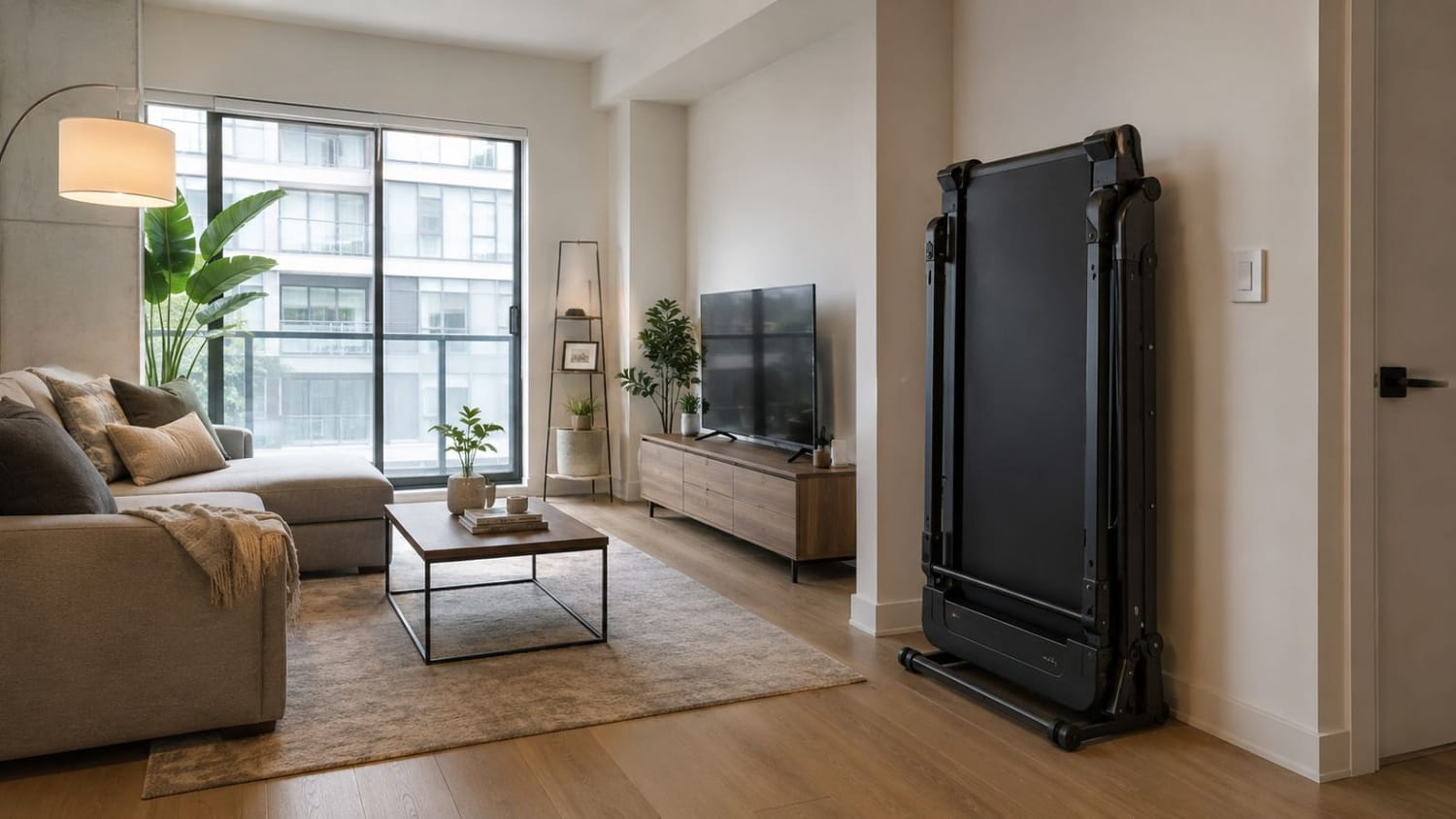
Foldable Treadmill: Even folded, this is not a closet situation. It stands about 5 feet tall and is 36 inches wide. Unless you have a dedicated workout closet or a generous storage room, this machine lives out in the open. You're committing to it being a visual element of your space — which is fine if you've got a home gym corner, not so fine in a studio. For options that fold down flat enough to actually disappear, see my picks for foldable treadmills that fit in closets.
Storage winner: WalkingPad — not even close. But if you have a dedicated corner and don't need to hide it, the foldable treadmill's footprint when upright is actually narrower than you'd expect.
WalkingPad vs Foldable Treadmill: Who Should Actually Buy Each?
The WalkingPad buyer is someone like me. Remote worker. Wants to get steps in while on Zoom calls or between tasks. Prioritizes zero-impact storage, minimal noise, and low-maintenance setup. She's not training for a 5K — she's trying to hit 8,000 steps without leaving the apartment in 14-degree weather. She has a desk setup and wants the pad to slide underneath when it's not in use. She doesn't want to make a production of working out. If that's you, the full standing desk and walking pad combo setup is worth a look.
The Foldable Treadmill buyer has more dedicated workout goals. She wants intervals, incline, running — real cardio, not just movement. She's probably cleared a workout corner in her apartment, owns a good mat already, and is willing to invest more upfront for a machine that can grow with her fitness level. She checks the clock before running at 8 a.m. out of courtesy, not paranoia. She's okay with the machine living in the open because she actually uses it daily.
Price and Value Breakdown
The WalkingPad C2 runs around $299–$399 depending on sale timing. For what it does — quiet, compact, under-desk walking — that's genuinely good value. There's no subscription required, the app is free, and you don't need a mat because vibration isn't a real issue at walking speeds.
A quality foldable treadmill like the NordicTrack Commercial 1750 starts around $1,499 and goes up from there. You're also looking at an iFit subscription (~$39/month) to unlock full features, plus the cost of a proper anti-vibration mat ($50–$120) for apartment use. The warranty is significantly better though — 10 years on the frame vs 1 year on the WalkingPad.
If budget is a real constraint: WalkingPad at $349 all-in is one of the best small-space fitness investments you can make. If you want a full cardio machine and can spend $1,500–$2,000, a foldable treadmill earns its price over time — especially if you'd otherwise be paying for a gym membership. For more renter-friendly cardio options at lower price points, my apartment gym under $500 gear list has solid alternatives worth considering.
WalkingPad vs Treadmill for Apartment Living — What Actually Works?
Quick Answer: For most apartment renters, a WalkingPad wins on noise, storage, and price. A foldable treadmill wins if you need running speeds, incline, and have a dedicated space. Both work — but they serve different movement goals and living situations.
The biggest thing I've learned testing both: the machine you'll actually use is the one that fits your routine without friction. The WalkingPad lives under my standing desk. I step on it without thinking. That passive consistency adds up to thousands of extra steps a week. A foldable treadmill I have to unfold, position, and prepare for mentally is a machine I'll use three times and then resent.
Does a WalkingPad Fit Under a Bed?
Quick Answer: Yes — most WalkingPad models fold flat to around 4.7–5 inches in height, which slides easily under a standard bed frame with 6–8 inches of clearance. Measure your bed clearance first. Platform beds with under-4-inch clearance won't work, but most standard frames are fine.
I store mine this way when I'm not using it at my desk. It's completely out of sight, takes under 10 seconds to pull out, and doesn't collect dust the way gear in a closet tends to. If under-bed storage is your main priority, WalkingPad is essentially the only treadmill category designed with this in mind — and it pairs well with the other under-bed gym essentials I keep in my apartment.
Walking Pad vs Foldable Treadmill — Which Is Actually Better?
Quick Answer: It depends entirely on your fitness goal. WalkingPad is better for step count, under-desk use, quiet operation, and minimal storage. A foldable treadmill is better for running, incline training, and dedicated cardio sessions. There's no universal winner — only the right fit for your lifestyle.
I've tested both seriously and here's my honest take: if you're a walker who wants more movement woven into your day, a WalkingPad will change your routine in a quiet, low-drama way. If you're a runner who wants apartment-compatible cardio with real training potential, invest in a quality foldable treadmill and get a thick mat.
Quietest Treadmill for Apartment Living in 2026
Quick Answer: WalkingPads are consistently the quietest treadmill option for apartment use in 2026, operating at 55–60 dB at walking speed — comparable to a quiet conversation. Among foldable treadmills, belt-drive models with DC motors and anti-vibration feet run quietest, but no running treadmill matches WalkingPad's near-silent performance at low speeds.
If noise is your top concern — and in an apartment building, it should be — WalkingPad is the answer. Full stop. No running treadmill, no matter how premium, competes with a walking-speed belt on a sub-30 lb machine for apartment noise levels.
Frequently Asked Questions
Is a WalkingPad the same as a foldable treadmill?
No. WalkingPad is a specific brand that makes ultra-flat, walking-only treadmills designed for under-desk and compact use. Foldable treadmills are a broader category of standard treadmills with a folding frame — they typically support running speeds and incline but fold up vertically for storage. WalkingPads fold horizontally to a flat profile. Very different design philosophy.
Which is smaller: WalkingPad or foldable treadmill?
WalkingPad is significantly smaller in its stored state. The C2 folds to a flat 57" x 20" x 5" profile. A typical foldable treadmill folds to roughly 39" x 36" x 60"+ — standing nearly 5 feet tall. WalkingPad can slide under furniture. Foldable treadmills cannot.
Can a WalkingPad fit under a bed?
Yes, in most cases. WalkingPad models fold to approximately 4.7–5 inches tall, which fits under a standard bed frame with 6–8 inches of clearance. Measure before you buy — platform beds with very low frames may not have enough space. Standard queen and king frames work well.
Are foldable treadmills good for apartments?
They can be, with the right setup. You'll need a dedicated corner, a high-quality anti-vibration mat, and realistic expectations about noise during running speeds. They're not ideal for late-night or early-morning use in buildings with thin floors. If you have a larger apartment, a spare room, or a ground-floor unit, a foldable treadmill is a genuinely good apartment option.
Which is quieter: WalkingPad or foldable treadmill?
WalkingPad is noticeably quieter, especially at walking speeds. It runs at approximately 55–60 dB — similar to background conversation. Foldable treadmills at jogging or running speeds produce 65–75 dB and generate floor vibration that transmits through building floors. For noise-sensitive apartment situations, WalkingPad is the clear winner.
Final Verdict + Where to Buy
After months of testing both in real apartment conditions — one light-sleeping neighbor, one hall closet, and zero desire to make fitness complicated — here's where I land:
- WalkingPad C2 is the best pick for remote workers, step-goal focused movers, and anyone in a small apartment who needs invisible storage and zero neighbor drama.
- A quality foldable treadmill is the better long-term cardio investment if you're a runner, you have the space, and you're committed to real training goals — not just daily steps.
The truth is, both machines work. The WalkingPad just works with apartment life. The foldable treadmill works despite it.
Shop the picks I tested:
→ WalkingPad C2 — Quiet Under-Desk Walking Treadmill
→ NordicTrack Commercial 1750 — Foldable Treadmill for Apartments
Questions about either machine? Drop them below — I read everything and actually answer based on what I've tested, not what a spec sheet says.
I test every piece of gear in my actual apartment — noise, footprint, deposit-safety, and real-world durability. No sponsored samples, no showroom conditions. If I wouldn't buy it for my own 650 sq ft studio, I don't recommend it.
Build Your Dream Home Gym—Without Wasting Space or Money
Join the MiniHomeGym Newsletter for expert reviews, space-saving fitness tips, apartment-friendly workout ideas, practical buying guides, and exclusive deals to help you choose the best compact fitness equipment with confidence.