Best Walking Pads for Apartments (2026): 5 Picks for Small Spaces
Discover top-rated apartment walking pads tested for quiet performance, low floor vibration, and ultra-compact, under-bed storage in small living spaces.

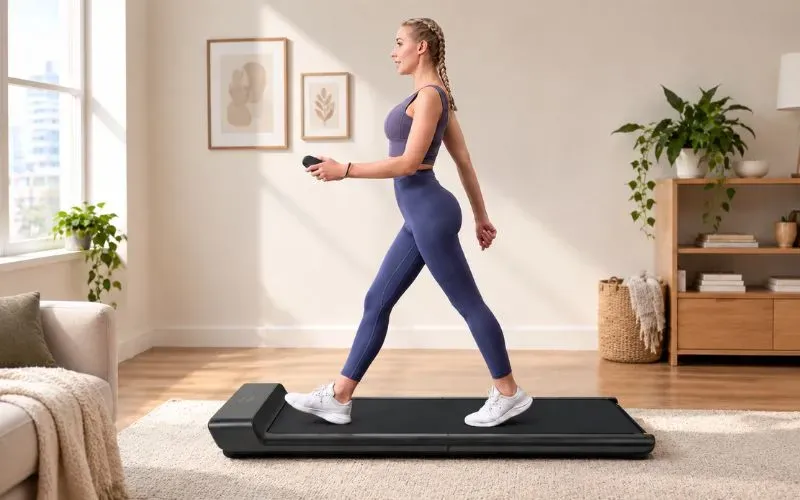
The best walking pad for your apartment isn't necessarily the best-reviewed one. A renter with 4.5 inches of bed frame clearance needs a different machine than someone who's parking a pad under a standing desk for eight hours a day, and both need something different than a person who wants to walk most days but jog occasionally. This guide is organized around that fact: five picks, each built for a specific constraint — storage shape, desk-work reliability, floor space, or walking-versus-jogging — rather than ranked top to bottom.
A note on the numbers: Walking pad spec sheets are inconsistent across this category — a brand's own site, a retailer listing, and an independent review can each report a different noise rating or folded height for the same model. Where our research found real disagreement between sources, we've given a range instead of a single number rather than picking whichever figure looked best. Treat any spec below as a starting point and confirm it against the current listing before you buy.
The UREVO SpaceWalk 3S (~$250–$350) is the best overall pick for its auto-incline and wide 42.5" belt. The WalkingPad P1 (~$499) folds in half like a briefcase for buyers who need the smallest storage footprint. The WalkingPad Z1 (~$299–$349) is the best fit for the tightest apartments. The WalkingPad C2 (~$399–$599) is the most-recommended option for daily under-desk use. The UREVO Strol 2E (~$200–$290) is the only pad here with a real jogging mode.
What Is a Walking Pad — and Why They Work in Apartments
A walking pad is a low-profile treadmill built around one job: letting you walk indoors without the bulk of a full-size treadmill. Most skip the console, handrail, and incline of a traditional machine, cap speed around 3.5–4 mph, and prioritize a flat, thin deck instead — usually under 6 inches folded. That's the trade-off: less capability, in exchange for a machine that fits under a desk, slides under a bed, or leans against a wall. A few models, like the Strol 2E below, split the difference with a fold-up handlebar that unlocks jogging speed when you want it.
Each pick below wins a specific apartment scenario rather than a general ranking — a wider belt matters more than a lower price if you're 6'2", and a non-folding deck matters more than fold height if you have a permanent spot for one but no under-bed clearance. Specs come from manufacturer pages and independent reviews where available.
Quick Comparison: 5 Best Walking Pads for Apartments
| Walking Pad | Best For | Size | Speed | Weight Capacity |
|---|---|---|---|---|
| UREVO SpaceWalk 3S | Overall | Compact | Up to 9% | See manufacturer |
| WalkingPad P1 | Foldable storage | Very compact | Up to 3.72 mph | 220 lb |
| WalkingPad Z1 | Small apartments | 17.3" × 47.2" | Up to 3.7 mph | 242 lb |
| WalkingPad C2 | Under-desk work | Compact | Up to 3.7 mph | 220 lb |
| UREVO Strol 2E | Walking + light jogging | Compact | Up to 6.2 mph | See manufacturer |
The 5 Best Walking Pads for Apartments, Reviewed
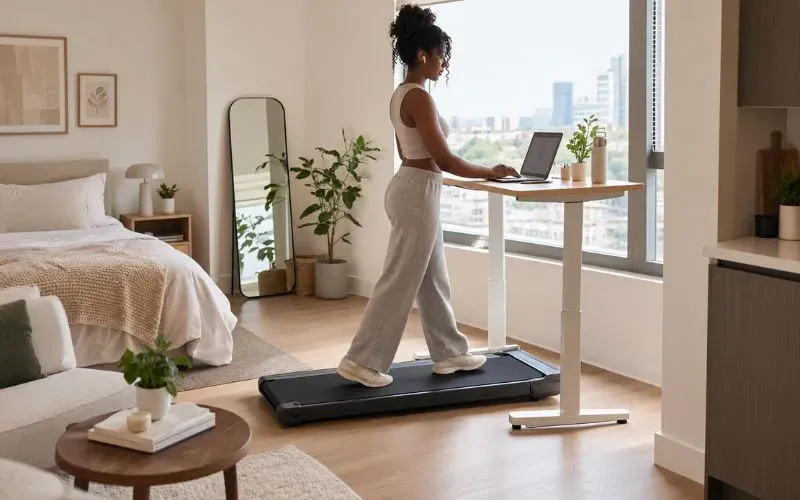
1. UREVO SpaceWalk 3S — Best Overall Walking Pad
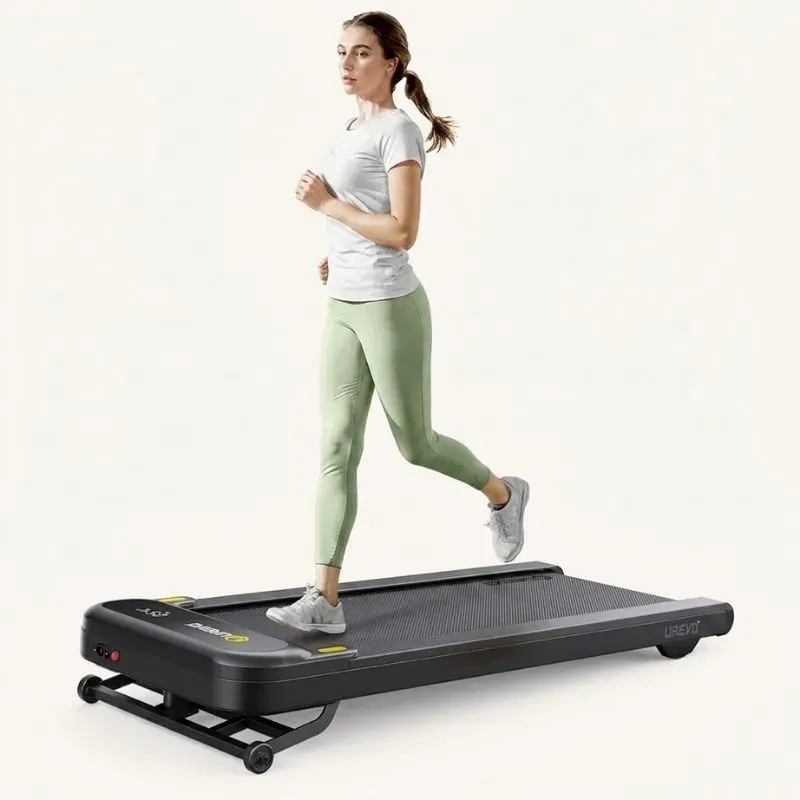
Price: ~$249.99–$349.99 (frequent promos)
Noise: Unconfirmed — sources disagree, check current spec
Belt: 16.5" x 42.5" Speed: 0.6–4.0 mph
Incline: 0–9% auto
Weight Capacity: ~265 lbs
The SpaceWalk 3S is the only pad here with auto-incline, and it pairs that with the widest belt in the lineup. Incline adds effort without adding speed — useful if you want more out of the same 30-minute session without walking faster. The 2.5 HP motor rating is a peak figure, not continuous (standard practice in this category), and the SmartCoach app adds preset workout modes on top of the basics.
Trade-off: It doesn't fold flat — it's a fixed deck on wheels that needs a permanent spot to live, under a bed, sofa, or along a wall. Some owners also report a loud confirmation beep on speed and incline changes with no way to mute it.
Skip it if: you need the pad to disappear into a closet or a slim under-bed stack — go with the P1 or Z1 instead. And before buying, it's worth checking whether UREVO has since positioned a newer model (the SpaceWalk 5L) as the current flagship in this line, since specs and pricing in this category shift fast.
2. WalkingPad P1 — Best Foldable Walking Pad

Price: $499 list (commonly discounted)
Noise: No confirmed dB figure; reviewers describe it as audible, "about the same as a regular treadmill"
Belt: 16.5" x 47" Speed: Up to ~3.75 mph Folded: 32.5" x 21.5" x 5" Weight Capacity: 220 lbs
The P1's 180-degree hinge fold is mechanically different from every other pad in this guide — it closes in half like a briefcase to roughly the size of a large suitcase, then rolls away on built-in wheels. If you don't have under-bed clearance but do have a closet corner or space beside a dresser, that upright fold solves a problem a flat-fold pad can't.
Trade-off: It's the least discreet option here for noise — not the pad to choose if you're taking calls while walking — and it carries the lowest weight capacity in the lineup at 220 lbs.
Skip it if: you're on video calls often while walking. The C2 is the quieter under-desk choice.
3. WalkingPad Z1 — Best Walking Pad for Small Apartments

Price: ~$299–$349 (MSRP listed up to $499)
Noise: Under 40 dB manufacturer-rated; independent testing measured meaningfully higher in real-world use
Belt: ~17.3" x 47.2" (width varies by source, 15.7"–17.3")
Speed: Up to 3.7 mph
Folded: ~4.4"–5.4", depending on source
Weight Capacity: 242 lbs
The Z1 is among the thinnest fold-flat pads on the market — thin enough to clear bed frames that reject bulkier models — while keeping a wide belt and the highest weight capacity of any flat-fold pad in this guide. That combination is the whole case for it: you're not trading stride room for a small footprint.
Trade-off: The under-40-dB rating is a manufacturer number. At least one independent test found it noticeably louder in practice, so don't assume it beats the C2 on noise without checking current owner feedback. It also has no incline and no jogging mode.
Skip it if: you want incline or a jogging mode — look at the SpaceWalk 3S or Strol 2E. And measure your own bed-frame clearance before ordering; folded-height specs for this model vary by a full inch across sources.
4. WalkingPad C2 — Best Walking Pad for Under-Desk Work

Price: ~$399–$599, depending on retailer and promotions
Noise: Reported readings vary by outlet (one review measured ~45 dB)
Belt: 16.5" x 47"
Speed: Up to 3.7 mph
Folded: ~4.9"–5.3", depending on source
Weight Capacity: 220 lbs
The C2 shows up repeatedly in reviews as the pad people stick with for daily desk-walking rather than abandon after a few weeks. The auto-speed sensor adjusts to where you're standing on the belt without a manual override, the belt tracks evenly with no reported wobble, and its brushless motor is generally a more durable design than the brushed motors found on cheaper pads in this category.
Trade-off: No incline, no jogging mode, and the lowest weight capacity tied with the P1 at 220 lbs. Price has also fluctuated more than any other pad here — some retailers list it near $400, others closer to $600 — so confirm the current price before assuming it's the budget pick.
Skip it if: you want the widest belt or thinnest fold available — the Z1 matches or beats it on both.
5. UREVO Strol 2E — Best for Walking and Light Jogging
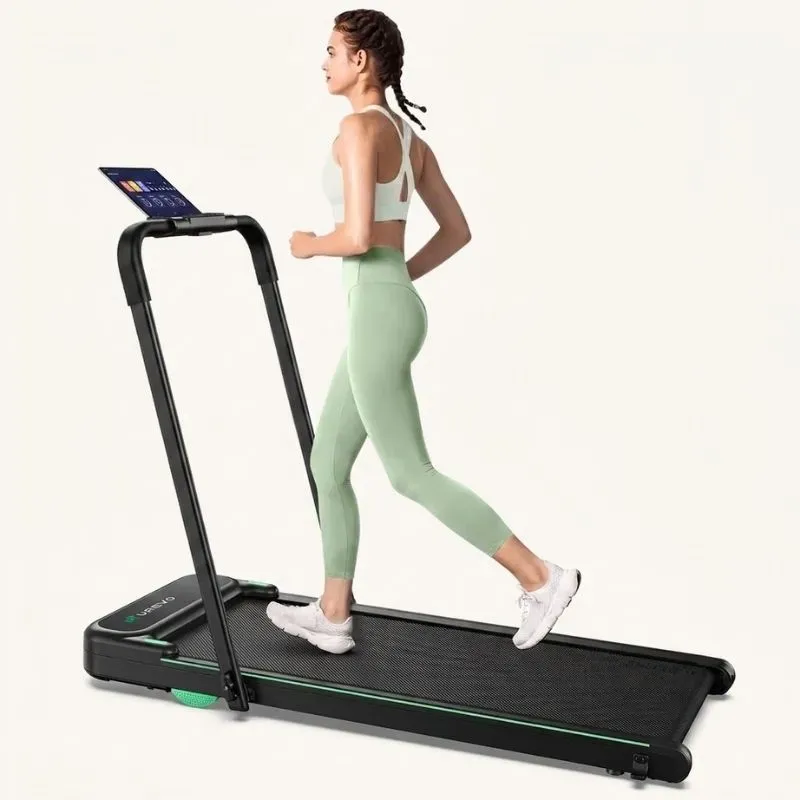
Price: ~$199.99–$289.99
Noise: Not published — check current owner reviews before buying if this matters to you
Belt: 15" x 40.2"
Speed: 0.6–4.0 mph walking / 0.6–6.2 mph running (manufacturer-stated)
Folded: 4.6"
Weight Capacity: 265 lbs
The Strol 2E is the only pad in this guide with a second gear. Lower the handlebar and it's a standard 4 mph desk-walking pad; raise it and the running mode opens up to a claimed 6.2 mph with hand support — genuine jogging speed, not just a faster walk. It's also the cheapest pad here, which is unusual for the one model that does double duty.
Trade-off: UREVO hasn't published a noise rating for this model, the belt is the narrowest in this comparison at 15 inches, and the handlebar adds bulk and a setup step that pure walking pads skip.
Skip it if: you only plan to walk. A dedicated walk-only pad like the Z1 or C2 gives you a wider belt for a comparable or lower price.
How to Choose the Best Walking Pad for Your Apartment
1. Available Floor Space
Measure two things separately: the storage spot and the walking space. For storage, check the lowest structural point under your bed or furniture, not the middle of the slats — that's where a pad will actually catch. For walking, remember a 47-inch belt needs 47 inches of clear floor in front of your desk while it's running on top of wherever it lives when folded.
2. Storage: Foldable vs. Non-Folding
Flat-fold pads (C2, Z1) collapse to under 6 inches and slide under most bed frames. Hinge-fold pads (P1) fold upright into a suitcase shape, better suited to a closet or corner than under-bed sliding. Non-folding pads (SpaceWalk 3S) don't collapse at all — they're a fixed deck on wheels that needs a permanent spot, whether that's under furniture or against a wall. Which is "better" depends entirely on what kind of empty space your apartment actually has.
3. Noise: Why Two Numbers Matter
Walking pad noise is really two separate problems that spec sheets collapse into one number. Motor noise is airborne — the hum you hear standing next to the machine, which is what manufacturers publish as a dB rating. Footfall impact is structural — the vibration your footsteps send through the floor into the ceiling below you. A pad can have a whisper-quiet motor and still be the reason your downstairs neighbor hears you every morning, because footfall doesn't appear in a motor-noise spec at all.
UREVO SpaceWalk 3S: Unconfirmed — sources disagree
WalkingPad P1: No confirmed figure; described as audible in reviews
WalkingPad Z1: Under 40 dB (manufacturer); independent testing found it notably louder
WalkingPad C2: ~45 dB in one independent test; no single confirmed figure
UREVO Strol 2E: Not published
A rubber-backed equipment mat under any of these pads absorbs a meaningful share of footfall impact regardless of the motor's dB rating. If apartment noise is your main concern, buying a mat is a better use of $20–40 than chasing the lowest published number on the spec sheet.
4. Walking vs. Jogging
Four of the five pads here are walk-only, capped around 3.7–4 mph — that cap is part of what keeps them flat, light, and quiet. If you want to jog occasionally without a second machine, the Strol 2E's handlebar-supported running mode is the only option here built for it. If running is a regular part of your routine rather than an occasional session, a full folding treadmill will hold up better than any walking pad, including this one.
5. Weight Capacity
Published capacities here range from 220 to 265 lbs. As a rule of thumb, treat the number as a ceiling rather than a target — daily use tends to be easier on a machine when you're well under its rated limit. Always check the current capacity on the manufacturer's listing, since specs get revised between model refreshes.
6. Home Office Compatibility
Check your desk's minimum clearance against the pad's folded or fixed height, and confirm the belt length gives you room to walk without over-striding. Auto-speed sensing (FootSense on the P1, the position sensor on the C2) means fewer manual adjustments mid-call. If you don't want to bend down to change pace while working, make sure the model you pick has a remote or app control.
Which Walking Pad Should You Buy?
UREVO SpaceWalk 3S — you want incline and the widest belt available and have a permanent spot for a non-folding unit.
WalkingPad P1 — you need an upright, closet-friendly fold rather than under-bed sliding, and noise during calls isn't a dealbreaker.
WalkingPad Z1 — your under-bed or under-couch clearance is genuinely tight, and you still want a full-width belt.
WalkingPad C2 — you're walking under a desk most workdays and want the model with the strongest daily-use reputation.
UREVO Strol 2E — you want to walk and jog on the same machine without buying two.
Where to Put a Walking Pad in a Small Apartment
Studio apartments: A flat-fold pad (Z1 or C2) that lives under the bed keeps the room clear for everything else — pull it out for a session, slide it back when you're done.
Home offices: If you're walking under a desk daily, storage speed matters more than storage size. Auto-speed pads with a low folded height, like the C2, are built to slide in and out of use several times a day without hassle.
Living rooms: A non-folding pad like the SpaceWalk 3S makes more sense here if you have a permanent nook for it — along a wall, behind a couch, or under a console table — rather than needing it to vanish between uses.
Bedrooms with limited under-bed clearance: Check your frame's lowest point before ordering. A closet-stored, hinge-fold pad like the P1 sidesteps the clearance problem entirely by not needing to go under the bed at all.
FAQ: Best Walking Pads for Apartments
For most work-from-home renters, yes — a walking pad adds a meaningful chunk of daily steps during calls or focus work without needing a dedicated gym room. The right pick depends on your storage clearance and noise tolerance, which is why matching the model to your space matters more than chasing the highest-rated option.
The WalkingPad Z1 is the strongest fit for very tight spaces — it folds close to flat (reported figures range roughly 4.4"–5.4" depending on source) while keeping a full-width belt.
It's possible, mainly from footfall impact rather than motor noise — see the noise section above. An equipment mat under the pad is the most effective single fix. As a matter of courtesy rather than a hard rule, it's worth walking at a lower speed during evening or early-morning hours, since both motor noise and footfall tend to increase with pace, and checking your lease for posted quiet hours before making it a daily habit.
Yes — that's the primary use case for most of these models. Check your desk's minimum clearance against the pad's height, and look for auto-speed sensing (Foot Sense on the P1, the position sensor on the C2) so you're not manually adjusting pace mid-call.
It varies by model, and manufacturer dB figures — which measure motor noise only, not footstep impact — don't always match independent testing. Treat any specific dB number as approximate until you've checked current, independent reviews for the exact model. An equipment mat under any pad helps absorb impact noise regardless of which one you buy.
Most walking pads cap out around 3.5–4 mph, which is a brisk walk, not a jog. The UREVO Strol 2E is the exception here — raising its handlebar unlocks a running mode rated up to 6.2 mph by the manufacturer.
While walking, plan for the belt's full length plus a little clearance in front of your desk — up to roughly 47 inches on the longer-belt models here. For storage, measure your actual clearance (under a bed, in a closet, or a permanent floor spot) before choosing between a fold-flat, hinge-fold, or non-folding design.
If you need the machine out of sight between sessions — under-bed storage, a closet, a shared living space — yes, a folding model makes sense. If you have a permanent spot where the pad can just stay put, a non-folding design like the SpaceWalk 3S trades that flexibility for a wider belt and incline.
Most will, but plush carpet can cause wobble since it doesn't offer the same stable base as hardwood or low-pile flooring. An equipment mat helps stabilize the unit on carpet just as much as it protects hardwood from scratching and vibration.
Measure your space before you shop — the clearance under your bed frame, the floor length in front of your desk, whichever constraint actually governs your apartment. That number will eliminate two or three of these five options before price or reviews even enter the picture. Once you're down to one or two candidates, verify the current spec sheet directly with the manufacturer; noise ratings and folded heights in this category shift often enough between listings that the numbers here should be a starting point, not the final word.