Walking Pad Weight Loss: My 8-Week Routine, Results & Tips to Lose Weight at Home

I started using my WalkingPad every day for 8 weeks without changing my diet and here's what actually happened to my step count, my energy, and yes — my weight. No gym. No commute. Just me, my 650 sq ft apartment, and a walking pad I was finally ready to take seriously.
Quick Answer
How do you use a walking pad to lose weight?
Walk at 2–3.5 mph for 30–60 minutes, at least 5 days a week. At a moderate pace, you can burn roughly 120–300 calories per session depending on your weight and speed. The key isn't one intense session — it's the compounded daily habit. Walking pads make that habit frictionless.
Why Walking Pads Actually Work for Weight Loss (Especially at Home)
Let me tell you about something called NEAT — Non-Exercise Activity Thermogenesis. It's a fancy way of saying: all the calories your body burns when you're not officially "working out." Things like walking to get coffee, pacing on a call, tidying up your space. NEAT can account for 15–30% of your total daily calorie burn — and most of us who work from home have basically zeroed it out.
A walking pad is the most direct way to reclaim that. You're not doing HIIT. You're not trying to be an athlete. You're just moving — quietly, consistently, in your living room — and letting your body do the math over time.
That's also why it's more sustainable than high-intensity cardio for most people. HIIT requires recovery. It spikes cortisol. It needs a specific time window. Walking? You can do it during your 2pm Zoom, during an episode of Succession, or while you're waiting on a Slack response. There's no weather excuse. No commute. The barrier is essentially zero — and that's the whole point.
For apartment renters specifically, this is a game changer. I'm on hardwood floors with a neighbor downstairs. My walking pad sits under my desk until I need it. That's it. That's the whole setup. If you're still deciding which model to get, our renter-tested guide to the best walking pads for apartments breaks down every option worth considering.
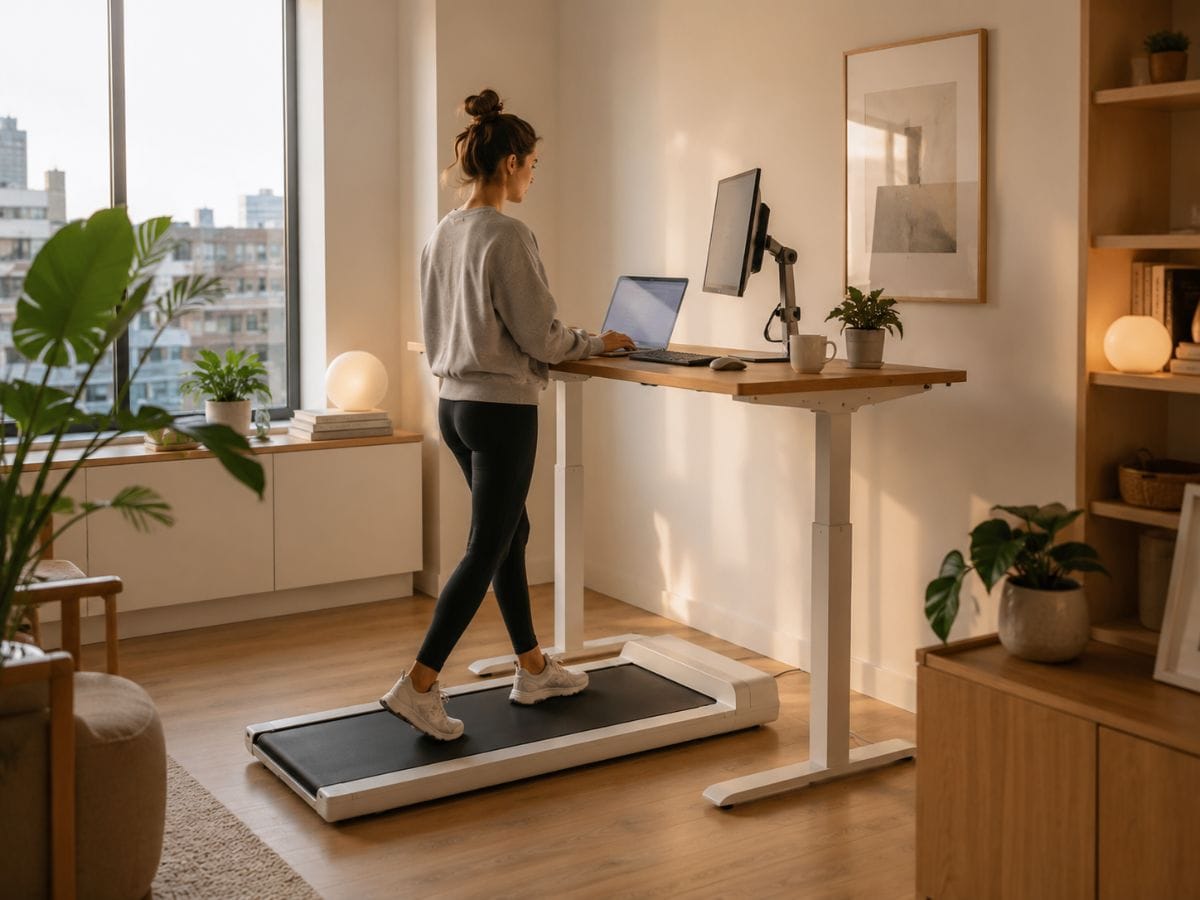
The 8-Week Walking Pad Routine I Actually Used
📌 Save this for later — screenshot this section as your plan
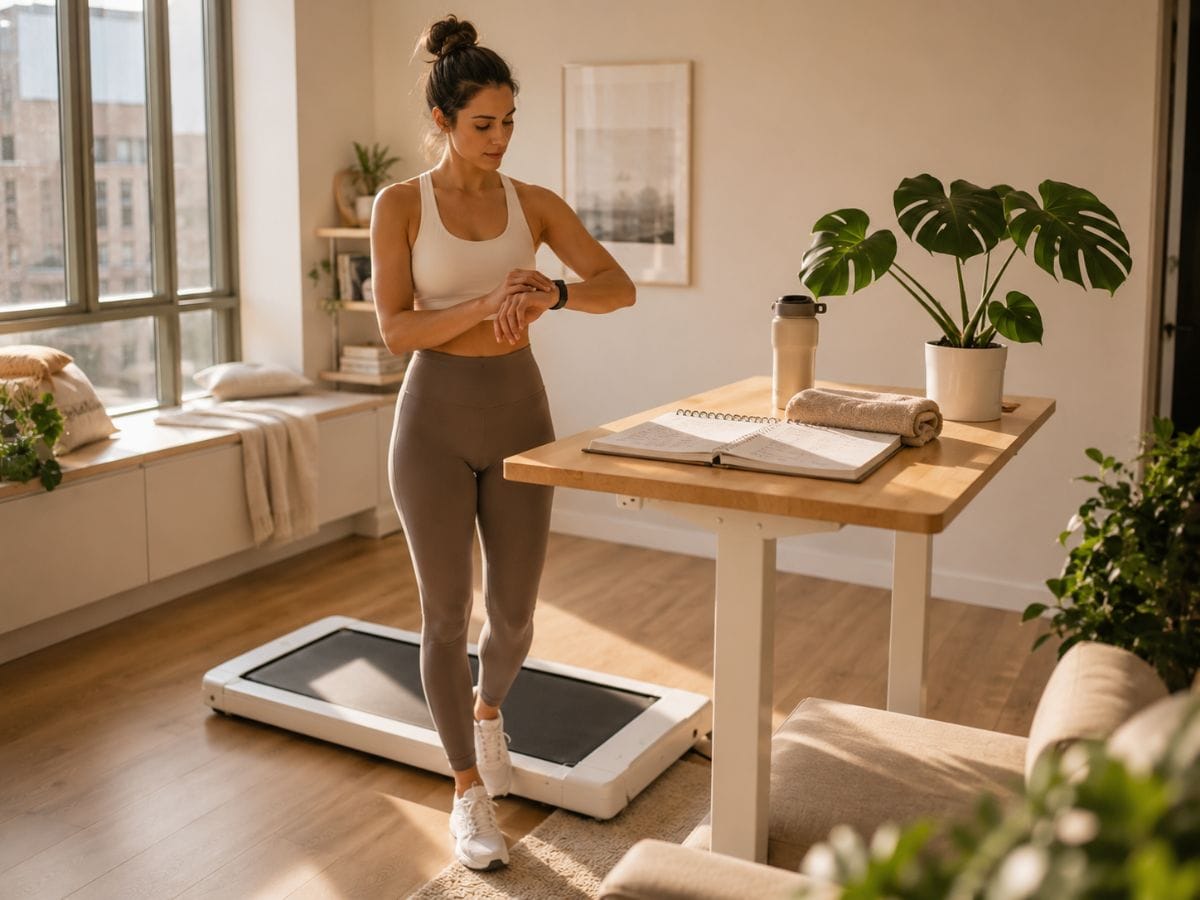
Weeks 1–2
Foundation — Build the Habit
Serah's note: This felt almost embarrassingly easy — which was the point. I wasn't tired, I wasn't sore, and I actually looked forward to it. I watched Netflix and forgot I was exercising. That was the goal.
Weeks 3–4
Build — Hit Your First Step Goal
Serah's note: Week 3 is where I started actually caring about my step count. I got a little competitive with myself. 2.5 mph feels like a real walk — you can feel the difference in your heart rate. Still totally manageable to do while working.
Weeks 5–6
Consistency — Make It Daily
Serah's note: This is when it stopped feeling like a "routine" and started feeling like just… my life. I was walking every morning before my first meeting. My energy was noticeably better. I wasn't doing anything else differently — just walking.
Weeks 7–8
Optimization — Stack Everything
Serah's note: By week 7, I was stacking walks the way I stack skincare — layered, intentional, automatic. 3.5 mph is brisk enough that I was definitely getting a workout, but still quiet enough not to bother my downstairs neighbor. I hit 10,000 steps on 5 out of 7 days in week 8. That felt like a win.
Calorie Burn Reference
These are rough estimates based on MET values — your actual burn depends on fitness level, incline, and body composition. The bigger picture: NEAT compounds quietly. 200 calories a day × 30 days = 6,000 calories. That's real.
The Walking Pad I Used
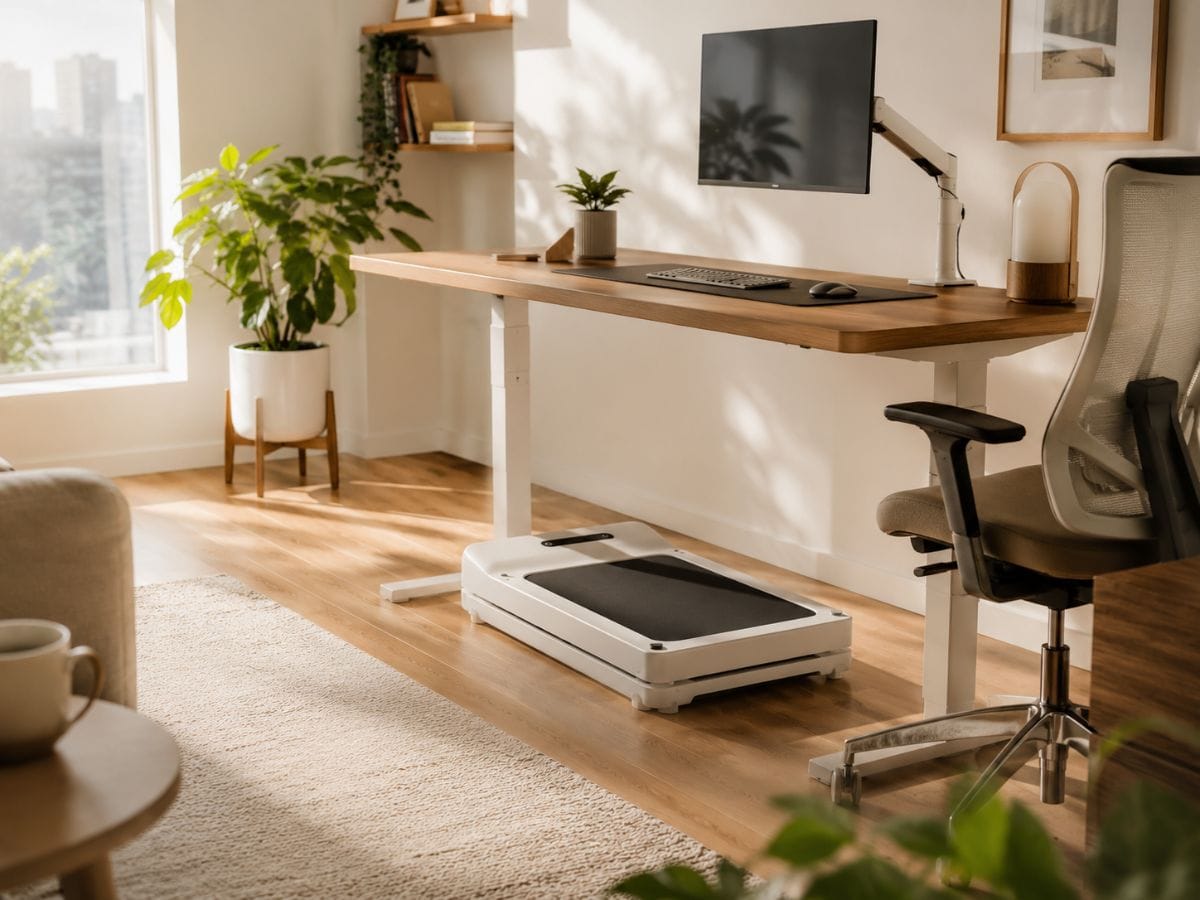
I used the WalkingPad C2 ($399) for this entire 8-week run, and I want to be specific about why it held up. At 3 mph, it's genuinely quiet — I could take calls without anyone knowing I was walking. The KS Fit app tracked my steps, distance, and time without me having to think about it, which kept me consistent when motivation dipped. And it folds flat enough to slide under my standing desk, which meant it was always out and ready — not buried in a closet I had to excavate.
For a WFH setup in a small apartment, the C2 checks every box: compact, quiet, reliable, app-connected. It's what I'd recommend to anyone starting this routine. I also covered the full standing desk and walking pad setup if you want to build out a proper WFH fitness station.
If you want a wider belt and slightly higher max speed, the WalkingPad A1 Pro ($499) is the step-up option — still apartment-friendly, just a bit more room to move. → Read my full WalkingPad C2 review here.
Common Mistakes That Kill Results
The most common one I see is walking too slow, like a gentle 1 mph stroll. Your heart rate barely shifts, and while any movement beats none, you're leaving real calorie burn on the table. Once you're comfortable, nudge that speed up. 2.5 mph is the sweet spot for most people — brisk enough to feel it, slow enough to talk.
The second mistake is expecting the walking pad to carry all the weight while you eat in a caloric surplus. Walking pads are powerful for NEAT and calorie burn, but they're not magic. You don't have to go on a diet, but a little awareness of what you're eating goes a long way. The routine and the food work together.
Then there's the "use it three times then abandon it" trap. I've been there. The results don't come in week one — they come after four or five weeks of quiet consistency. If you're not seeing changes at day ten, that's completely normal. Trust the compounding. Don't quit in the middle of the compound curve. If you're weighing your options before committing, our walking pad vs. foldable treadmill comparison is a good place to sort through the trade-offs.
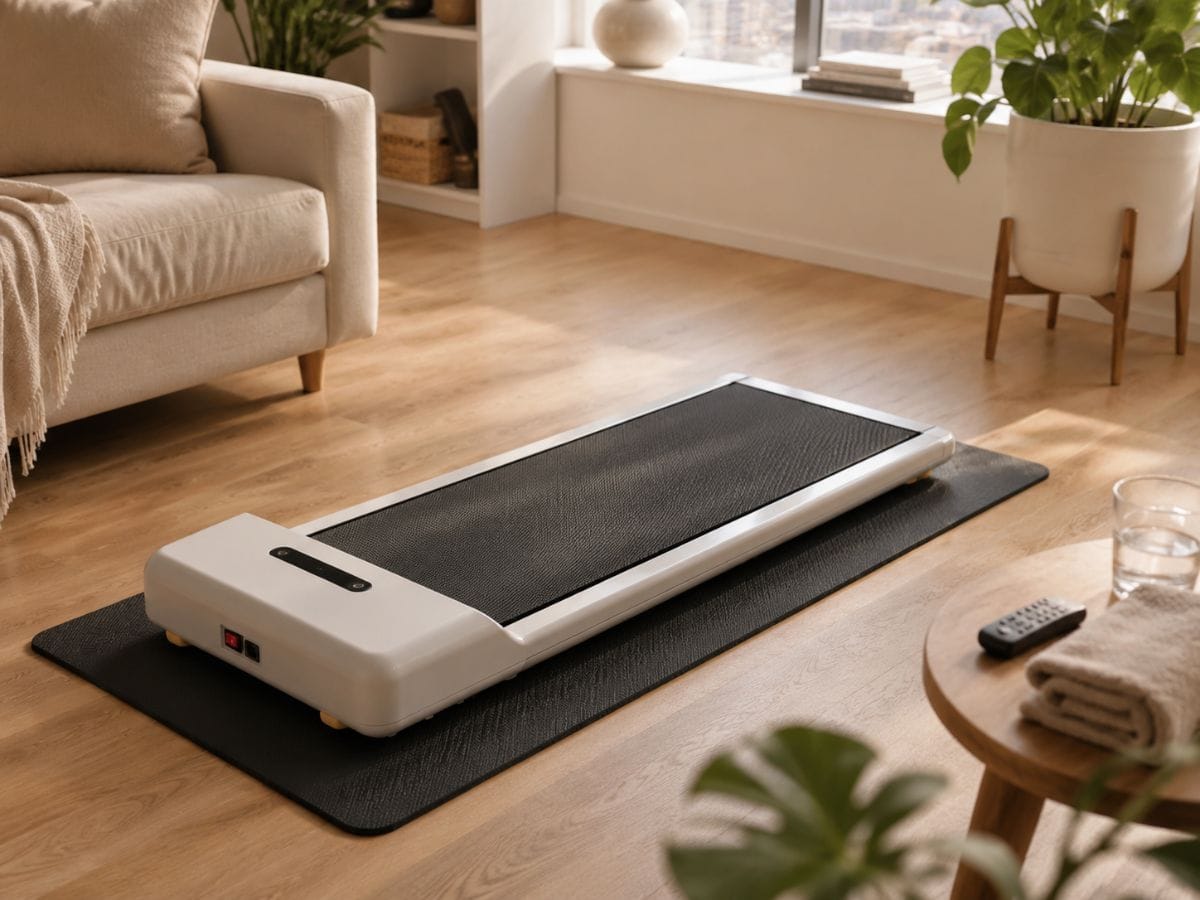
And finally — skip the mat at your own risk. I use a non-slip WalkingPad floor mat ($65) under my pad, and it changed everything. Without it, every step sounded like a small event on my downstairs neighbor's ceiling. With it? Practically silent. If noise is making you self-conscious, you'll use the pad less. Don't let that happen. The mat is a $65 fix for a consistency problem.
Frequently Asked Questions
How long should I walk on a walking pad to lose weight?
Start with 20–30 minutes and build to 45–60 minutes over a few weeks. The research generally points to 150+ minutes of moderate-intensity walking per week as the threshold where weight loss becomes consistent. That's about 30 minutes, five days a week — very doable with a walking pad built into your WFH day.
What speed is best for fat burning on a walking pad?
The "fat burning zone" sits around 50–65% of your max heart rate, which for most people corresponds to a brisk walk — roughly 2.5–3.5 mph. You should be able to hold a conversation but feel slightly warm. That range is effective and sustainable, which is the whole goal here.
Can you lose weight just by walking on a walking pad?
Yes — if you're in a mild caloric deficit or if the walking meaningfully increases your total daily movement. Many people lose weight from walking alone simply because they were previously very sedentary. The walking pad removes the friction that keeps most people from moving daily. That alone creates real change over 6–8 weeks. → See my walking pad picks for apartments.
Is 30 minutes on a walking pad enough?
Completely. Thirty minutes at 2.5–3 mph daily is a meaningful, research-backed amount of movement. At 155 lbs, that's roughly 145–210 calories per session — over a week, that adds up to 1,000+ calories burned from walking alone. The "enough" question matters less than the "consistent" question. For more on daily use patterns, the WalkingPad X21 review goes deep on what 90 days of consistent walking actually looks like.
Do I need to change my diet to lose weight with a walking pad?
You don't have to overhaul your diet — but a little awareness helps. I didn't diet during my 8 weeks, but I naturally started eating slightly less because I was more tuned into my body. Walking tends to regulate appetite better than intense cardio. If you eat mindfully and walk consistently, the numbers start moving on their own. Think of it as addition, not subtraction.
The Bottom Line
Eight weeks. No gym membership. No meal plan. Just a consistent walking habit in my apartment that slowly, quietly reshaped how I felt in my body. The WalkingPad made it possible because it made it easy — and "easy" is what creates habits that actually stick.
If you're starting from scratch, start slow, build gradually, and trust the process past the two-week mark. The results live on the other side of consistency — not intensity.
Ready to start?
The WalkingPad C2 is what I used for this entire routine.
Shop WalkingPad C2 — $399 →
I test every piece of gear in my actual apartment — noise, footprint, deposit-safety, and real-world durability. No sponsored samples, no showroom conditions. If I wouldn't buy it for my own 650 sq ft studio, I don't recommend it.
Build Your Dream Home Gym—Without Wasting Space or Money
Join the MiniHomeGym Newsletter for expert reviews, space-saving fitness tips, apartment-friendly workout ideas, practical buying guides, and exclusive deals to help you choose the best compact fitness equipment with confidence.