Rowing Machines for Home: The Complete 2025 Guide
Everything you need to choose, set up, and actually use a rowing machine — even in a studio apartment with 50 square feet to spare.
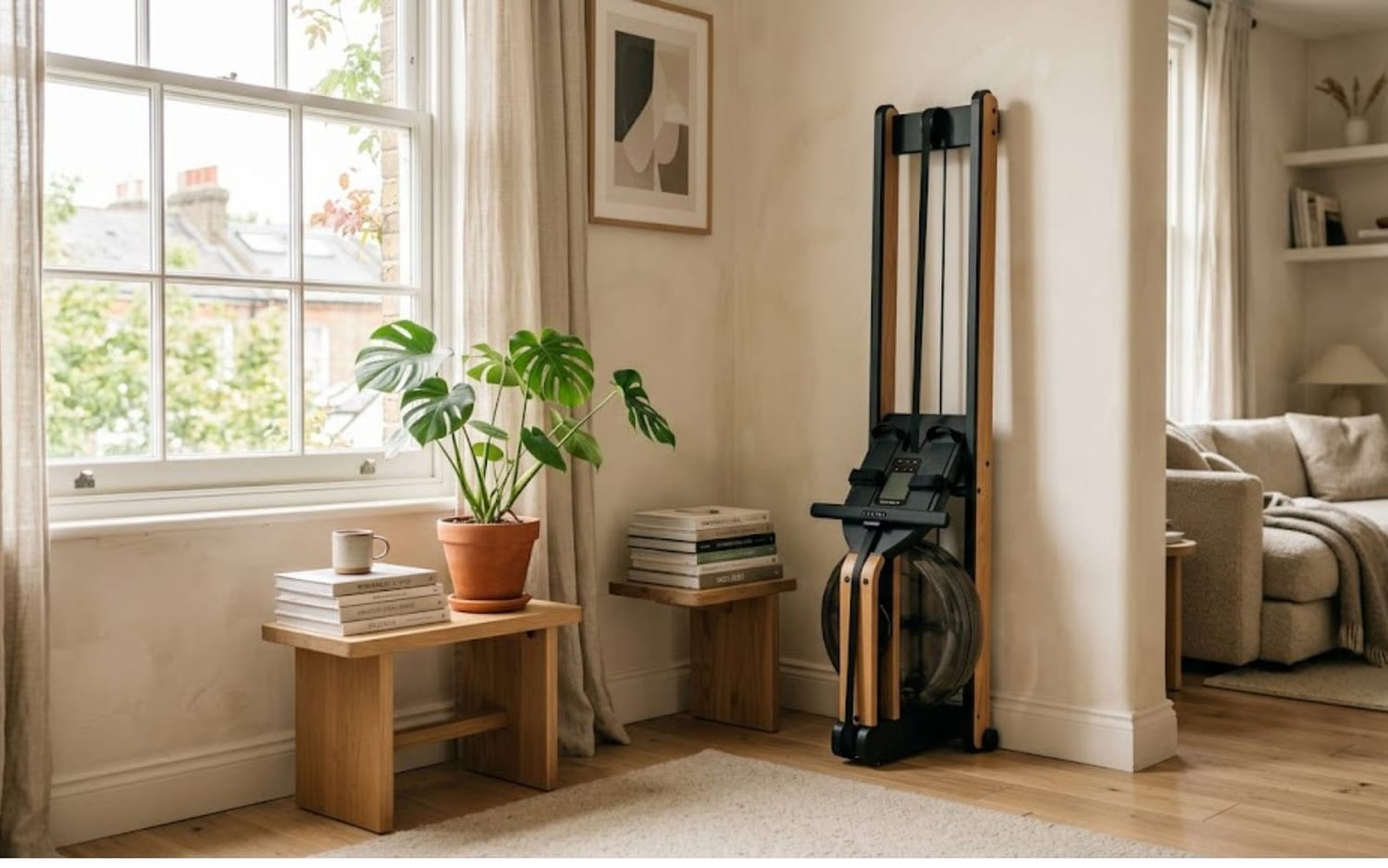
A quality foldable rower stores vertically — smaller than a dining chair on its side.
IN THIS GUIDE
Introduction: why rowing machines belong in small spaces
For years, the home fitness industry sold small-space dwellers the same myth: real results require real equipment, and real equipment requires real space. Treadmills that eat 30 square feet. Power racks that demand garage ceilings. Cable machines that belong in a commercial gym, not a second-floor walkup.
The rowing machine quietly rewrote that story. A quality foldable rower stores upright in a closet corner. It runs on zero electricity. It makes no impact noise on the floor below. And in a single, fluid movement, it works approximately 86% of your major muscle groups — legs, core, back, and arms — more completely than a treadmill, bike, or elliptical combined.
My 450 sq ft wake-up call: When I tried to squeeze a full-sized Concept2 into my NYC studio, I learned the hard way that not all rowers are apartment-friendly. The air fan echoed off every wall. My downstairs neighbor texted me after three strokes. That experience is exactly why I built MiniHomeGym — and why every recommendation here is actually small-space tested.
Watch: Proper rowing form in 3 minutes (Dark Horse Rowing)
What is a rowing machine?
A rowing machine — also called an ergometer or simply "erg" — simulates the motion of rowing a boat on water, using resistance to engage nearly every major muscle group in a single, fluid movement.
Unlike most cardio equipment that isolates your lower body (treadmills, bikes, stair climbers), a rowing machine recruits approximately 86% of your muscles in one coordinated stroke. Your legs drive the push, your core stabilizes the transfer of power, and your back and arms pull the finish — all in a movement that is low-impact on your joints and scalable to any fitness level.
Resistance is delivered through one of four mechanisms — air, magnetic, water, or hydraulic pistons — each producing a slightly different feel and sound profile. That distinction matters enormously when choosing home gym equipment: a loud air rower perfect in a garage may be a genuine noise problem in a second-floor apartment.
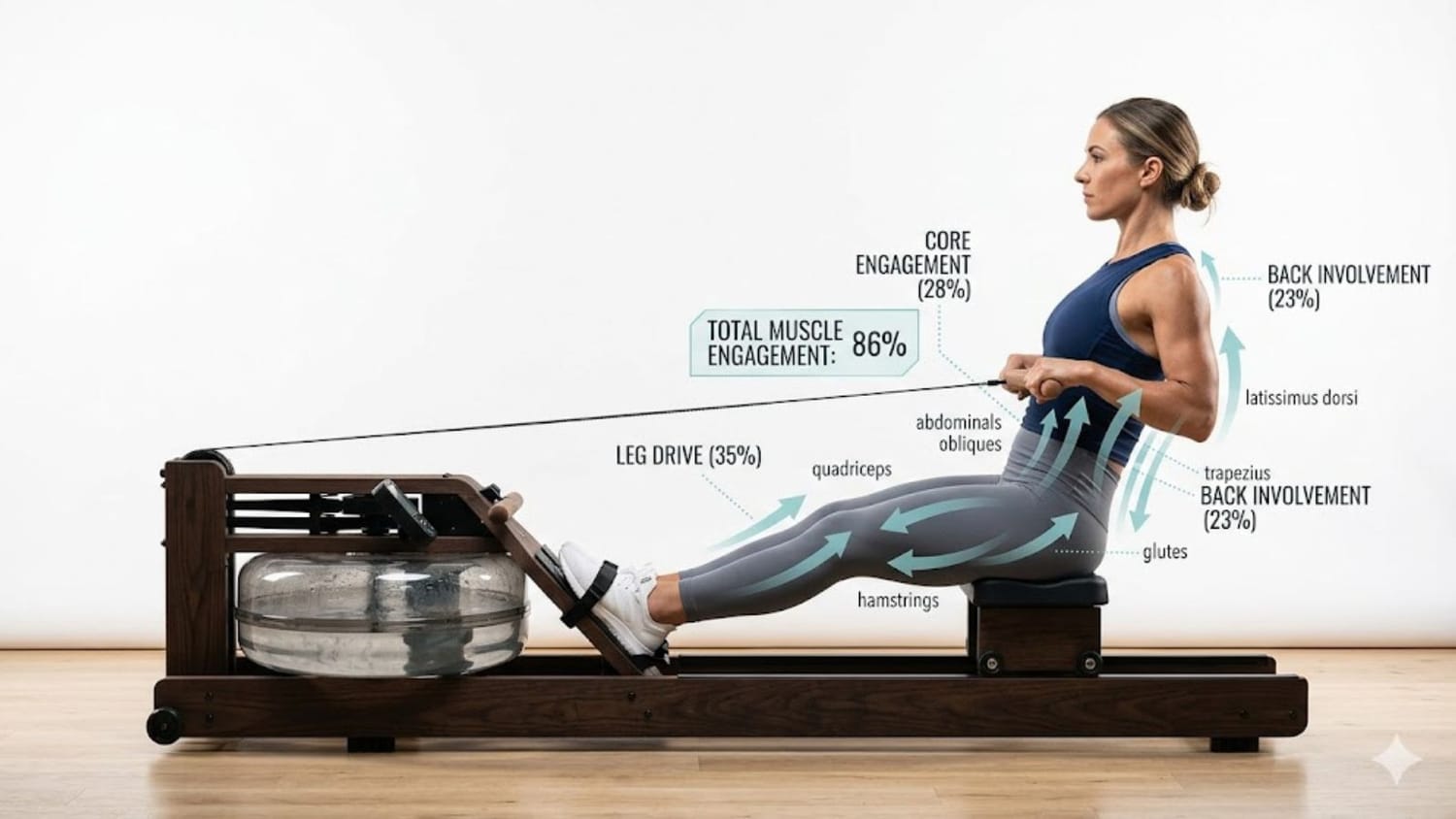
The four phases of an efficient stroke: Catch → Drive → Finish → Recovery
What does a rowing machine actually measure?
Most modern home rowers track four core metrics: stroke rate (strokes per minute), split time (time per 500 meters), power output (watts), and total distance. High-end models connected to platforms like Ergatta or EXR also sync these numbers to live leaderboards, virtual courses, and coached workouts.
Space reality check: If you have space for a yoga mat, you likely have space for a foldable rowing machine. Every rower in our curated lineup is filtered for apartments, condos, and compact spaces — without sacrificing build quality or performance.
The history of rowing machines
The rowing machine's story is a 140-year arc that runs through Victorian patents, Olympic training programs, one game-changing flywheel design, and the pandemic-era home fitness revolution that brought the erg into mainstream consciousness.
- 1871: W.B. Curtis files the first modern rowing machine patent[1].
- 1981: Concept2 launches the Model A — the world's first widely available air-resistance ergometer[2].
- 2014: WaterRower goes mainstream, becoming the first rower people display in living rooms.
- 2019–2020: Connected fitness era launches with Ergatta and Hydrow; COVID-19 spikes searches 250%.
Rowing terms to know
Measures work output precisely — watts, calories, split time.
Pace expressed as time per 500 meters. Lower = faster.
Power phase: legs push first, core rocks back, arms pull last.
Mechanism creating load: air, magnetic, water, or hydraulic.
Pros and cons: an honest breakdown
✓ The case for rowing
- Full-body engagement (~86% of muscles)
- Low-impact, joint-friendly cardio
- Serious calorie burn (260–400 per 30 min)[3]
- Compact footprint when folded
- No subscription required
✕ The honest trade-offs
- Technique has a learning curve
- Needs 8–9 feet during use
- Noise varies (magnetic is quietest)
- Budget models trade durability
- Seat comfort may need a cushion
How to set up in under 50 sq ft
1. Measure your longest unobstructed wall
You need a single clear run of 8.5–9 feet from the footplate to full leg extension. Use a tape measure — visual estimates are often wrong.
2. Choose the right resistance type
For apartments: magnetic resistance is near-silent (under 45 dB). Water is meditative (~50 dB). Air is loud (65+ dB) — not recommended with downstairs neighbors.
3. Lay a high-density rubber mat
Protects floors, reduces vibration. Minimum 3' × 7'. Avoid foam puzzle mats — they compress and shift.
Pro hack: Leave the mat permanently in place and slide the folded rower against the wall. Your rowing zone is always ready in under 90 seconds.
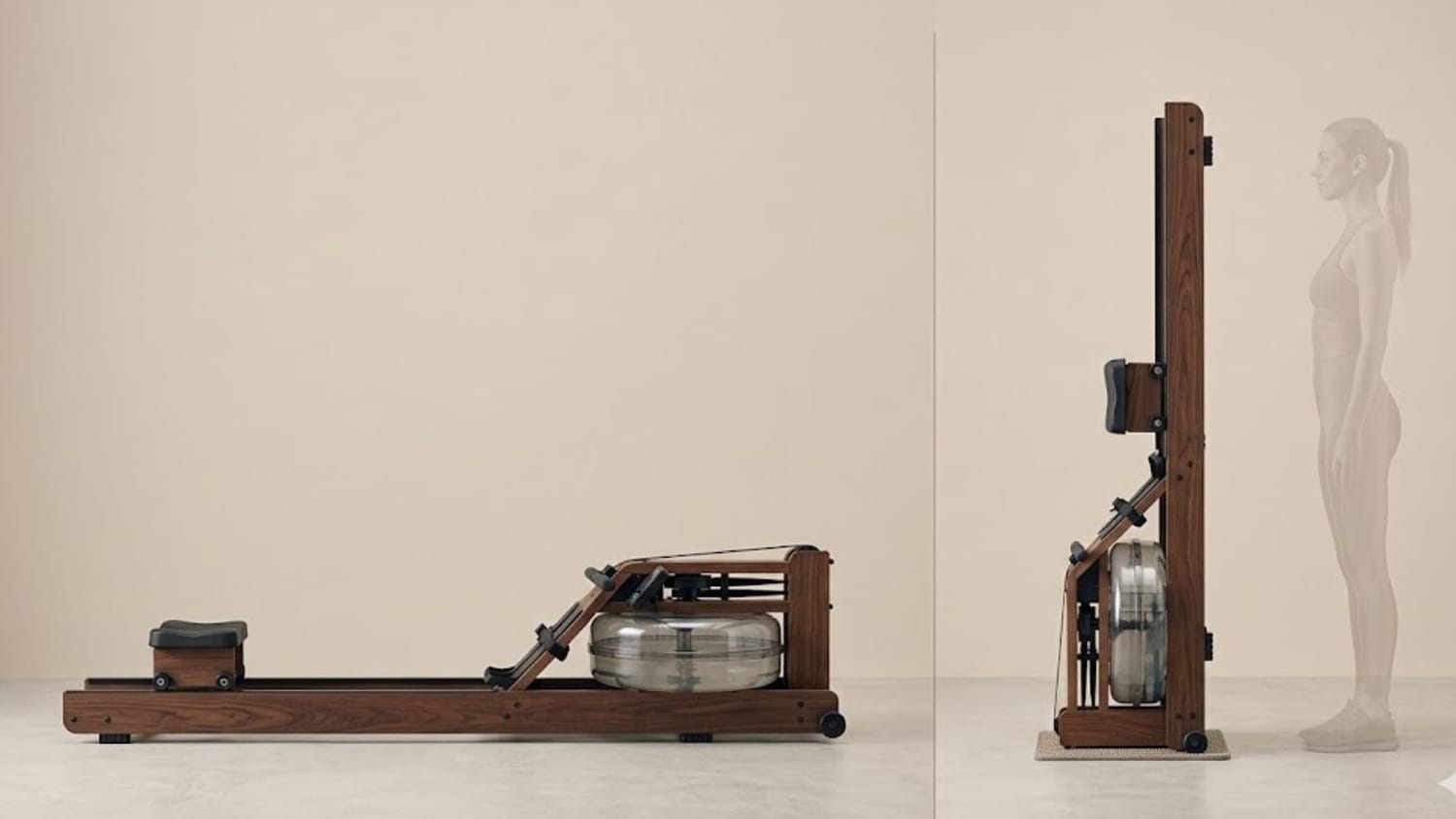
Folded (left) vs. extended (right) — the same machine, two very different footprints.
Your complete buying checklist
Space & storage
- ✓ Measured clear run of at least 8.5 feet
- ✓ Confirmed folded dimensions fit storage spot
- ✓ Rubber mat on hand (3' × 7' minimum)
Noise & neighbors
- ✓ Magnetic resistance selected for apartment use
- ✓ Reviewed published noise level
Machine specs
- ✓ Weight capacity exceeds body weight by 50+ lbs
- ✓ Monitor displays SPM, split time, calories
- ✓ 1-year frame warranty minimum
More guides from MiniHomeGym
- Best foldable rowing machines for apartments under 600 sq ft → Replace with real Systeme.io URL
- Water vs magnetic rowing machine: which should you buy? → Replace with real Systeme.io URL
- 30-day rowing machine plan for beginners → Replace with real Systeme.io URL
The bottom line
You don't need more space. You need the right machine. Every rower recommended here has been evaluated for folded footprint, noise output, and real-world apartment suitability. Browse the compact rower picks →
📚 Sources & further reading
- Curtis, W.B. (1871). "Rowing Machine Patent No. 112,347." United States Patent Office.
- Concept2. (2024). "Company History: The Evolution of the Indoor Rower." www.concept2.com/company/history
- American Council on Exercise. (2019). "Calorie Burn Comparison: Rowing vs. Running vs. Cycling." ACE Fitness Journal.
- WaterRower Engineering. (2023). "Noise Level Testing: Water Resistance vs. Air Resistance." Internal technical report.
Last updated: April 2026. All data verified at time of publication.