Adjustable Dumbbells
$299 USD
View on Amazon
Living in a small apartment doesn’t mean giving up your fitness goals.
With today’s foldable, multi-functional gym equipment, you can build a powerful setup that fits your lifestyle and your space.
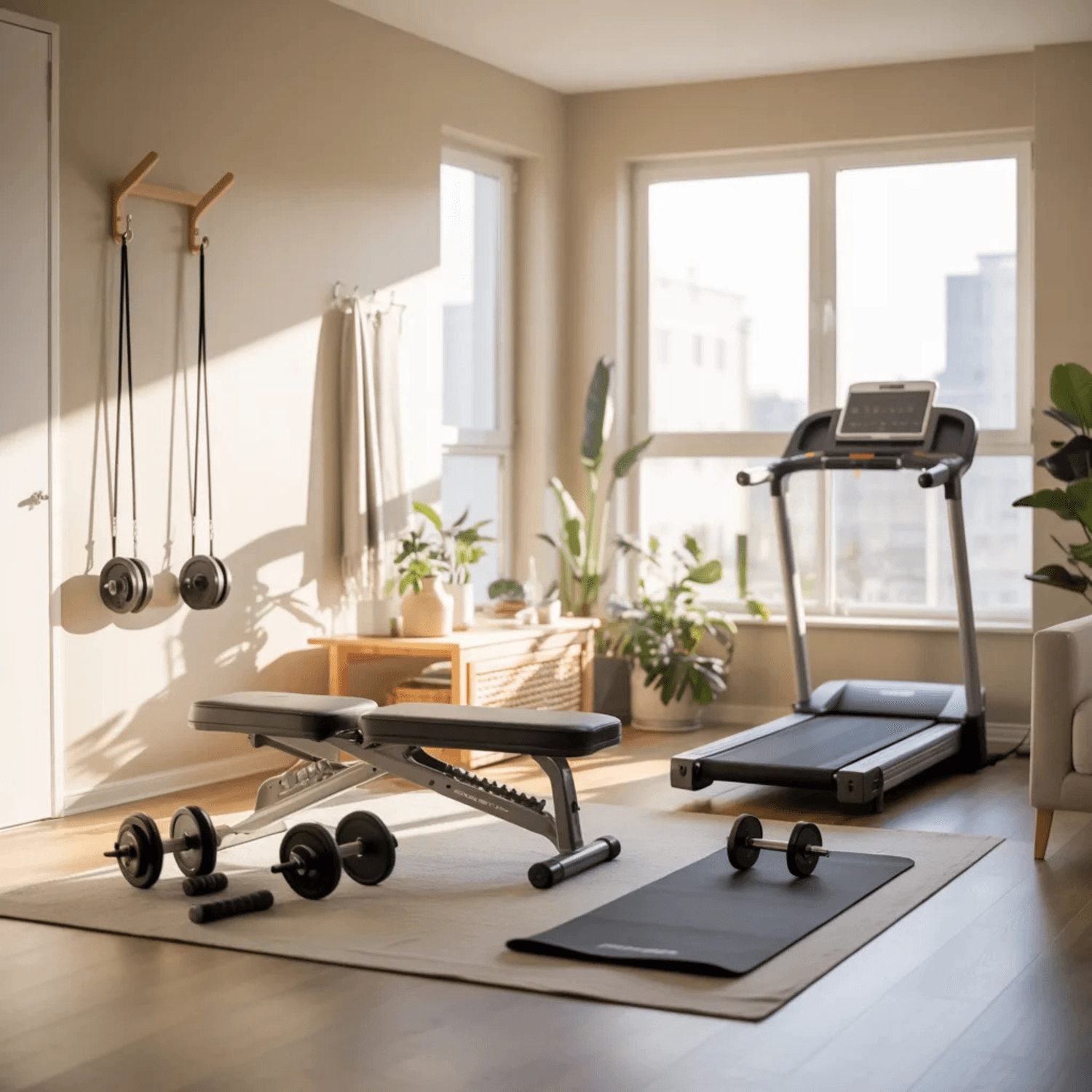
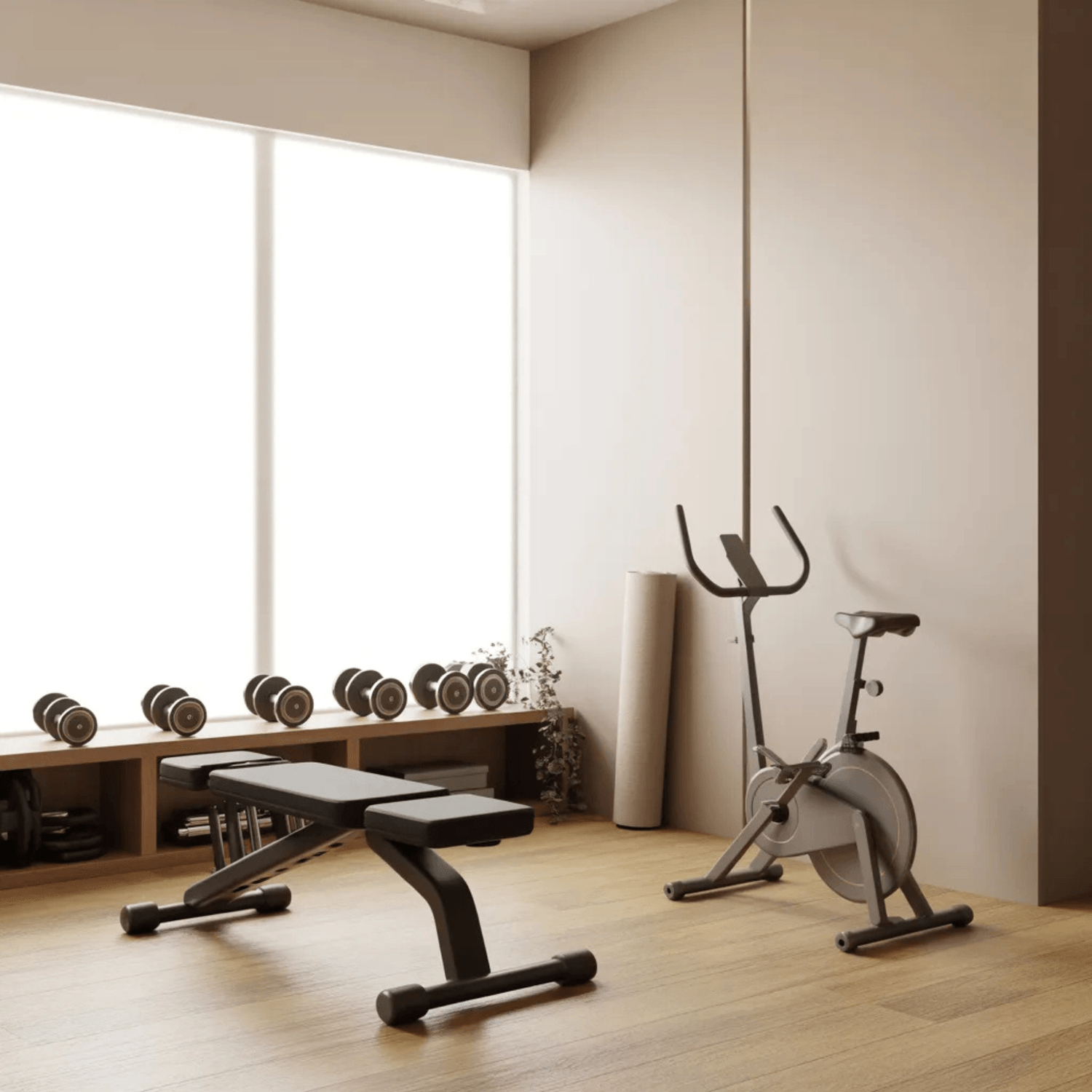
This 2026 setup guide breaks down how to design a compact home gym — from choosing versatile gear to styling your workout corner so it looks clean, cozy, and motivating.
🧩 Step 1: Measure Your Space & Define Your Goals
Before buying anything, map out your available space and work out priorities.
Ask yourself:
Do I prioritize strength, cardio, or mobility?
How much floor space can I realistically dedicate?
Will the equipment need to fold, roll, or store vertically?
💡 Pro Tip:
Strength setups can fit in a 6×6 ft space using vertical storage.
Cardio zones (foldable bikes, walking pads) work best with 8×8 ft.
Tape the outline on your floor first. Visualizing your layout prevents wasted money and overcrowding.
🧠 Step 2: Choose Foldable & Multi-Use Equipment
A compact home gym only works if every piece earns its space.
Choose foldable, adjustable, or stackable equipment that supports multiple exercises and stores easily.
💡 Pro Tip:
Dual-purpose gear wins every time — one item, multiple workouts.

Adjustable dumbbells that replace an entire rack — ideal for minimalist home gyms and long-term progression.
Check price on Amazon →Folds flat, supports heavy lifts, and stores under a bed — a must-have for compact strength setups.
View on Amazon →Short-height squat rack designed for apartments with low ceilings — serious strength without bulk.
Check Amazon price →Full-body resistance training that stores in a drawer — perfect for travel, warm-ups, and recovery days.
See on Amazon →Quiet, foldable cardio bike for daily movement without eating up floor space.
View price →Renter-friendly upper-body training with zero permanent installation.
Check availability →Store dumbbells, bands, or mats vertically and reclaim valuable floor space.
View on Amazon →Lightweight, non-slip mat that rolls small — ideal for stretching, yoga, and floor work.
See price →Disassembles easily for storage — real barbell training without permanent bulk.
Check Amazon →Pull-ups, dips, and core work in one vertical footprint — built for small rooms.
View details →*Affiliate Disclosure: MiniHomeGym earns from qualifying purchases.
🗂️ Step 3: Plan Smart Storage Solutions
A compact gym only works if it stays organized.
Best storage strategies:
Wall-mounted racks & hooks: keep gear off the floor
Behind-the-door storage: perfect for bands and jump ropes
Under-bed storage: ideal for foldable benches and mats
Collapsible bins: store accessories without clutter
Floating shelves: towels, water bottles, small gear
Multipurpose furniture: storage benches or ottomans
Ceiling or wall hooks: TRX straps, resistance bands
Every item should fold, hang, or hide when not in use.
✨ Think modular — every piece needs a dedicated home.
💡 Step 4: Optimize Lighting & Aesthetic
The best compact home gyms feel calm, clean, and motivating.
🌿 Design Tips
Neutral walls: beige, cream, light gray
Mirrors: expand space and improve form
Natural elements: one plant or bamboo accent
Layered lighting: overhead + LED strips
Minimal decor: function first, clutter last
Clean flooring: foam mats, cork, or rubber tiles
Your gym should blend into your apartment — not overpower it.
Before buying more gear, dial in your layout. A smart small-space gym setup prioritizes movement flow, storage efficiency, and visual calm — not just fitting equipment into a room.
A bench, adjustable dumbbells, and a mirror create a focused strength zone without dominating the room. Ideal for studios and one-bedroom apartments.
Turn a spare closet into a vertical gym using wall-mounted storage. Slide doors closed and your workout space disappears instantly.

Foldable benches, resistance bands, and mats stored flat under the bed. Perfect for renters who need zero visual clutter when not training.

💡 Pro tip: Most small-space gyms work best as hybrids. Combine one strength corner with hidden storage to keep your home feeling open, calm, and intentional.
Once your core equipment is set, small details make the difference. The goal isn’t decoration — it’s creating a space that feels calm, motivating, and easy to return to.
Warm, indirect lighting reduces visual stress and makes early-morning or evening workouts feel more inviting.
Check price on Amazon →Background music boosts consistency, while subtle scents help your brain associate the space with movement and focus.
View on Amazon →One clean visual anchor keeps the space inspiring without clutter. Less noise = more focus during workouts.
See options on Amazon →💡 Rule of thumb: If an item doesn’t improve mood, focus, or recovery — it doesn’t belong in a small-space gym.
FAQs
Can you build a home gym in a small apartment?
Yes. With foldable, adjustable, and vertical-storage equipment, you can build a functional home gym in as little as 6×6 feet. Compact dumbbells, foldable benches, resistance bands, and quiet cardio machines are ideal for apartment living.
How much space do you need for a compact home gym?
Most strength-focused setups fit comfortably in 6×6 ft, while compact cardio equipment like folding bikes or walking pads works best in 8×8 ft. Measuring your space first helps avoid overcrowding.
What is the best equipment for a small-space home gym?
The best small-space home gym equipment includes adjustable dumbbells, foldable weight benches, resistance bands, doorway pull-up bars, folding exercise bikes, and vertical storage racks. Multi-use gear delivers the most value per square foot.
Are foldable workout benches sturdy enough for daily use?
Yes. High-quality foldable workout benches are built for daily training and can support heavy loads when used correctly. Always check the weight capacity, frame construction, and locking system before buying.
What is the quietest cardio option for apartments?
The quietest apartment-friendly cardio options are folding exercise bikes, walking pads, and mini steppers. These machines are low-impact and designed to minimize noise and vibration for shared living spaces.
How do you store gym equipment in a small apartment?
Use wall-mounted racks, behind-the-door hooks, under-bed storage, foldable benches, and compact bins. Every piece of equipment should fold, hang, or store flat when not in use to keep your space clutter-free.
Is a compact home gym worth it?
Absolutely. A compact home gym saves time, eliminates gym fees, and supports consistent workouts. With the right space-saving equipment, even small setups can deliver effective full-body training.
✅ Final Takeaway
A small space doesn’t limit your workouts — it sharpens your setup.
With foldable equipment, smart storage, and clean design, you can build a compact home gym that fits anywhere and supports daily consistency.
Start small. Focus on essentials. Upgrade intentionally.
👉 Combine foldable gear, vertical storage, and minimalist design to build a home gym that works — and looks good doing it.